NUS Synthetic Biology for Clinical and Technological Innovation (SynCTI), National University of Singapore, 117456, Singapore.
Synthetic Biology Translational Research Programme, Yong Loo Lin School of Medicine, National University of Singapore, 117456, Singapore.
ACS Biomater Sci Eng. 2023 Sep 11;9(9):5123-5135. doi: 10.1021/acsbiomaterials.2c00202. Epub 2022 Nov 18.
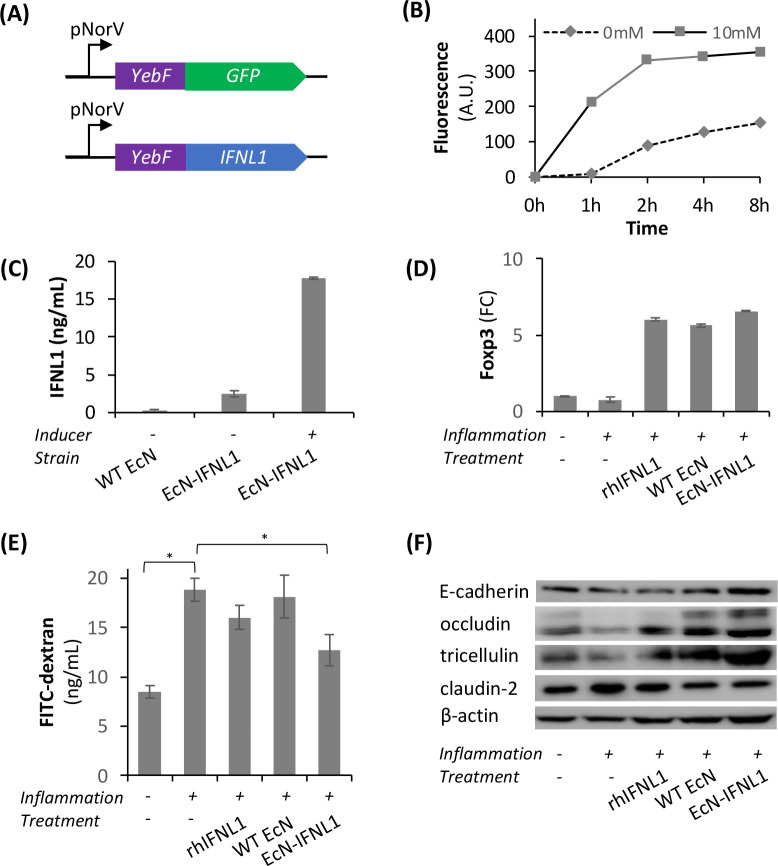
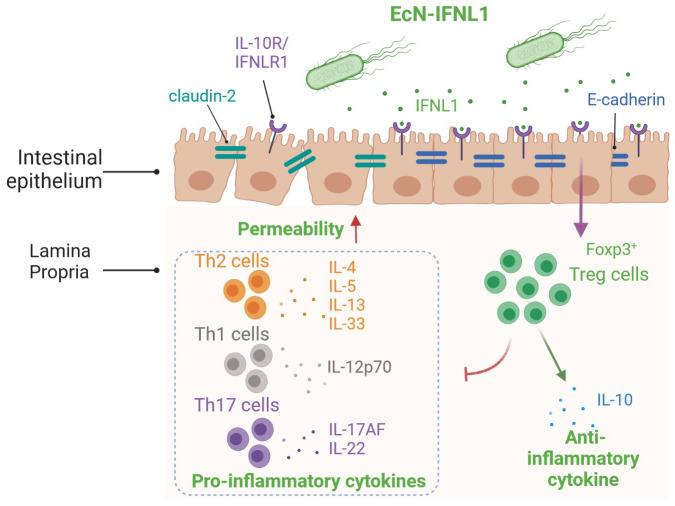
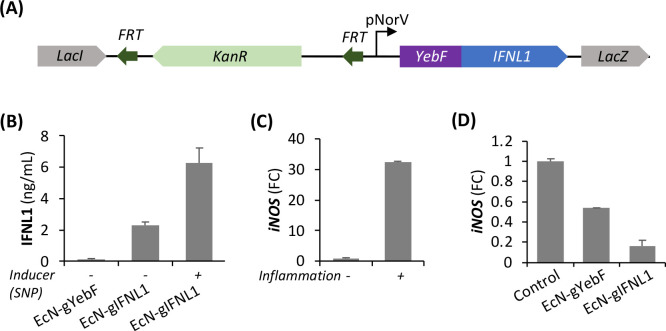
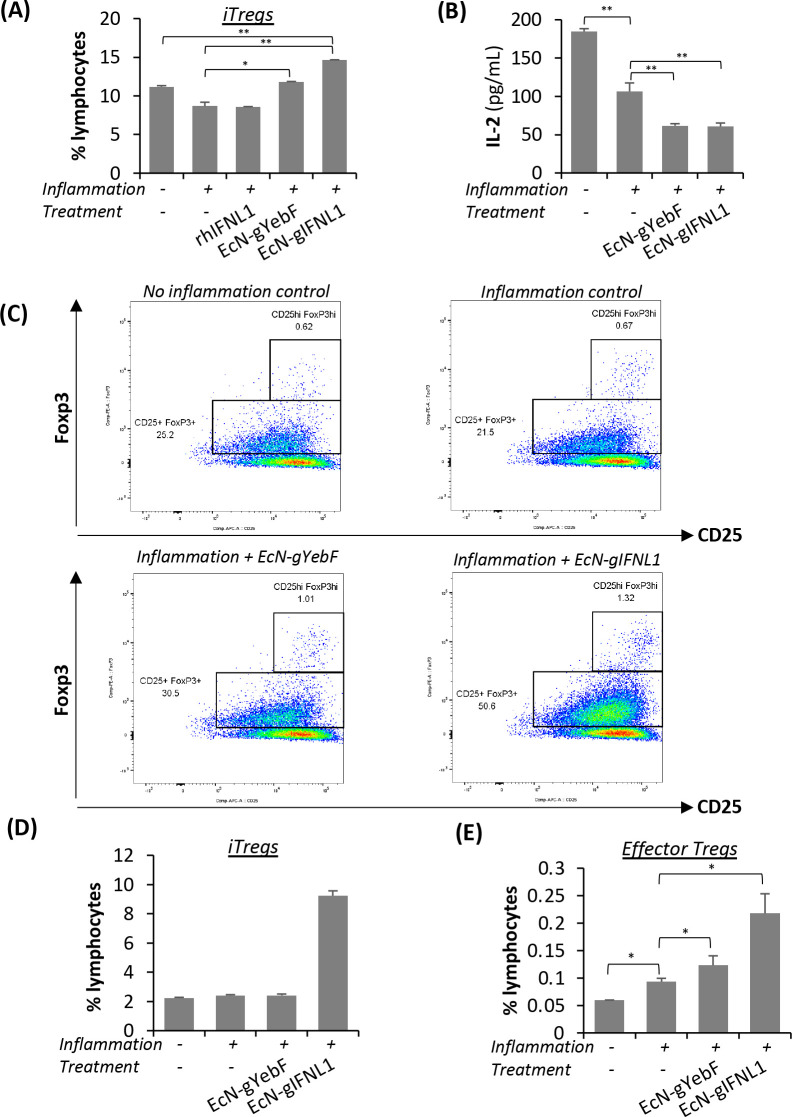
The etiology of inflammatory bowel diseases (IBDs) frequently results in the uncontrolled inflammation of intestinal epithelial linings and the local environment. Here, we hypothesized that interferon-driven immunomodulation could promote anti-inflammatory effects. To test this hypothesis, we engineered probiotic Nissle 1917 (EcN) to produce and secrete a type III interferon, interferon lambda 1 (IFNL1), in response to nitric oxide (NO), a well-known colorectal inflammation marker. We then validated the anti-inflammatory effects of the engineered EcN strains in two models: a Caco-2/Jurkat T cell coculture model and a scaffold-based 3D coculture IBD model that comprises intestinal epithelial cells, myofibroblasts, and T cells. The IFNL1-expressing EcN strains upregulated expression in T cells and thereafter reduced the production of pro-inflammatory cytokines such as IL-13 and -33, significantly ameliorating inflammation. The engineered strains also rescued the integrity of the inflamed epithelial cell monolayer, protecting epithelial barrier integrity even under inflammation. In the 3D coculture model, IFNL1-expressing EcN treatment enhanced the population of regulatory T cells and increased anti-inflammatory cytokine IL-10. Taken together, our study showed the anti-inflammatory effects of IFNL1-expressing probiotics in two IBD models, demonstrating their potential as live biotherapeutics for IBD immunotherapy.
炎症性肠病(IBD)的病因常常导致肠道上皮衬里和局部环境的失控性炎症。在这里,我们假设干扰素驱动的免疫调节可以促进抗炎作用。为了验证这一假设,我们设计了益生菌 Nissle 1917(EcN),以响应一氧化氮(NO)产生和分泌一种 III 型干扰素,干扰素 lambda 1(IFNL1),NO 是一种众所周知的结直肠炎症标志物。然后,我们在两种模型中验证了工程 EcN 菌株的抗炎作用:Caco-2/Jurkat T 细胞共培养模型和基于支架的 3D 共培养 IBD 模型,该模型包含肠道上皮细胞、肌成纤维细胞和 T 细胞。表达 IFNL1 的 EcN 菌株上调了 T 细胞中的表达,随后减少了促炎细胞因子如 IL-13 和 -33 的产生,显著改善了炎症。工程菌株还挽救了发炎的上皮细胞单层的完整性,即使在炎症下也能保护上皮屏障的完整性。在 3D 共培养模型中,IFNL1 表达的 EcN 处理增强了调节性 T 细胞的群体,并增加了抗炎细胞因子 IL-10 的产生。总之,我们的研究在两种 IBD 模型中显示了表达 IFNL1 的益生菌的抗炎作用,表明它们作为 IBD 免疫治疗的活生物疗法的潜力。