Department of Biostatistics, School of Public Health, Cheeloo College of Medicine, Shandong University, PO Box 100, 44 Wenhuaxi RoadShandong Province, Shandong, 250012, Jinan, China.
Institute for Medical Dataology, Cheeloo College of Medicine, Shandong University, Jinan, Shandong, 250012, China.
BMC Cancer. 2022 Nov 19;22(1):1194. doi: 10.1186/s12885-022-10219-w.
The relative contributions of genetic and environmental factors versus unavoidable stochastic risk factors to the variation in cancer risk among tissues have become a widely-discussed topic. Some claim that the stochastic effects of DNA replication are mainly responsible, others believe that cancer risk is heavily affected by environmental and hereditary factors. Some of these studies made evidence from the correlation analysis between the lifetime number of stem cell divisions within each tissue and tissue-specific lifetime cancer risk. However, they did not consider the measurement error in the estimated number of stem cell divisions, which is caused by the exposure to different levels of genetic and environmental factors. This will obscure the authentic contribution of environmental or inherited factors.
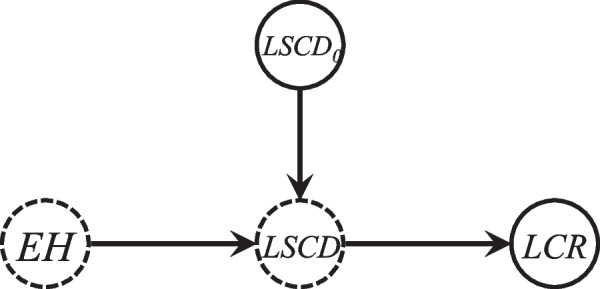
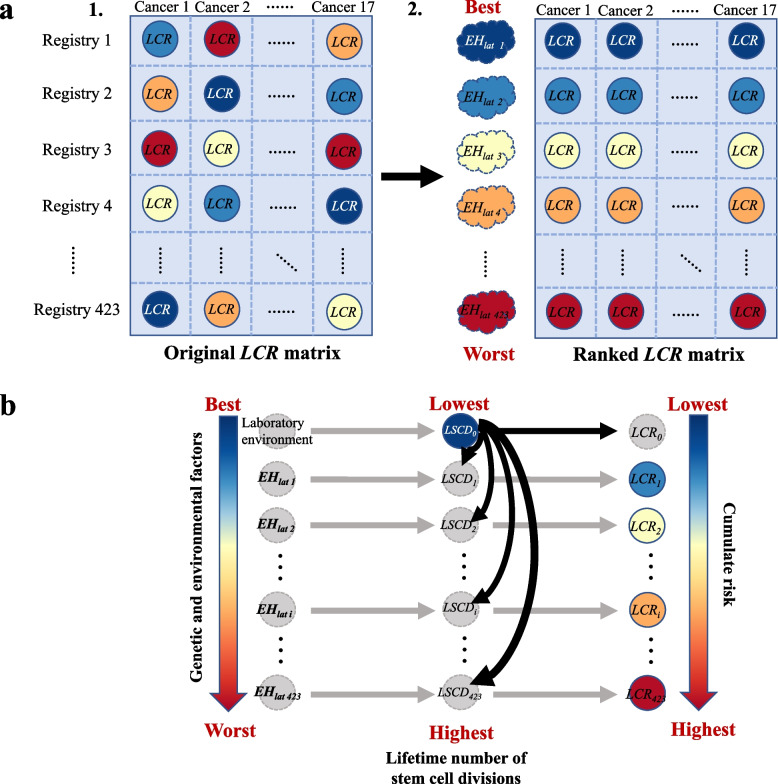
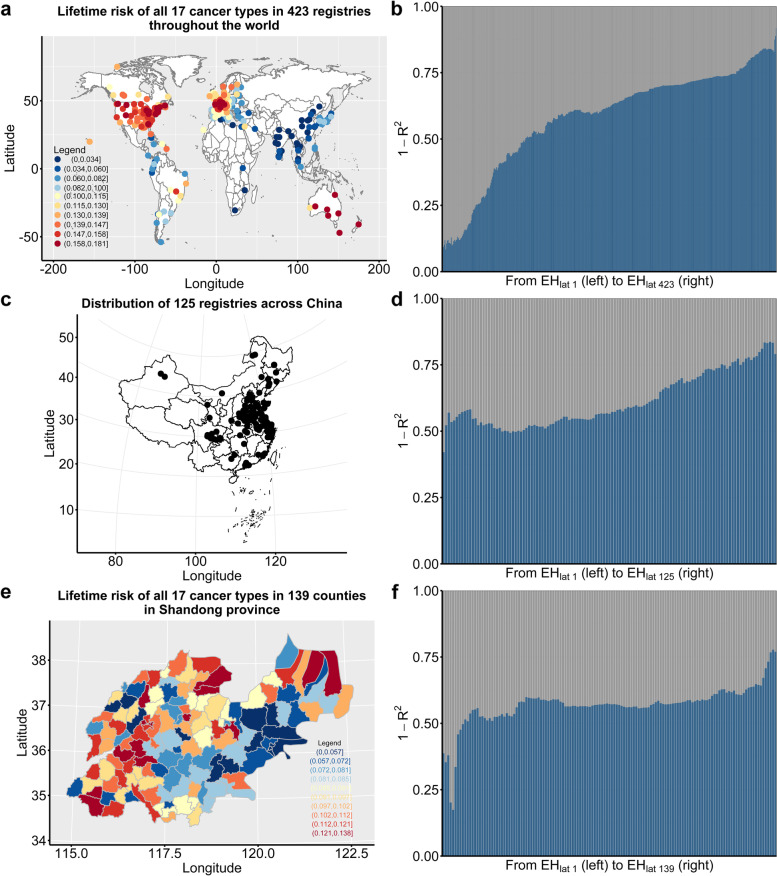
In this study, we proposed two distinct modeling strategies, which integrate the measurement error model with the prevailing model of carcinogenesis to quantitatively evaluate the contribution of hereditary and environmental factors to cancer development. Then, we applied the proposed strategies to cancer data from 423 registries in 68 different countries (global-wide), 125 registries across China (national-wide of China), and 139 counties in Shandong province (Shandong provincial, China), respectively.
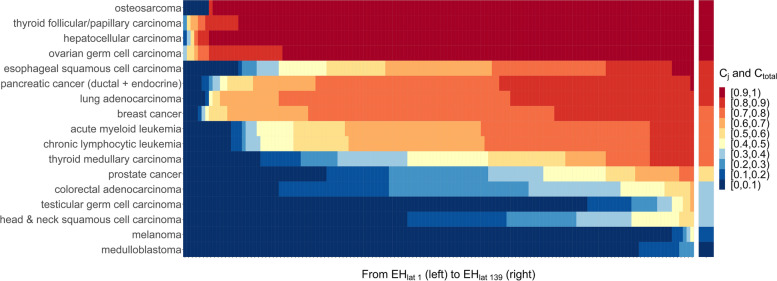
The results suggest that the contribution of genetic and environmental factors is at least 92% to the variation in cancer risk among 17 tissues. Moreover, mutations occurring in progenitor cells and differentiated cells are less likely to be accumulated enough for cancer to occur, and the carcinogenesis is more likely to originate from stem cells. Except for medulloblastoma, the contribution of genetic and environmental factors to the risk of other 16 organ-specific cancers are all more than 60%.
This work provides additional evidence that genetic and environmental factors play leading roles in cancer development. Therefore, the identification of modifiable environmental and hereditary risk factors for each cancer is highly recommended, and primary prevention in early life-course should be the major focus of cancer prevention.
遗传和环境因素与不可避免的随机风险因素对组织间癌症风险变化的相对贡献已成为一个广泛讨论的话题。一些人认为,DNA 复制的随机效应是主要原因,另一些人则认为癌症风险受环境和遗传因素的影响很大。其中一些研究通过分析每个组织中干细胞分裂的终生数量与组织特异性终生癌症风险之间的相关性来提供证据。然而,它们没有考虑到由于暴露于不同水平的遗传和环境因素而导致的估计干细胞分裂次数的测量误差。这将掩盖环境或遗传因素的真实贡献。
在这项研究中,我们提出了两种不同的建模策略,将测量误差模型与流行的致癌模型相结合,以定量评估遗传和环境因素对癌症发展的贡献。然后,我们分别将所提出的策略应用于来自 68 个不同国家的 423 个登记处(全球范围)、中国的 125 个登记处(中国全国范围)和山东省的 139 个县(山东省)的癌症数据。
结果表明,遗传和环境因素对 17 种组织间癌症风险的变化至少有 92%的贡献。此外,祖细胞和分化细胞中的突变不太可能积累到足以引发癌症的程度,致癌作用更可能起源于干细胞。除髓母细胞瘤外,遗传和环境因素对其他 16 种器官特异性癌症风险的贡献均超过 60%。
这项工作提供了额外的证据,表明遗传和环境因素在癌症发展中起着主导作用。因此,强烈建议识别每种癌症可改变的环境和遗传风险因素,并将生命早期的一级预防作为癌症预防的重点。