Zhang Qing, Liu Tuodong, Gu Yuan, Gao Yongquan, Ni Jiangdong
Department of Orthopaedics, The Second Xiangya Hospital, Central South University, No. 139 Renmin Street, Changsha, 410000, Hunan, People's Republic of China.
J Orthop Surg Res. 2022 Nov 19;17(1):499. doi: 10.1186/s13018-022-03398-6.
To systematically evaluate the curative efficacy and safety of platelet-rich plasma (PRP) combined with hyaluronic acid (HA) in the treatment of knee osteoarthritis (KOA), comparing with platelet-rich plasma alone.
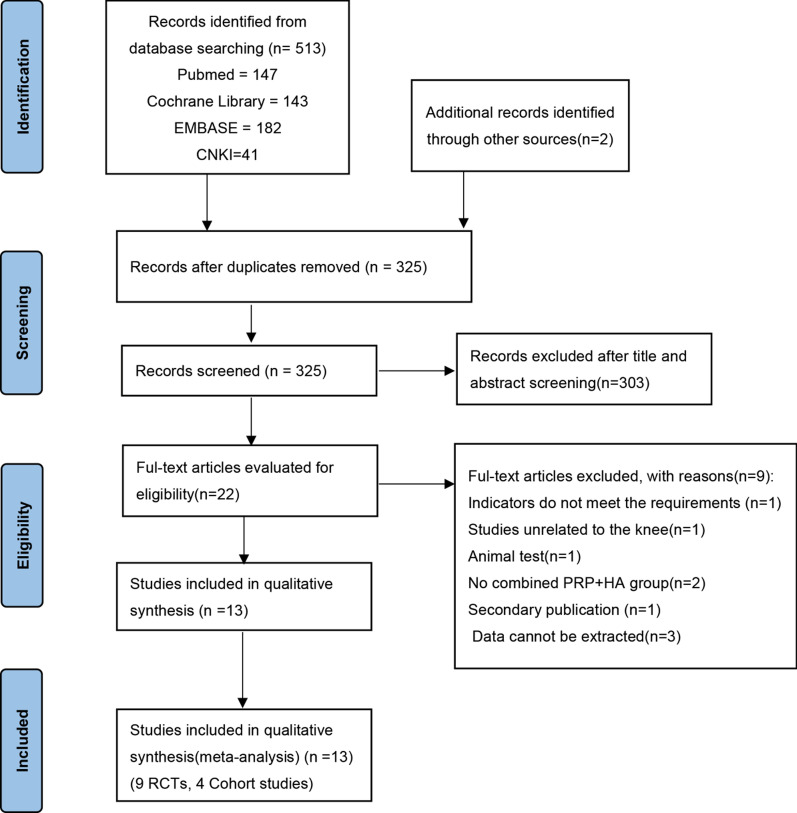
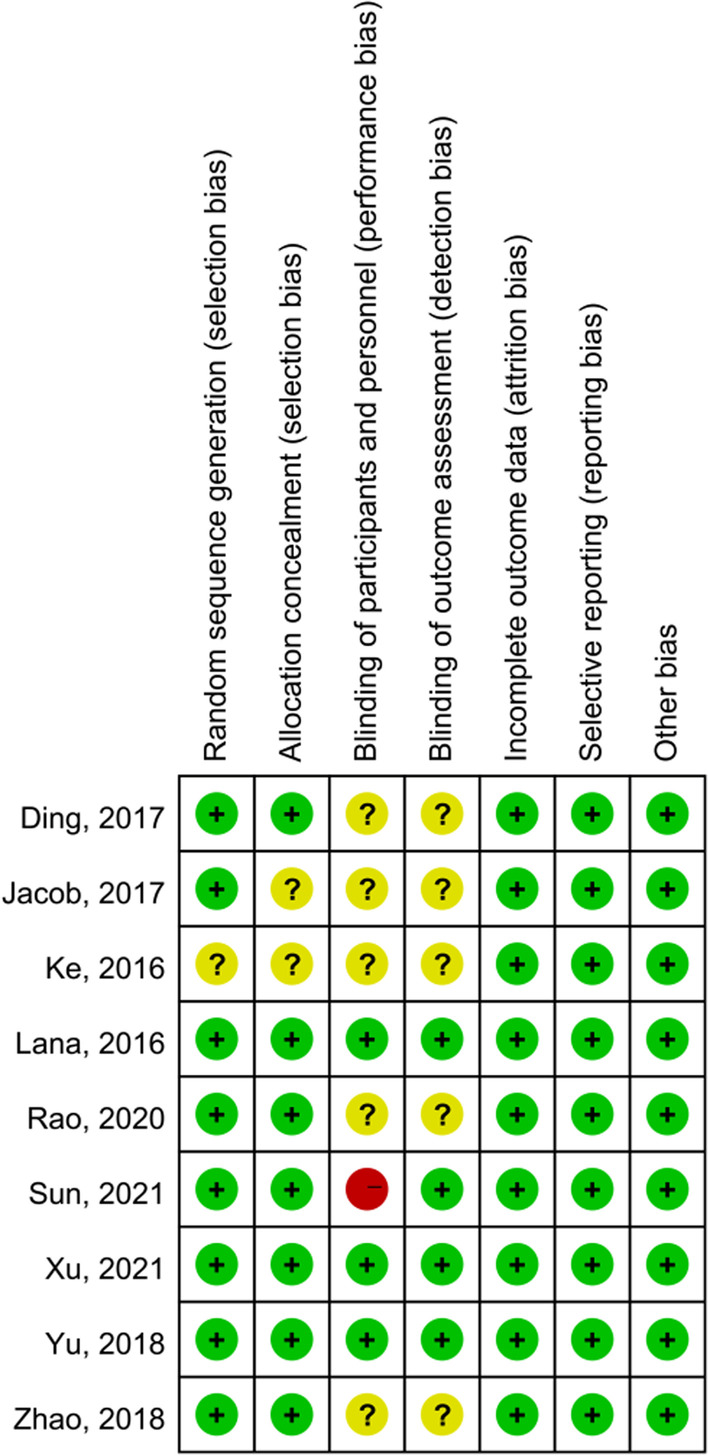
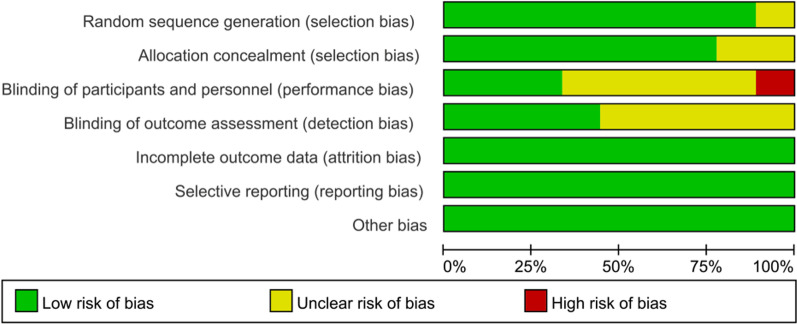
Cochrane Library, PubMed, China National Knowledge Infrastructure (CNKI) and Embase were searched for randomized controlled trials (RCTs) and cohort studies regarding the efficacy and safety of platelet-rich plasma (PRP) combined with hyaluronic acid (HA) in the treatment of knee osteoarthritis (KOA) comparing with platelet-rich plasma alone before January 15, 2022. The methodological quality of the ultimately included studies was assessed comprehensively, and meta-analysis was implemented using RevMan 5.3 software.
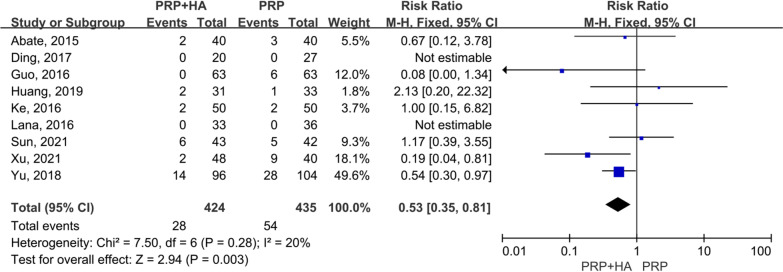
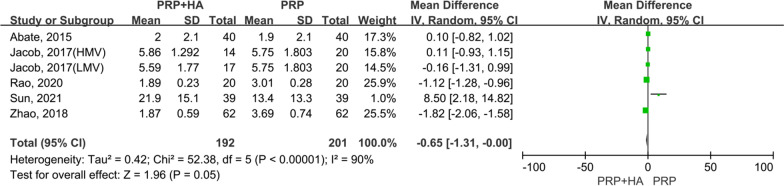
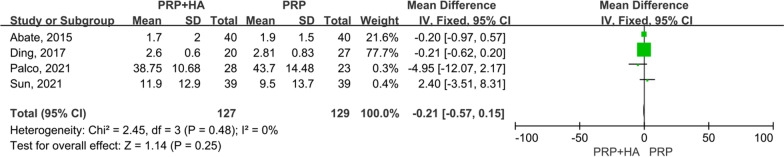
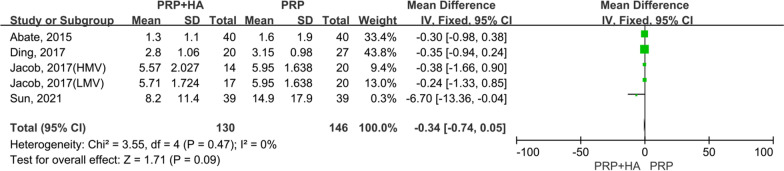
Thirteen articles (9 RCTs, 4 cohort studies), including 1118 patients, were covered. There was no significant difference between the PRP + HA therapy and PRP-alone therapy in VAS scores at 3 months, 6 months and 12 months, WOMAC total scores at 3 months and KOOS at 1 month and 6 months. Compared with PRP-alone therapy, PRP + HA therapy was associated with significantly better improvement in VAS scores at 1 month, WOMAC total scores at 6 months, KOOS at 3 months, IKDC scores at 6 months and Lequesne index scores at 3 and 6 months. However, the smallest treatment effect of VAS scores, WOMAC total scores, KOOS and IKDC scores did not exceed the minimum clinically important difference (MCID). However, PRP + HA therapy got a greater reduction in the rate of adverse events, compared with PRP-alone therapy.
The results of this meta-analysis indicated that PRP + HA therapy was not found to be superior to PRP-alone therapy in pain relief and function improvement for patients with KOA. However, combined PRP with HA injections was generally safer than PRP injections alone, by assessing the incidence of adverse events.
系统评价富血小板血浆(PRP)联合透明质酸(HA)治疗膝关节骨关节炎(KOA)的疗效和安全性,并与单纯使用富血小板血浆进行比较。
检索Cochrane图书馆、PubMed、中国知网(CNKI)和Embase,查找2022年1月15日前关于富血小板血浆(PRP)联合透明质酸(HA)治疗膝关节骨关节炎(KOA)与单纯使用富血小板血浆比较的疗效和安全性的随机对照试验(RCT)和队列研究。全面评估最终纳入研究的方法学质量,并使用RevMan 5.3软件进行荟萃分析。
共纳入13篇文章(9项RCT、4项队列研究),涉及1118例患者。PRP+HA治疗组与单纯PRP治疗组在3个月、6个月和12个月时的视觉模拟评分(VAS)、3个月时的WOMAC总分、1个月和6个月时的膝关节损伤和骨关节炎疗效评分(KOOS)方面无显著差异。与单纯PRP治疗相比,PRP+HA治疗在1个月时的VAS评分、6个月时的WOMAC总分、3个月时的KOOS、6个月时的国际膝关节文献委员会(IKDC)评分以及3个月和6个月时的Lequesne指数评分方面改善更显著。然而,VAS评分、WOMAC总分、KOOS和IKDC评分的最小治疗效果未超过最小临床重要差异(MCID)。但是,与单纯PRP治疗相比,PRP+HA治疗的不良事件发生率降低幅度更大。
该荟萃分析结果表明,在缓解疼痛和改善功能方面,PRP+HA治疗对KOA患者并不优于单纯PRP治疗。然而,通过评估不良事件的发生率,PRP联合HA注射总体上比单纯PRP注射更安全。