Sakellaropoulos Stefanos G, Ali Muhammad, Papadis Athanasios, Mohammed Muhemin, Mitsis Andreas, Zivzivadze Zaza
Department of Internal Medicine, Cardiology, Cantonal Hospital Baden, Baden, Switzerland.
Clinic of Cardiology Salzgitter, Salzgitter, Germany.
Cardiol Res. 2022 Oct;13(5):264-267. doi: 10.14740/cr1419. Epub 2022 Oct 25.
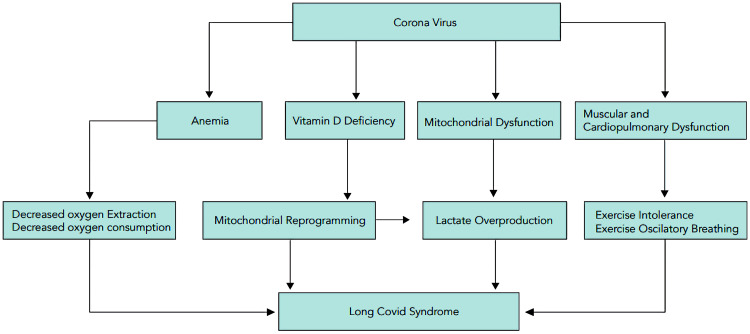
The new outbreak of the severe acute respiratory syndrome coronavirus 2 (SARS-CoV-2) infection has an impact worldwide, primarily as a medical emergency. Even that the total constellation is considered as a pandemic of acute respiratory disease, coronavirus disease 2019 (COVID-19) gives rise to dysfunction in multiple organs (e.g., brain, lungs, heart, muscles) that impairs cardiopulmonary (CP) function. Parallel to the CP consequences of COVID-19 is a significant reduction in physical activity. Cardiopulmonary exercise testing (CPET) is daily used in clinical practice to define prognosis, provide risk stratification and treatment strategy. As such, the significance of CPET is crucial concerning clinical assessments of COVID-19 patients. Furthermore, new studies aim at understanding the effects of SARS-CoV-2 infection in long term. Multiple studies have investigated the cardiopulmonary function and impairment of exercise endurance in such patients, as well as a possible prolonged physical impairment. With this review, we summarize the COVID-19-associated pathophysiology for the Long COVID (LC) syndrome as well as the importance of performing CPET.
严重急性呼吸综合征冠状病毒2(SARS-CoV-2)感染的新疫情在全球范围内产生了影响,主要是作为一种医疗紧急情况。即使将整个疫情视为急性呼吸道疾病大流行,2019冠状病毒病(COVID-19)也会导致多个器官(如脑、肺、心脏、肌肉)功能障碍,进而损害心肺(CP)功能。与COVID-19对心肺的影响同时出现的是身体活动的显著减少。心肺运动试验(CPET)在临床实践中每天都用于确定预后、提供风险分层和治疗策略。因此,CPET对于COVID-19患者的临床评估至关重要。此外,新的研究旨在了解SARS-CoV-2感染的长期影响。多项研究调查了此类患者的心肺功能和运动耐力损害情况,以及可能存在的长期身体损害。通过本综述,我们总结了长期COVID(LC)综合征与COVID-19相关的病理生理学以及进行CPET的重要性。