Saed Abdel
Orthopaedics, Barts Health NHS Trust, London, GBR.
Cureus. 2022 Oct 18;14(10):e30440. doi: 10.7759/cureus.30440. eCollection 2022 Oct.
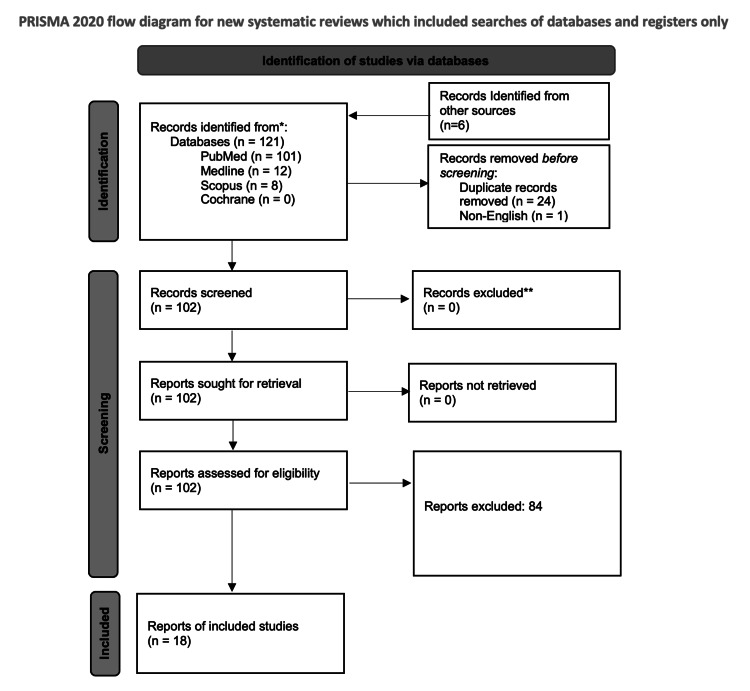
The coronavirus disease 2019 (COVID-19) pandemic has challenged and changed significant aspects of day-to-day life. With regard to medical education, the challenges have been substantial, and the changes have been innovative. This systematic review focuses specifically on medical student feedback on undergraduate surgical education during the pandemic. It explores the various types of technology used to facilitate online learning and aims to comprehensively review the advantages and disadvantages. The Preferred Reporting Items for Systematic Reviews and Meta-Analyses (PRISMA) guidelines were adhered to, and electronic databases PubMed, Medline, and Scopus were used to identify relevant studies. The search yielded 102 papers once duplicates and non-English articles were removed. Of these, 19 articles were included in the review. These publications were appraised, which was the source of the narrative syntheses of this systematic review, and due to the heterogeneous data, a meta-analysis could not be successfully implemented. The integration of real-time image capture devices used to display stakeholders or objects such as models of wounds has resulted in the improvement of virtual learning to an almost in-person experience. Adding to this, the use of communication and participation platforms facilitates active discussion when used appropriately. However, there are still some barriers that may be removed with time as the technology continually improves, and these are not exclusive to connectivity issues and restriction of the senses to only two-dimensional sight and hearing. Despite this, the student feedback was largely positive, and the integration of more innovative methods of delivering teaching will have a positive impact on education as long as it is used as an adjunct and not as a replacement for face-to-face teaching.
2019年冠状病毒病(COVID-19)大流行给日常生活的诸多方面带来了挑战并使其发生了改变。在医学教育方面,挑战巨大,变化也颇具创新性。本系统综述专门聚焦于医学生对大流行期间本科外科教育的反馈。它探讨了用于促进在线学习的各类技术,并旨在全面回顾其优缺点。我们遵循了系统评价和Meta分析的首选报告项目(PRISMA)指南,并使用电子数据库PubMed、Medline和Scopus来识别相关研究。去除重复项和非英文文章后,检索得到102篇论文。其中,19篇文章被纳入综述。对这些出版物进行了评估,这是本系统综述叙述性综合的来源,由于数据的异质性,未能成功实施Meta分析。用于展示利益相关者或物体(如伤口模型)的实时图像捕捉设备的整合,已将虚拟学习提升至几乎身临其境的体验。此外,通信和参与平台的使用在恰当运用时有助于开展积极的讨论。然而,随着技术的不断改进,仍存在一些障碍可能会随着时间推移而消除,这些障碍并非仅限于连接问题以及感官仅局限于二维视觉和听觉。尽管如此,学生反馈总体上是积极的,只要将更具创新性的教学方式作为面对面教学的辅助而非替代手段,其整合将对教育产生积极影响。