Department of Pain Medicine, 461918The University of Texas M.D. Anderson Cancer Center, Houston, TX, USA.
Department of Anesthesiology, School of Medicine, University of Minnesota, Minneapolis, MN, USA.
Mol Pain. 2022 Apr;18:17448069221142523. doi: 10.1177/17448069221142523.
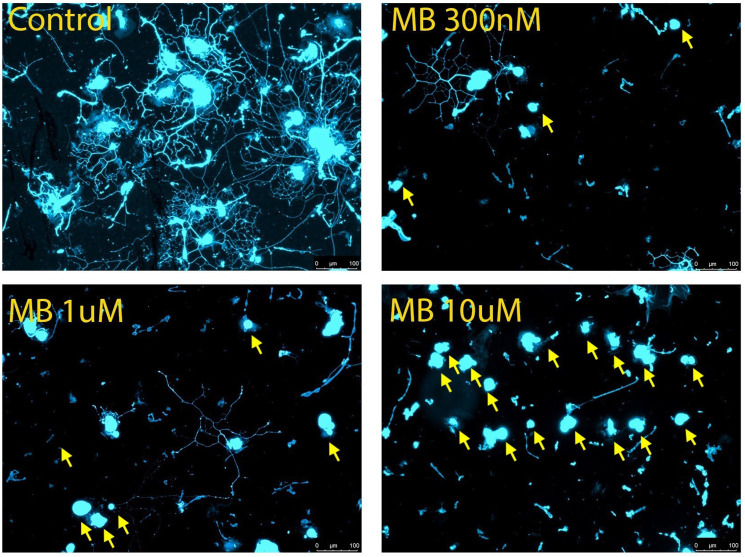
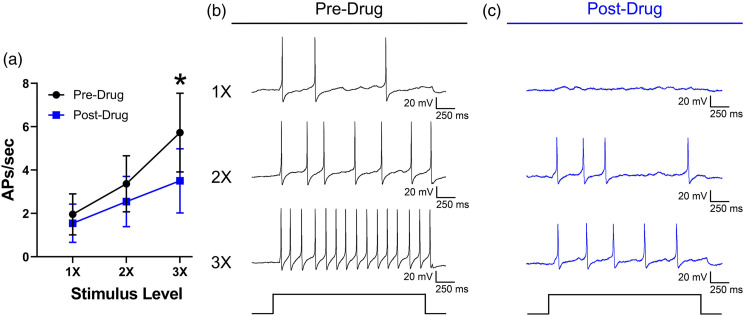
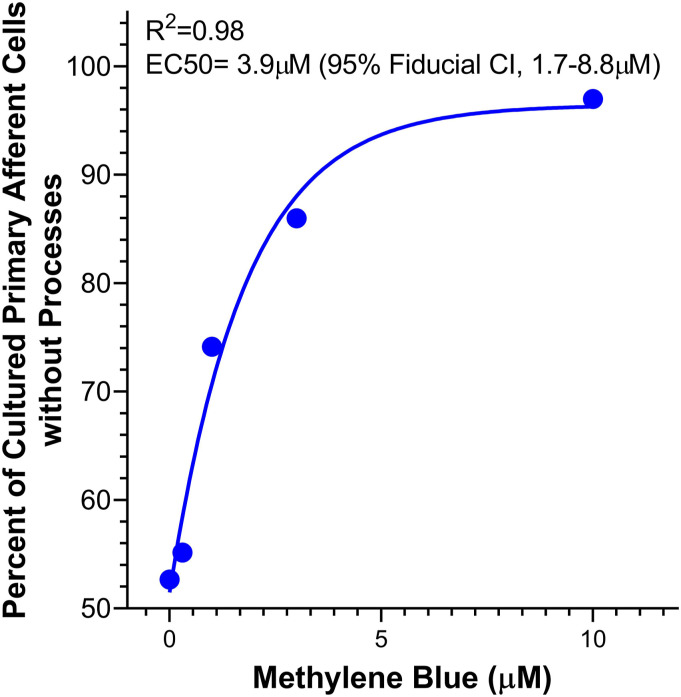
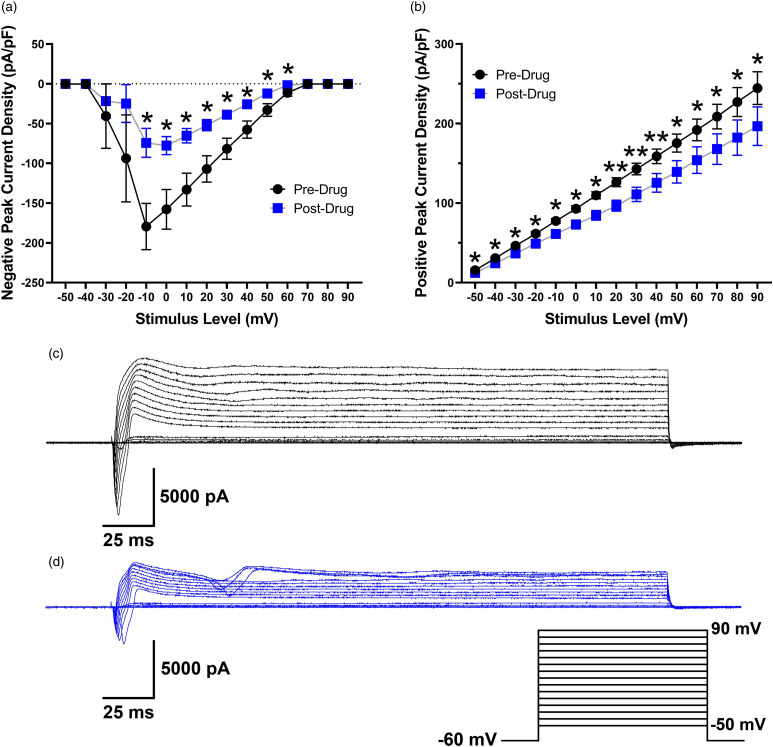
Methylene blue (MB) is an effective treatment for methemoglobinemia, ifosfamide-induced encephalopathy, cyanide poisoning, and refractory vasoplegia. However, clinical case reports and preclinical studies indicate potentially neurotoxic activity of MB at certain concentrations. The exact mechanisms of MB neurotoxicity are not known, and while the effects of MB on neuronal tissue from different brain regions and myenteric ganglia have been examined, its effects on primary afferent neurons from dorsal root ganglia (DRG) have not been studied. Mouse DRG were exposed to MB (0.3-10 μM) to assess neurite outgrowth. Increasing concentrations of MB (0.3-10 μM) were associated with neurotoxicity as shown by a substantial loss of cells with neurite formation, particularly at 10 μM. In parallel experiments, cultured rat DRG neurons were treated with MB (100 μM) to examine how MB affects electrical membrane properties of small-diameter sensory neurons. MB decreased peak inward and outward current densities, decreased action potential amplitude, overshoot, afterhyperpolarization, increased action potential rise time, and decreased action potential firing in response to current stimulation. MB induced dose-dependent toxicity in peripheral neurons, . These findings are consistent with studies in brain and myenteric ganglion neurons showing increased neuronal loss and altered membrane electrical properties after MB application. Further research is needed to parse out the toxicity profile for MB to minimize damage to neuronal structures and reduce side effects in clinical settings.
亚甲蓝(MB)是治疗高铁血红蛋白血症、异环磷酰胺诱导的脑病、氰化物中毒和难治性血管扩张的有效药物。然而,临床病例报告和临床前研究表明,MB 在某些浓度下可能具有神经毒性活性。MB 神经毒性的确切机制尚不清楚,虽然已经研究了 MB 对来自不同脑区和肌间神经节的神经元组织的影响,但尚未研究 MB 对背根神经节(DRG)初级传入神经元的影响。用 MB(0.3-10 μM)处理小鼠 DRG 以评估轴突生长。随着 MB 浓度(0.3-10 μM)的增加,神经元毒性显著增加,表现为具有轴突形成的细胞大量丢失,特别是在 10 μM 时。在平行实验中,用 MB(100 μM)处理培养的大鼠 DRG 神经元,以研究 MB 如何影响小直径感觉神经元的电膜特性。MB 降低了内向和外向电流密度峰值,降低了动作电位幅度、超射、后超极化、动作电位上升时间,并降低了对电流刺激的动作电位发放。MB 在周围神经元中诱导剂量依赖性毒性,。这些发现与在大脑和肌间神经节神经元中的研究一致,表明 MB 应用后神经元丢失增加和膜电特性改变。需要进一步研究以确定 MB 的毒性特征,以最大程度地减少对神经元结构的损害并减少临床环境中的副作用。