Laboratory of Cochlear Development, National Institute on Deafness and Other Communication Disorders, National Institutes of Health, Bethesda, MD 20892.
Proc Natl Acad Sci U S A. 2022 Nov 29;119(48):e2203935119. doi: 10.1073/pnas.2203935119. Epub 2022 Nov 21.
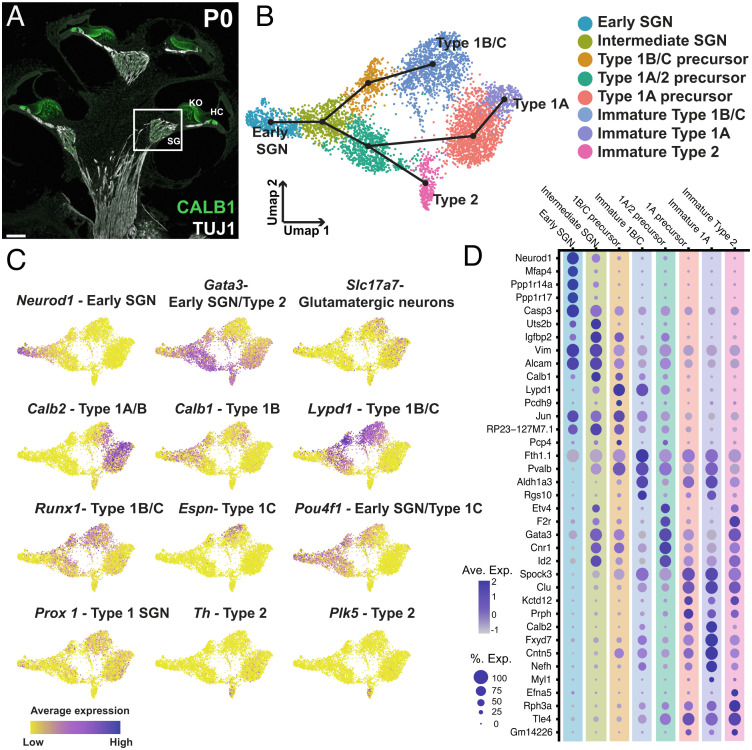
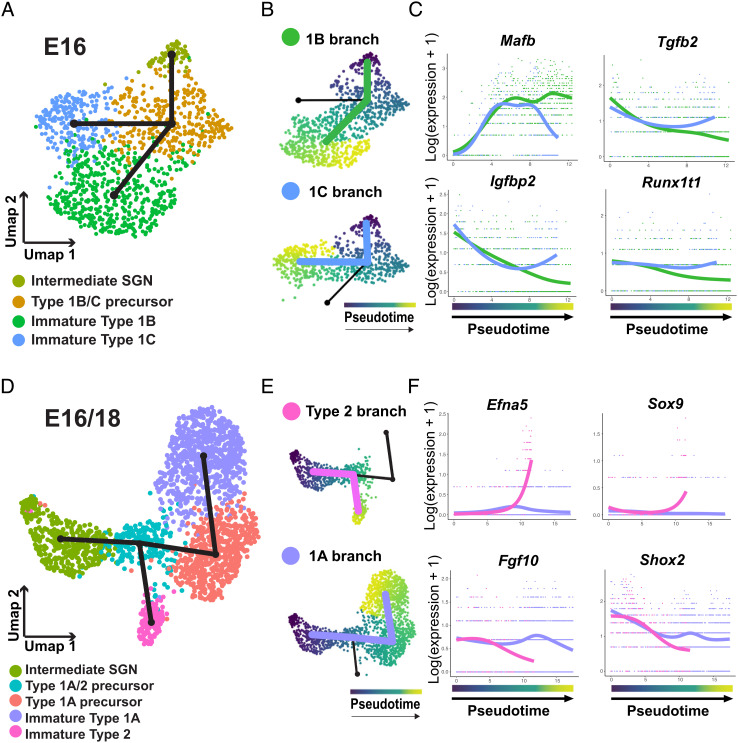
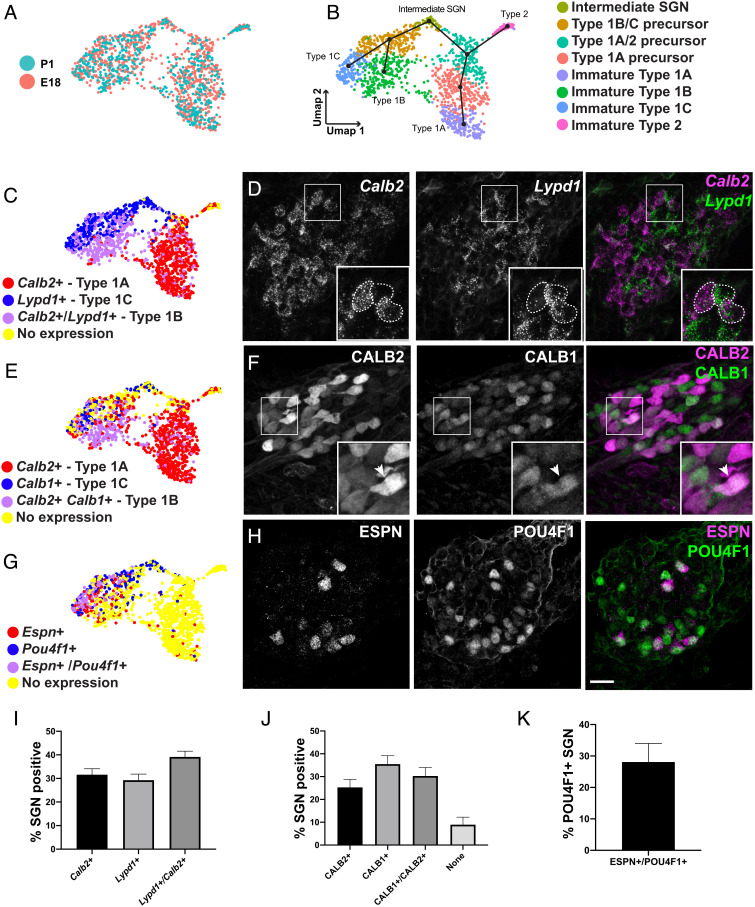
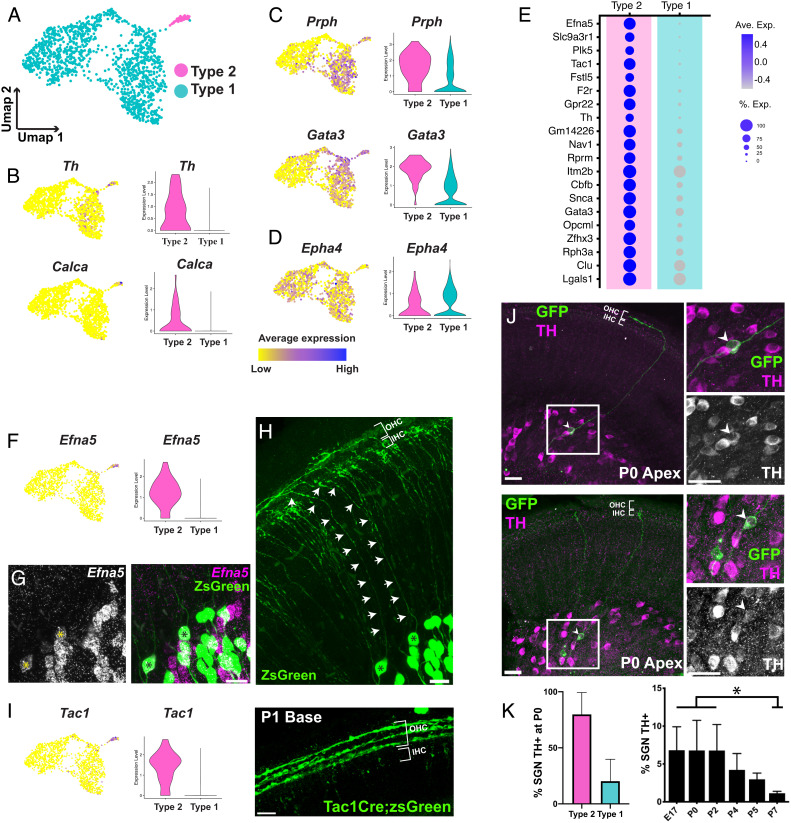
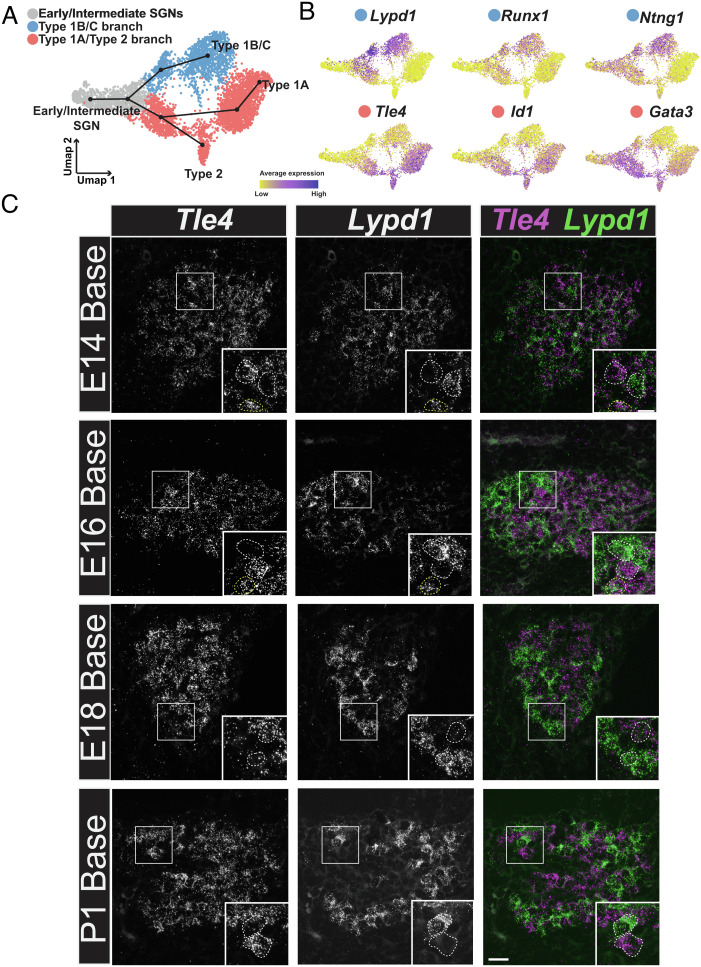
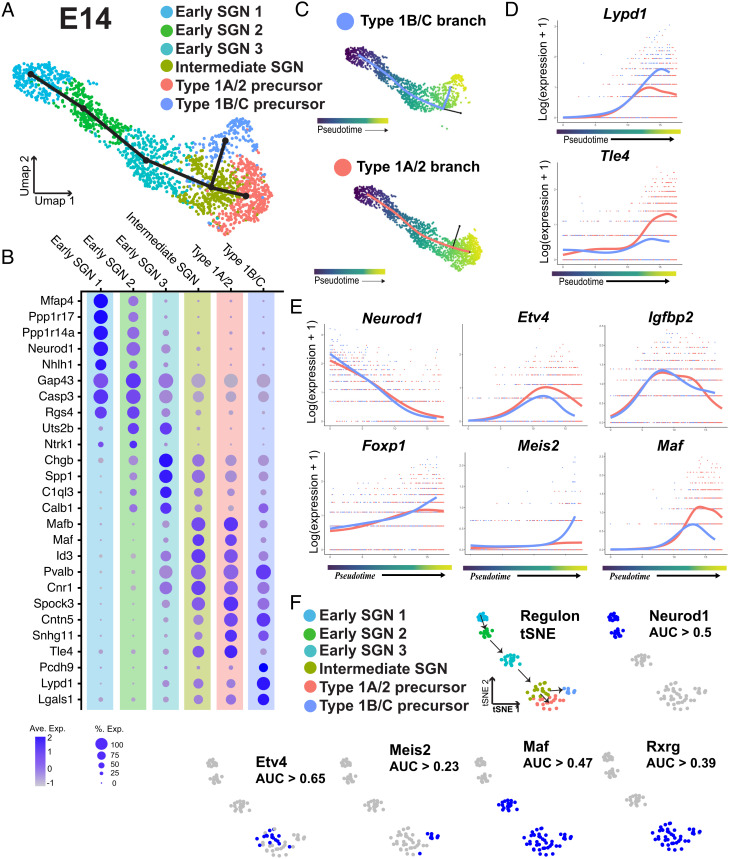
The afferent innervation of the cochlea is comprised of spiral ganglion neurons (SGNs), which are characterized into four subtypes (Type 1A, B, and C and Type 2). However, little is known about the factors and/or processes that determine each subtype. Here, we present a transcriptional analysis of approximately 5,500 single murine SGNs collected across four developmental time points. All four subtypes are transcriptionally identifiable prior to the onset of coordinated spontaneous activity, indicating that the initial specification process is under genetic control. Trajectory analysis indicates that SGNs initially split into two precursor types (Type 1A/2 and Type 1B/C), followed by subsequent splits to give rise to four transcriptionally distinct subtypes. Differential gene expression, pseudotime, and regulon analyses were used to identify candidate transcription factors which may regulate the subtypes specification process. These results provide insights into SGN development and comprise a transcriptional atlas of SGN maturation across the prenatal period.
耳蜗的传入神经支配由螺旋神经节神经元(SGN)组成,这些神经元可分为四个亚型(1A 型、B 型、C 型和 2 型)。然而,对于决定每个亚型的因素和/或过程知之甚少。在这里,我们对大约 5500 个来自四个发育时间点的单个小鼠 SGN 进行了转录组分析。所有四个亚型在协调自发活动开始之前在转录上都是可识别的,这表明初始的特化过程受遗传控制。轨迹分析表明,SGN 最初分为两种前体细胞类型(1A/2 型和 1B/C 型),然后进一步分裂产生四个在转录上明显不同的亚型。差异基因表达、伪时间和调控因子分析用于鉴定可能调节亚型特化过程的候选转录因子。这些结果为 SGN 发育提供了深入了解,并构成了产前 SGN 成熟的转录图谱。