Laboratory of Molecular Genetics & Immunology, The Rockefeller University, New York, NY 10065.
Department of Chemistry and Biochemistry, University of Maryland, College Park, MD 20742.
Proc Natl Acad Sci U S A. 2022 Nov 29;119(48):e2212658119. doi: 10.1073/pnas.2212658119. Epub 2022 Nov 21.
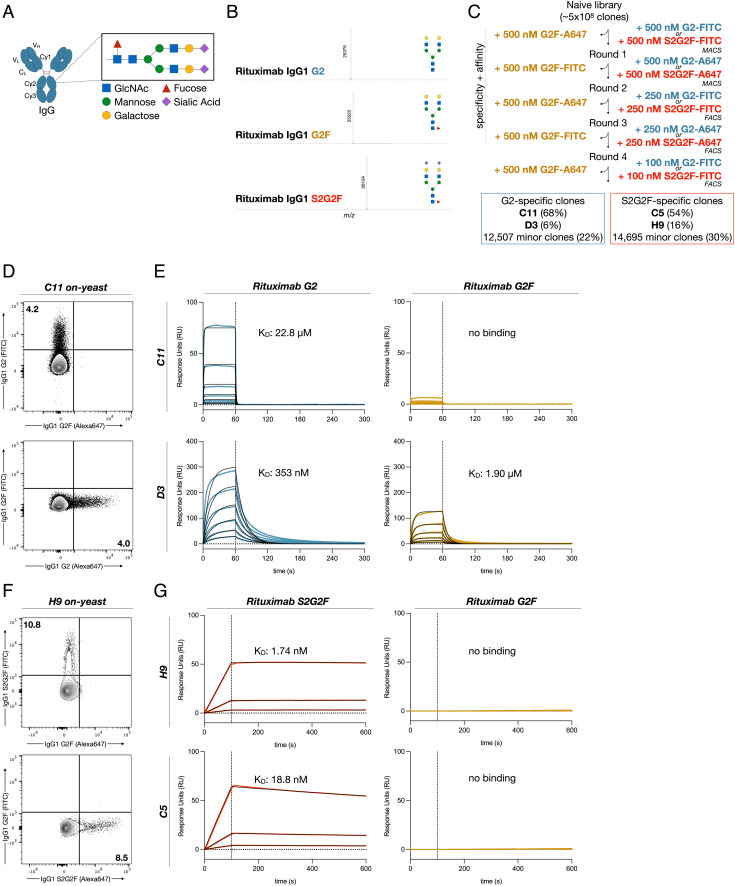
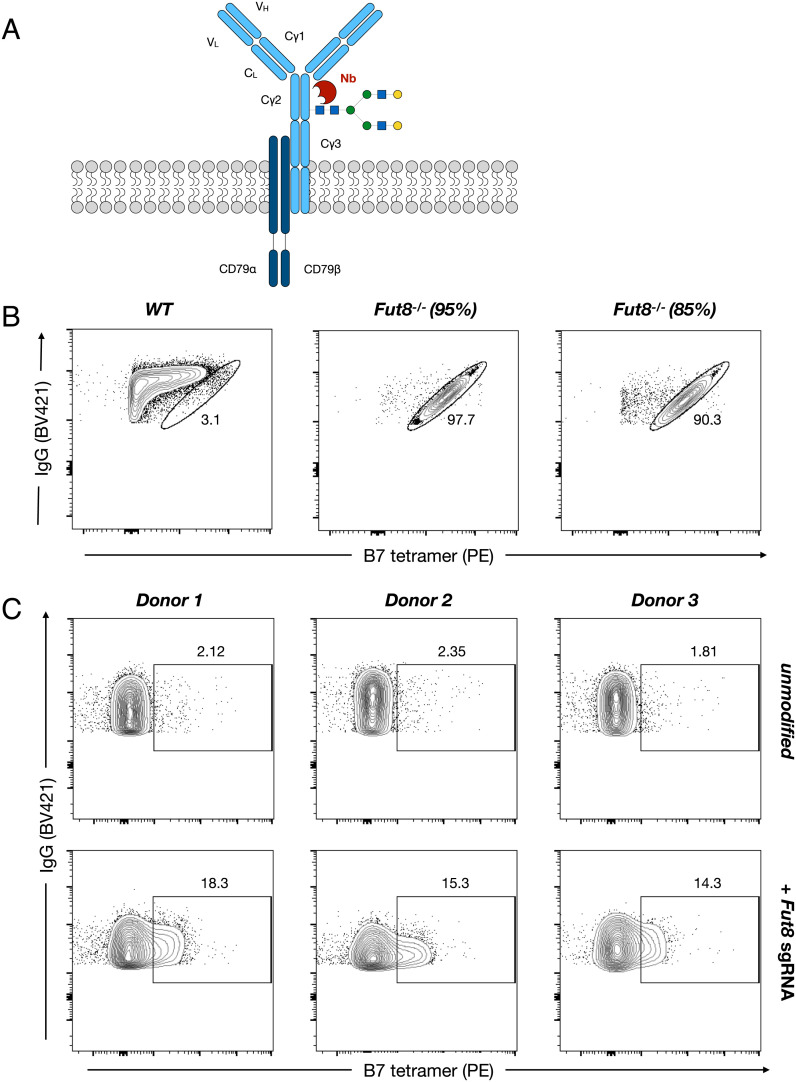
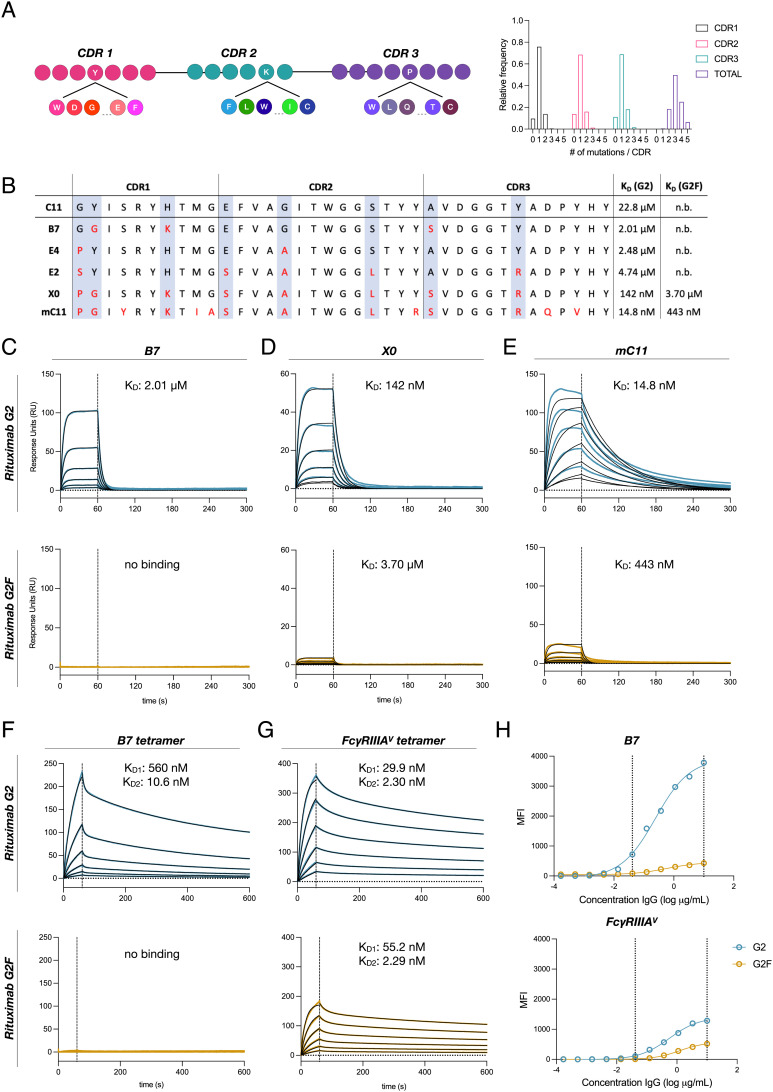
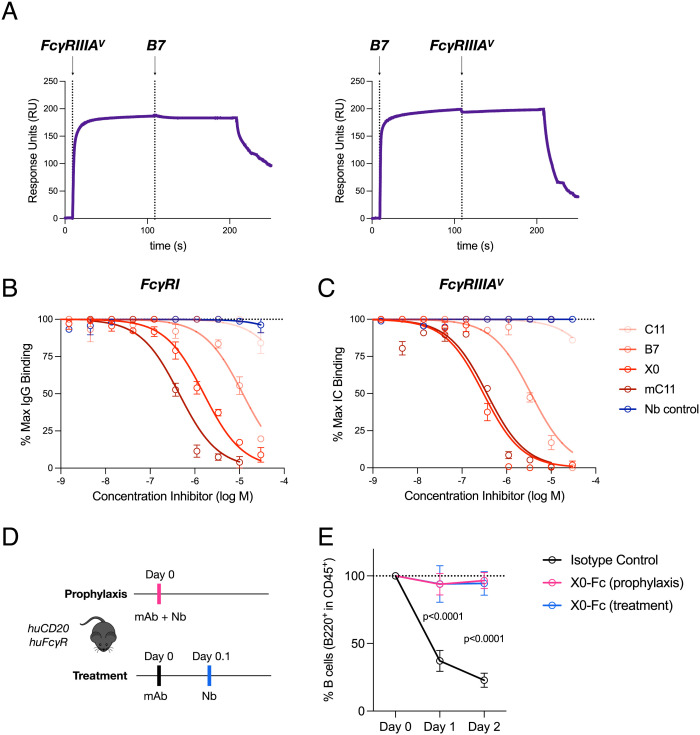
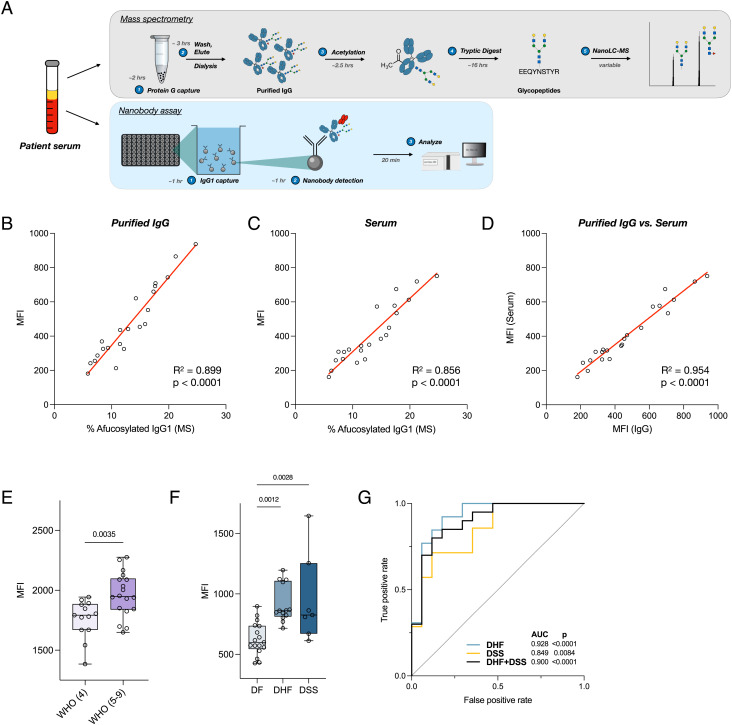
Protein glycosylation is a crucial mediator of biological functions and is tightly regulated in health and disease. However, interrogating complex protein glycoforms is challenging, as current lectin tools are limited by cross-reactivity while mass spectrometry typically requires biochemical purification and isolation of the target protein. Here, we describe a method to identify and characterize a class of nanobodies that can distinguish glycoforms without reactivity to off-target glycoproteins or glycans. We apply this technology to immunoglobulin G (IgG) Fc glycoforms and define nanobodies that specifically recognize either IgG lacking its core-fucose or IgG bearing terminal sialic acid residues. By adapting these tools to standard biochemical methods, we can clinically stratify dengue virus and SARS-CoV-2 infected individuals based on their IgG glycan profile, selectively disrupt IgG-Fcγ receptor binding both in vitro and in vivo, and interrogate the B cell receptor (BCR) glycan structure on living cells. Ultimately, we provide a strategy for the development of reagents to identify and manipulate IgG Fc glycoforms.
蛋白质糖基化是生物功能的重要介质,在健康和疾病中受到严格调控。然而,目前的凝集素工具由于交叉反应性而受到限制,而质谱通常需要对目标蛋白进行生化纯化和分离,因此对复杂的蛋白质糖型进行分析具有挑战性。在这里,我们描述了一种鉴定和表征一类纳米抗体的方法,这些纳米抗体可以区分糖型,而不会与非靶标糖蛋白或聚糖发生反应。我们将这项技术应用于免疫球蛋白 G (IgG) Fc 糖型,并定义了特异性识别 IgG 缺乏核心岩藻糖或 IgG 带有末端唾液酸残基的纳米抗体。通过将这些工具应用于标准的生化方法,我们可以根据 IgG 聚糖谱对登革热病毒和 SARS-CoV-2 感染个体进行临床分层,在体外和体内选择性地破坏 IgG-Fcγ 受体结合,并在活细胞上研究 B 细胞受体 (BCR) 聚糖结构。最终,我们提供了一种开发用于识别和操纵 IgG Fc 糖型的试剂的策略。