• 文献检索
  • 文档翻译
  • 深度研究
  • 学术资讯
  • Suppr Zotero 插件Zotero 插件
  • 邀请有礼
  • 套餐&价格
  • 历史记录
应用&插件
Suppr Zotero 插件Zotero 插件浏览器插件Mac 客户端Windows 客户端微信小程序
定价
高级版会员购买积分包购买API积分包
服务
文献检索文档翻译深度研究API 文档MCP 服务
关于我们
关于 Suppr公司介绍联系我们用户协议隐私条款
关注我们

Suppr 超能文献

核心技术专利:CN118964589B侵权必究
粤ICP备2023148730 号-1Suppr @ 2026

文献检索

告别复杂PubMed语法,用中文像聊天一样搜索,搜遍4000万医学文献。AI智能推荐,让科研检索更轻松。

立即免费搜索

文件翻译

保留排版,准确专业,支持PDF/Word/PPT等文件格式,支持 12+语言互译。

免费翻译文档

深度研究

AI帮你快速写综述,25分钟生成高质量综述,智能提取关键信息,辅助科研写作。

立即免费体验

机器学习模型预测早期 2 型糖尿病患者心衰和慢性肾脏病的发生。

Machine learning models for prediction of HF and CKD development in early-stage type 2 diabetes patients.

机构信息

Medical Science, Kawasaki Medical University, Okayama, Japan.

Department of Endocrinology, Diabetes and Metabolism, Fujita Health University, Toyoake, Aichi, Japan.

出版信息

Sci Rep. 2022 Nov 21;12(1):20012. doi: 10.1038/s41598-022-24562-2.

DOI:10.1038/s41598-022-24562-2
PMID:36411366
原文链接:https://pmc.ncbi.nlm.nih.gov/articles/PMC9678863/
Abstract

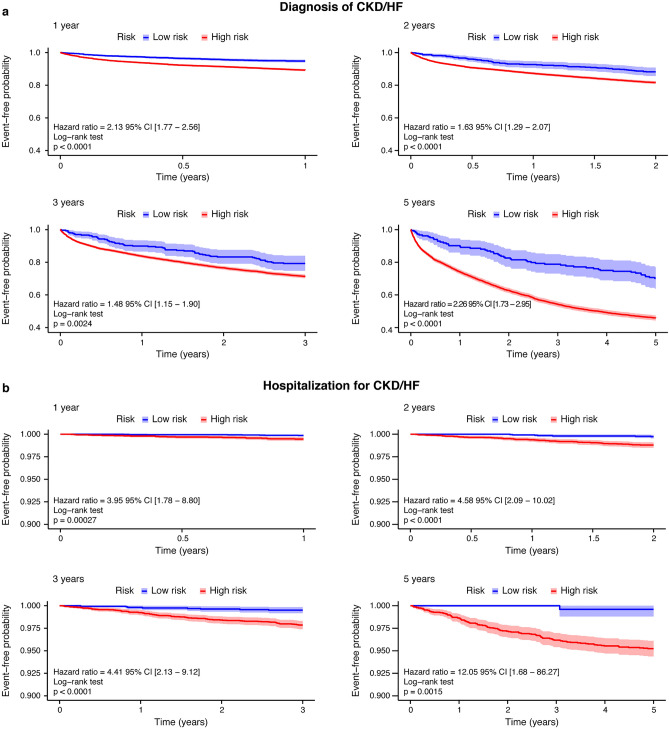
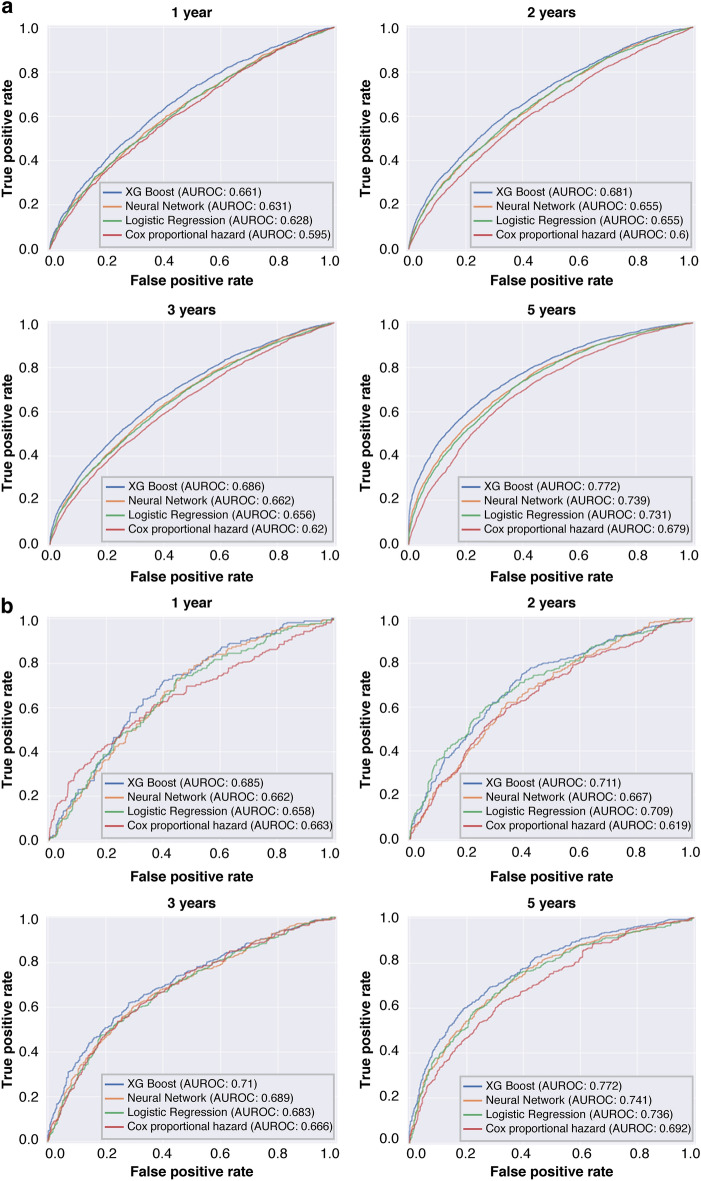
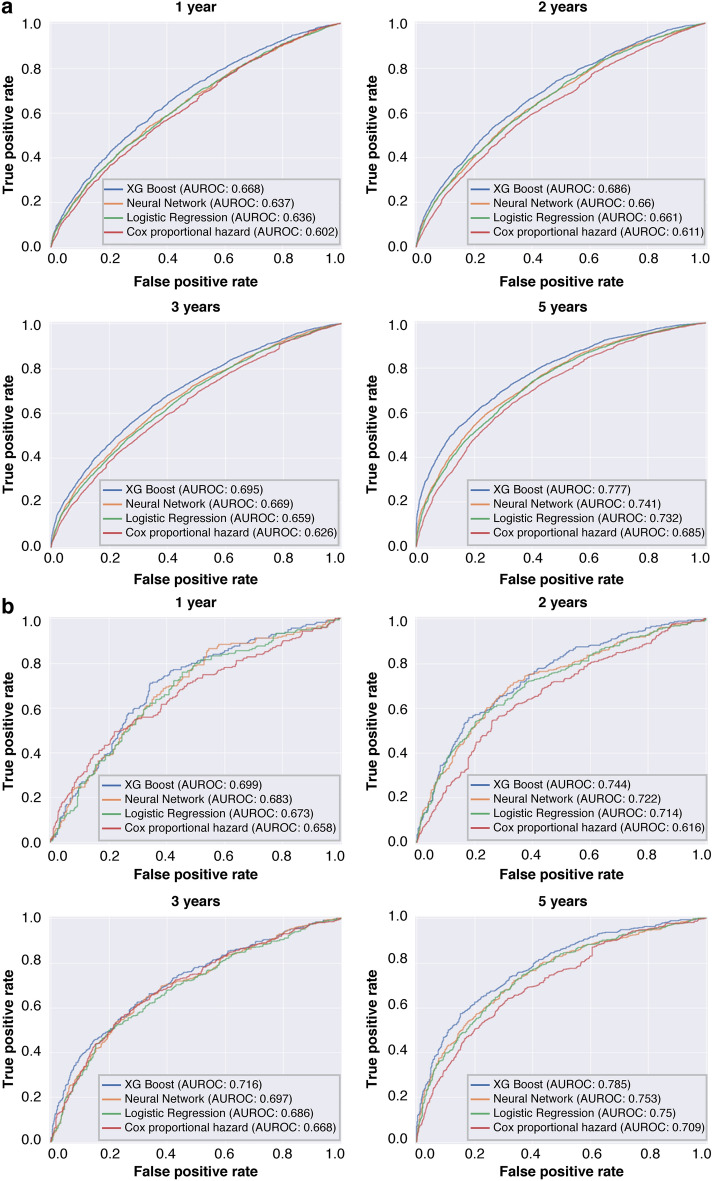
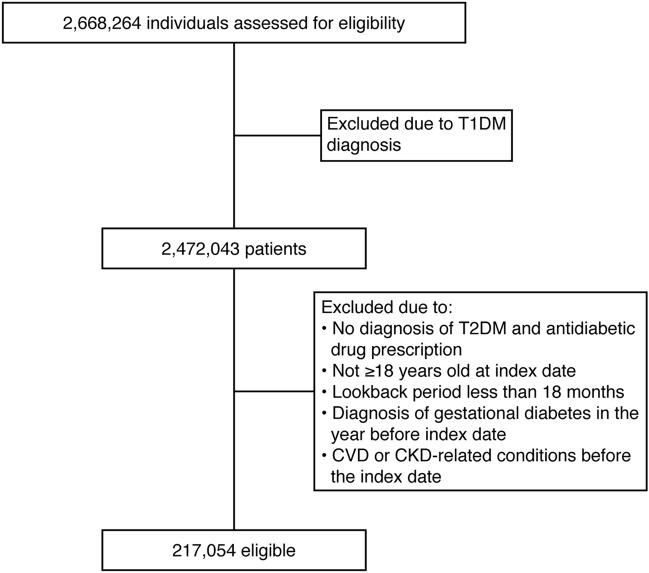
Chronic kidney disease (CKD) and heart failure (HF) are the first and most frequent comorbidities associated with mortality risks in early-stage type 2 diabetes mellitus (T2DM). However, efficient screening and risk assessment strategies for identifying T2DM patients at high risk of developing CKD and/or HF (CKD/HF) remains to be established. This study aimed to generate a novel machine learning (ML) model to predict the risk of developing CKD/HF in early-stage T2DM patients. The models were derived from a retrospective cohort of 217,054 T2DM patients without a history of cardiovascular and renal diseases extracted from a Japanese claims database. Among algorithms used for the ML, extreme gradient boosting exhibited the best performance for CKD/HF diagnosis and hospitalization after internal validation and was further validated using another dataset including 16,822 patients. In the external validation, 5-years prediction area under the receiver operating characteristic curves for CKD/HF diagnosis and hospitalization were 0.718 and 0.837, respectively. In Kaplan-Meier curves analysis, patients predicted to be at high risk showed significant increase in CKD/HF diagnosis and hospitalization compared with those at low risk. Thus, the developed model predicted the risk of developing CKD/HF in T2DM patients with reasonable probability in the external validation cohort. Clinical approach identifying T2DM at high risk of developing CKD/HF using ML models may contribute to improved prognosis by promoting early diagnosis and intervention.

摘要

慢性肾脏病 (CKD) 和心力衰竭 (HF) 是与早期 2 型糖尿病 (T2DM) 相关的死亡率的首要和最常见的合并症。然而,仍然需要建立有效的筛选和风险评估策略,以识别发生 CKD 和/或 HF(CKD/HF)风险较高的 T2DM 患者。本研究旨在生成一种新的机器学习 (ML) 模型,以预测早期 T2DM 患者发生 CKD/HF 的风险。该模型源自一个从日本索赔数据库中提取的 217054 名无心血管和肾脏疾病病史的 T2DM 患者的回顾性队列。在用于 ML 的算法中,极端梯度增强在内部验证后对 CKD/HF 诊断和住院的表现最佳,并使用另一个包含 16822 名患者的数据集进行了进一步验证。在外部验证中,用于 CKD/HF 诊断和住院的 5 年预测接受者操作特征曲线下面积分别为 0.718 和 0.837。在 Kaplan-Meier 曲线分析中,与低风险患者相比,预测为高风险的患者在 CKD/HF 诊断和住院方面显著增加。因此,在外部验证队列中,开发的模型以合理的概率预测了 T2DM 患者发生 CKD/HF 的风险。使用 ML 模型识别发生 CKD/HF 风险较高的 T2DM 的临床方法可能通过促进早期诊断和干预来改善预后。
https://cdn.ncbi.nlm.nih.gov/pmc/blobs/7c9c/9678863/335f92b16663/41598_2022_24562_Fig6_HTML.jpg
https://cdn.ncbi.nlm.nih.gov/pmc/blobs/7c9c/9678863/9c128e2a0ccf/41598_2022_24562_Fig1_HTML.jpg
https://cdn.ncbi.nlm.nih.gov/pmc/blobs/7c9c/9678863/ce195cc1b301/41598_2022_24562_Fig2_HTML.jpg
https://cdn.ncbi.nlm.nih.gov/pmc/blobs/7c9c/9678863/cd7a03c19815/41598_2022_24562_Fig3_HTML.jpg
https://cdn.ncbi.nlm.nih.gov/pmc/blobs/7c9c/9678863/9a7c554a76d5/41598_2022_24562_Fig4_HTML.jpg
https://cdn.ncbi.nlm.nih.gov/pmc/blobs/7c9c/9678863/ebc88542cd63/41598_2022_24562_Fig5_HTML.jpg
https://cdn.ncbi.nlm.nih.gov/pmc/blobs/7c9c/9678863/335f92b16663/41598_2022_24562_Fig6_HTML.jpg
https://cdn.ncbi.nlm.nih.gov/pmc/blobs/7c9c/9678863/9c128e2a0ccf/41598_2022_24562_Fig1_HTML.jpg
https://cdn.ncbi.nlm.nih.gov/pmc/blobs/7c9c/9678863/ce195cc1b301/41598_2022_24562_Fig2_HTML.jpg
https://cdn.ncbi.nlm.nih.gov/pmc/blobs/7c9c/9678863/cd7a03c19815/41598_2022_24562_Fig3_HTML.jpg
https://cdn.ncbi.nlm.nih.gov/pmc/blobs/7c9c/9678863/9a7c554a76d5/41598_2022_24562_Fig4_HTML.jpg
https://cdn.ncbi.nlm.nih.gov/pmc/blobs/7c9c/9678863/ebc88542cd63/41598_2022_24562_Fig5_HTML.jpg
https://cdn.ncbi.nlm.nih.gov/pmc/blobs/7c9c/9678863/335f92b16663/41598_2022_24562_Fig6_HTML.jpg

相似文献

1
Machine learning models for prediction of HF and CKD development in early-stage type 2 diabetes patients.机器学习模型预测早期 2 型糖尿病患者心衰和慢性肾脏病的发生。
Sci Rep. 2022 Nov 21;12(1):20012. doi: 10.1038/s41598-022-24562-2.
2
Cardiovascular and renal diseases in type 2 diabetes patients: 5-year cumulative incidence of the first occurred manifestation and hospitalization cost: a cohort within the French SNDS nationwide claims database.2 型糖尿病患者的心血管和肾脏疾病:首次发病表现和住院费用的 5 年累积发生率:法国全国索赔数据库 SNDS 中的一个队列。
Cardiovasc Diabetol. 2024 Jan 9;23(1):22. doi: 10.1186/s12933-023-02101-1.
3
Chronic kidney disease begets heart failure and vice versa: temporal associations between heart failure events in relation to incident chronic kidney disease in type 2 diabetes.慢性肾脏病引发心力衰竭,反之亦然:2型糖尿病患者中与新发慢性肾脏病相关的心力衰竭事件之间的时间关联。
Diabetes Obes Metab. 2023 Mar;25(3):707-715. doi: 10.1111/dom.14916. Epub 2022 Nov 29.
4
Risk factors, outcomes and healthcare utilisation in individuals with multimorbidity including heart failure, chronic kidney disease and type 2 diabetes mellitus: a national electronic health record study.患有心力衰竭、慢性肾脏病和 2 型糖尿病等多种疾病的个体的风险因素、结局和医疗保健利用情况:一项全国性电子健康记录研究。
Open Heart. 2023 Sep;10(2). doi: 10.1136/openhrt-2023-002332.
5
Machine Learning to Predict the Risk of Incident Heart Failure Hospitalization Among Patients With Diabetes: The WATCH-DM Risk Score.机器学习预测糖尿病患者心力衰竭住院风险:WATCH-DM 风险评分。
Diabetes Care. 2019 Dec;42(12):2298-2306. doi: 10.2337/dc19-0587. Epub 2019 Sep 13.
6
Impact of Cardio-Renal-Metabolic Comorbidities on Cardiovascular Outcomes and Mortality in Type 2 Diabetes Mellitus.心脏-肾脏-代谢合并症对 2 型糖尿病患者心血管结局和死亡率的影响。
Am J Nephrol. 2020;51(1):74-82. doi: 10.1159/000504558. Epub 2019 Dec 6.
7
Manifestation of Heart Failure and Chronic Kidney Disease are Associated with Increased Mortality Risk in Early Stages of Type 2 Diabetes Mellitus: Analysis of a Japanese Real-World Hospital Claims Database.心力衰竭和慢性肾脏病的表现与2型糖尿病早期死亡风险增加相关:基于日本真实世界医院理赔数据库的分析
Diabetes Ther. 2022 Feb;13(2):275-286. doi: 10.1007/s13300-021-01191-y. Epub 2022 Jan 10.
8
Development and internal validation of machine learning algorithms for end-stage renal disease risk prediction model of people with type 2 diabetes mellitus and diabetic kidney disease.机器学习算法在 2 型糖尿病合并糖尿病肾病患者终末期肾病风险预测模型中的开发与内部验证。
Ren Fail. 2022 Dec;44(1):562-570. doi: 10.1080/0886022X.2022.2056053.
9
Effect of multimorbidity on survival of patients diagnosed with heart failure: a retrospective cohort study in Singapore.共病对心力衰竭诊断患者生存的影响:新加坡的一项回顾性队列研究。
BMJ Open. 2018 May 20;8(5):e021291. doi: 10.1136/bmjopen-2017-021291.
10
Lower risk of hospitalization for heart failure, kidney disease and death with sodium-glucose co-transporter-2 inhibitors compared with dipeptidyl peptidase-4 inhibitors in type 2 diabetes regardless of prior cardiovascular or kidney disease: A retrospective cohort study in UK primary care.钠-葡萄糖共转运蛋白 2 抑制剂与二肽基肽酶-4 抑制剂相比,在 2 型糖尿病患者中无论是否存在心血管或肾脏疾病,均可降低心力衰竭、肾脏疾病和死亡的住院风险:英国初级保健中的一项回顾性队列研究。
Diabetes Obes Metab. 2021 Oct;23(10):2207-2214. doi: 10.1111/dom.14437. Epub 2021 Aug 2.

引用本文的文献

1
Predicting the risks of stroke, cardiovascular disease, and peripheral vascular disease among people with type 2 diabetes with artificial intelligence models: A systematic review and meta-analysis.使用人工智能模型预测2型糖尿病患者中风、心血管疾病和外周血管疾病的风险:一项系统综述和荟萃分析。
Narra J. 2025 Apr;5(1):e2116. doi: 10.52225/narra.v5i1.2116. Epub 2025 Mar 19.
2
Development of Artificial Intelligence Systems for Chronic Kidney Disease.慢性肾脏病人工智能系统的开发
JMA J. 2025 Jan 15;8(1):48-56. doi: 10.31662/jmaj.2024-0090. Epub 2024 Sep 6.
3
Development and external validation of a machine learning model to predict diabetic nephropathy in T1DM patients in the real-world.

本文引用的文献

1
Indoor transmission of airborne viral aerosol with a simplistic reaction-diffusion model.基于简单反应扩散模型的空气传播病毒气溶胶的室内传播
Eur Phys J Spec Top. 2022;231(18-20):3591-3601. doi: 10.1140/epjs/s11734-022-00614-6. Epub 2022 May 30.
2
An extended epidemic model with vaccination: Weak-immune SIRVI.一种带有疫苗接种的扩展流行病模型:弱免疫SIRVI模型
Physica A. 2022 Jul 15;598:127429. doi: 10.1016/j.physa.2022.127429. Epub 2022 Apr 22.
3
Prediction of 3-year risk of diabetic kidney disease using machine learning based on electronic medical records.
用于预测现实世界中1型糖尿病患者糖尿病肾病的机器学习模型的开发与外部验证
Acta Diabetol. 2024 Nov 11. doi: 10.1007/s00592-024-02404-z.
4
Predictive model and risk analysis for peripheral vascular disease in type 2 diabetes mellitus patients using machine learning and shapley additive explanation.基于机器学习和 Shapley 加法解释的 2 型糖尿病患者外周血管疾病预测模型和风险分析。
Front Endocrinol (Lausanne). 2024 Feb 28;15:1320335. doi: 10.3389/fendo.2024.1320335. eCollection 2024.
5
Impact of Residential Social Deprivation on Prediction of Heart Failure in Patients With Type 2 Diabetes: External Validation and Recalibration of the WATCH-DM Score Using Real World Data.居住社会剥夺对 2 型糖尿病患者心力衰竭预测的影响:使用真实世界数据对 WATCH-DM 评分进行外部验证和再校准。
Circ Cardiovasc Qual Outcomes. 2024 Mar;17(3):e010166. doi: 10.1161/CIRCOUTCOMES.123.010166. Epub 2024 Feb 8.
6
Predicting CKD progression using time-series clustering and light gradient boosting machines.利用时间序列聚类和轻量级梯度提升机预测 CKD 进展。
Sci Rep. 2024 Jan 19;14(1):1723. doi: 10.1038/s41598-024-52251-9.
7
Machine Learning Models for Prediction of Diabetic Microvascular Complications.机器学习模型预测糖尿病微血管并发症。
J Diabetes Sci Technol. 2024 Mar;18(2):273-286. doi: 10.1177/19322968231223726. Epub 2024 Jan 8.
8
Increasing transparency in machine learning through bootstrap simulation and shapely additive explanations.通过引导模拟和 Shapley 加性解释提高机器学习的透明度。
PLoS One. 2023 Feb 23;18(2):e0281922. doi: 10.1371/journal.pone.0281922. eCollection 2023.
基于电子病历的机器学习预测糖尿病肾病 3 年风险。
J Transl Med. 2022 Mar 26;20(1):143. doi: 10.1186/s12967-022-03339-1.
4
Manifestation of Heart Failure and Chronic Kidney Disease are Associated with Increased Mortality Risk in Early Stages of Type 2 Diabetes Mellitus: Analysis of a Japanese Real-World Hospital Claims Database.心力衰竭和慢性肾脏病的表现与2型糖尿病早期死亡风险增加相关:基于日本真实世界医院理赔数据库的分析
Diabetes Ther. 2022 Feb;13(2):275-286. doi: 10.1007/s13300-021-01191-y. Epub 2022 Jan 10.
5
Recent advances in diabetic kidney disease.糖尿病肾病的最新进展
BMC Med. 2021 Aug 17;19(1):180. doi: 10.1186/s12916-021-02050-0.
6
Machine Learning-Based Cardiovascular Disease Prediction Model: A Cohort Study on the Korean National Health Insurance Service Health Screening Database.基于机器学习的心血管疾病预测模型:对韩国国民健康保险服务健康筛查数据库的队列研究
Diagnostics (Basel). 2021 May 25;11(6):943. doi: 10.3390/diagnostics11060943.
7
A qualitative study documenting unmet needs in the management of diabetic kidney disease (DKD) in the primary care setting.一项定性研究,记录了初级医疗环境中糖尿病肾病(DKD)管理方面未满足的需求。
BMC Public Health. 2021 May 17;21(1):930. doi: 10.1186/s12889-021-10959-7.
8
Comorbidities and complications in Japanese patients with type 2 diabetes mellitus: Retrospective analyses of J-DREAMS, an advanced electronic medical records database.日本2型糖尿病患者的合并症与并发症:对先进电子病历数据库J-DREAMS的回顾性分析
Diabetes Res Clin Pract. 2021 Aug;178:108845. doi: 10.1016/j.diabres.2021.108845. Epub 2021 Apr 30.
9
Explicit formulae for the peak time of an epidemic from the SIR model.基于SIR模型的传染病流行高峰时间的显式公式。
Physica D. 2021 Aug;422:132902. doi: 10.1016/j.physd.2021.132902. Epub 2021 Mar 26.
10
Derivation and validation of a machine learning risk score using biomarker and electronic patient data to predict progression of diabetic kidney disease.基于生物标志物和电子患者数据的机器学习风险评分的推导和验证,以预测糖尿病肾脏疾病的进展。
Diabetologia. 2021 Jul;64(7):1504-1515. doi: 10.1007/s00125-021-05444-0. Epub 2021 Apr 2.