Shaanxi Key Laboratory of Degradable Biomedical Materials, School of Chemical Engineering, Northwest University, Xi'an 710069, China.
Shaanxi R&D Center of Biomaterials and Fermentation Engineering, School of Chemical Engineering, Northwest University, Xi'an 710069, China.
Int J Mol Sci. 2022 Nov 11;23(22):13921. doi: 10.3390/ijms232213921.
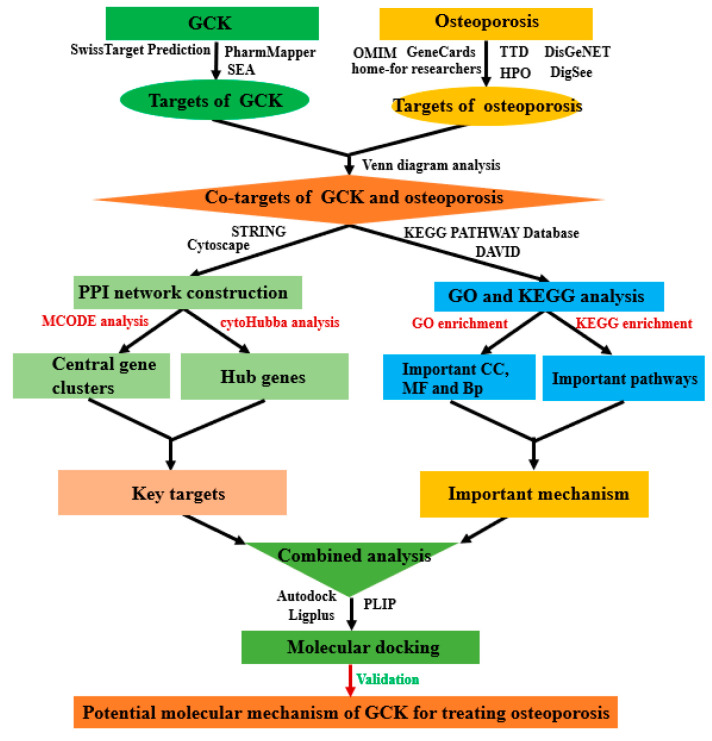
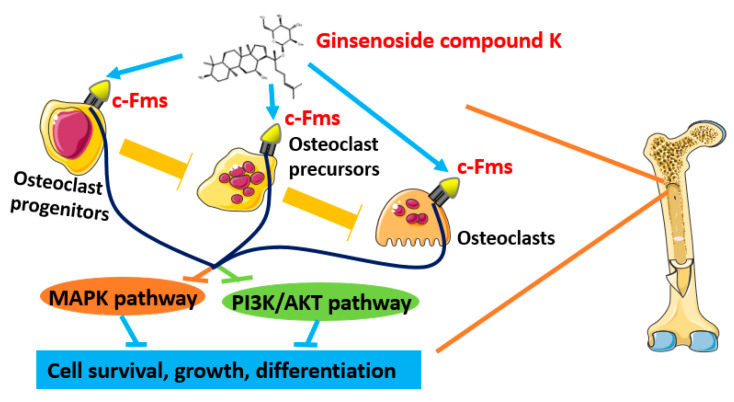
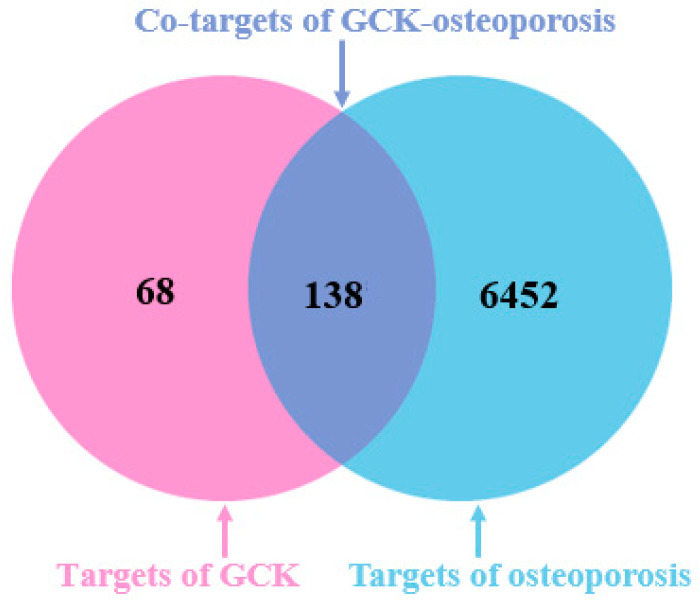
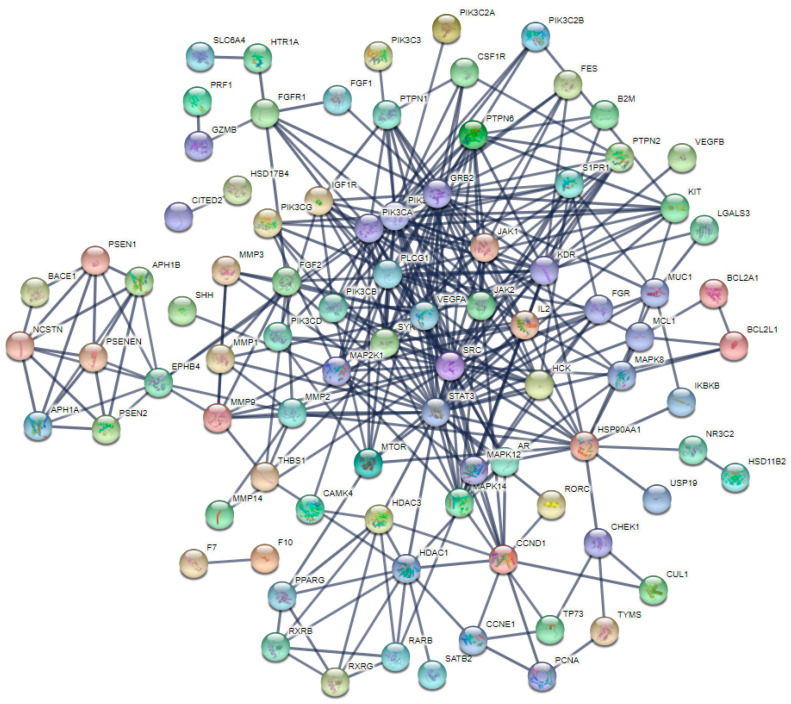
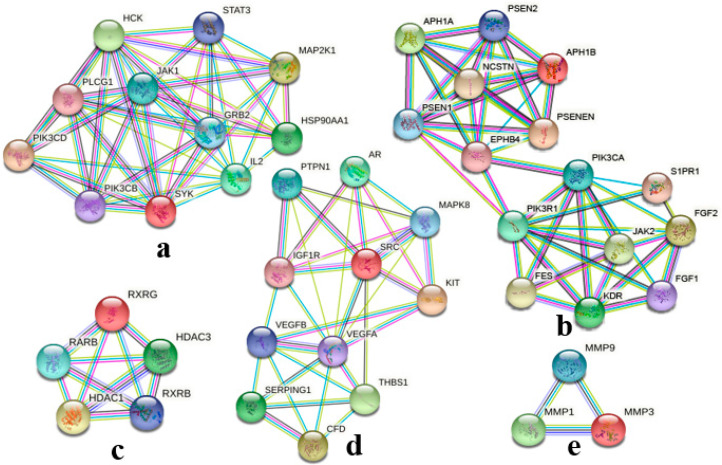
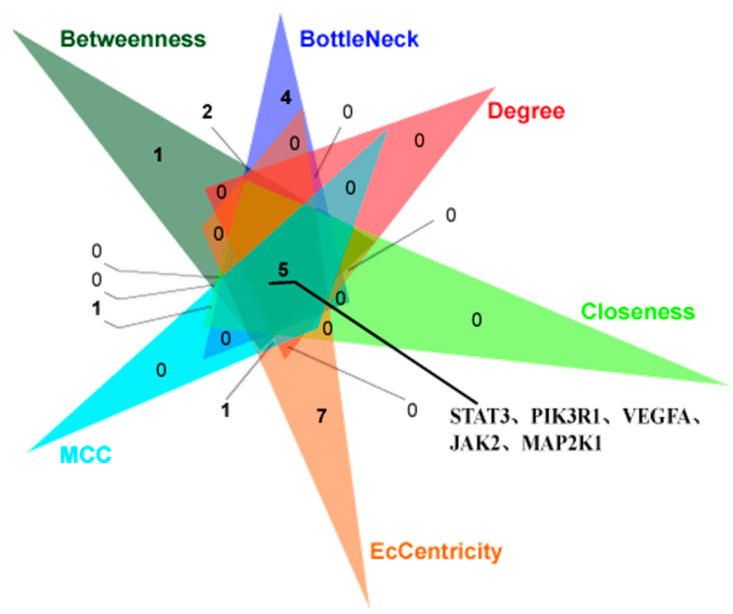
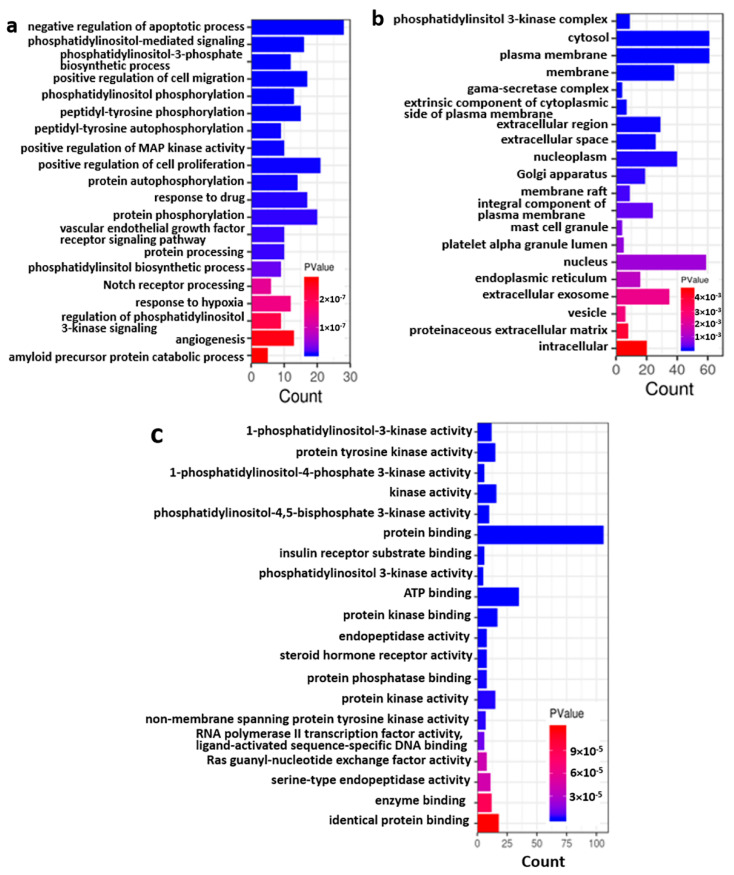
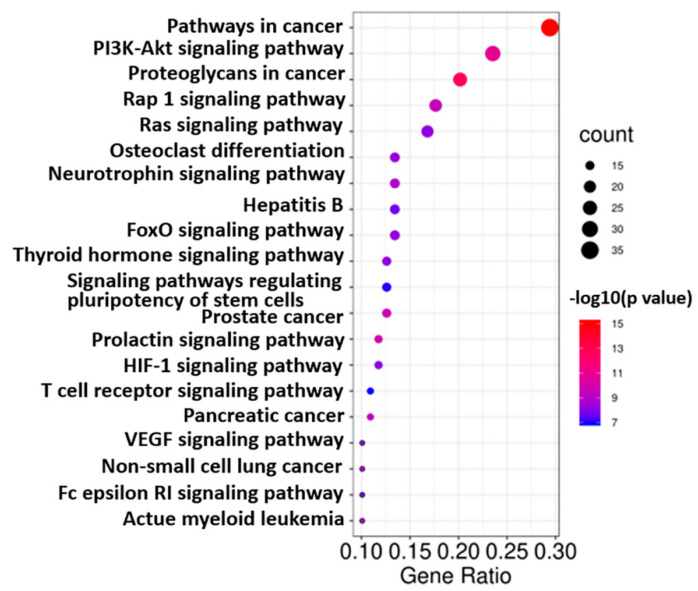
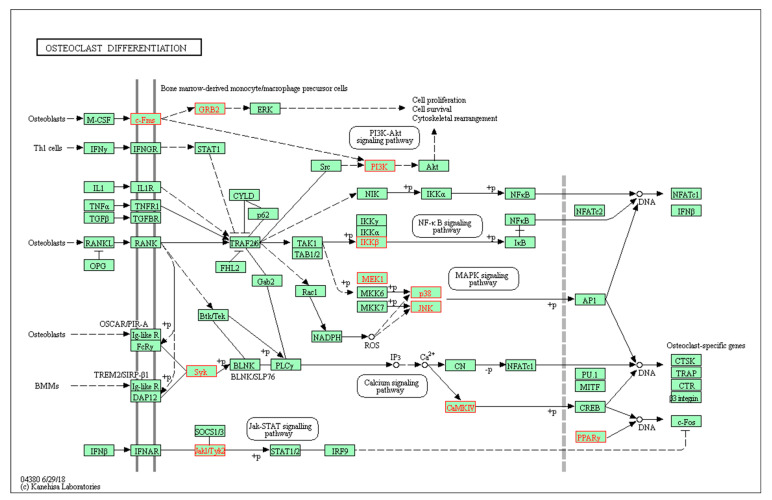
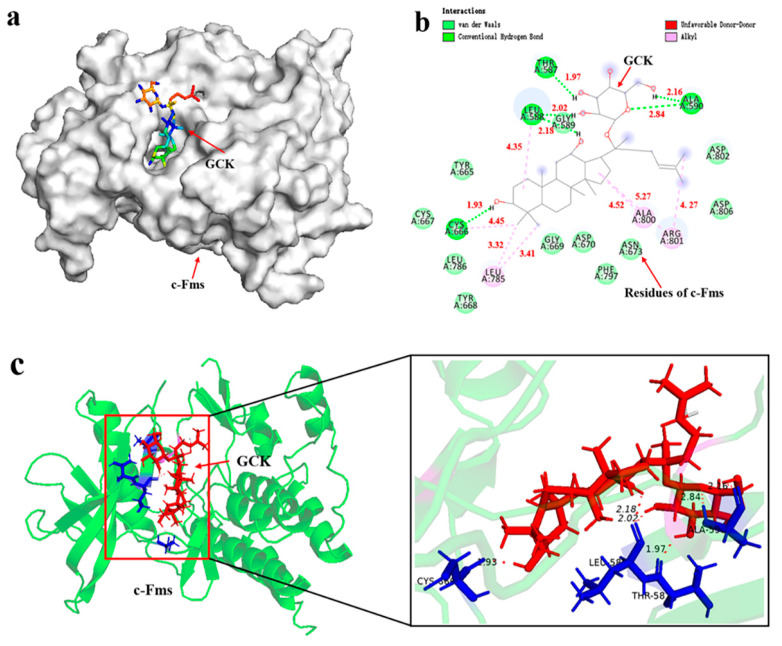
To investigate the potential of ginsenosides in treating osteoporosis, ginsenoside compound K (GCK) was selected to explore the potential targets and mechanism based on network pharmacology (NP). Based on text mining from public databases, 206 and 6590 targets were obtained for GCK and osteoporosis, respectively, in which 138 targets were identified as co-targets of GCK and osteoporosis using intersection analysis. Five central gene clusters and key genes (STAT3, PIK3R1, VEGFA, JAK2 and MAP2K1) were identified based on Molecular Complex Detection (MCODE) analysis through constructing a protein-protein interaction network using the STRING database. Gene Ontology (GO) analysis implied that phosphatidylinositol-related biological process, molecular modification and function may play an important role for GCK in the treatment of osteoporosis. Function and Kyoto Encyclopedia of Genes and Genomes (KEGG) analysis suggested that the c-Fms-mediated osteoclast differentiation pathway was one of the most important mechanisms for GCK in treating osteoporosis. Meanwhile, except for being identified as key targets based on cytoHubba analysis using Cytoscape software, MAPK and PI3K-related proteins were enriched in the downstream of the c-Fms-mediated osteoclast differentiation pathway. Molecular docking further confirmed that GCK could interact with the cavity on the surface of a c-Fms protein with the lowest binding energy (-8.27 Kcal/moL), and their complex was stabilized by hydrogen bonds (Thr578 (1.97 Å), Leu588 (2.02 Å, 2.18 Å), Ala590 (2.16 Å, 2.84 Å) and Cys 666 (1.93 Å)), van der Waals and alkyl hydrophobic interactions. Summarily, GCK could interfere with the occurrence and progress of osteoporosis through the c-Fms-mediated MAPK and PI3K signaling axis regulating osteoclast differentiation.
为了研究人参皂苷治疗骨质疏松症的潜力,选择人参皂苷化合物 K(GCK)作为研究对象,基于网络药理学(NP)来探索潜在的靶点和机制。通过从公共数据库进行文本挖掘,分别获得了 GCK 和骨质疏松症的 206 和 6590 个靶点,通过交集分析,确定了 138 个 GCK 和骨质疏松症的共同靶点。通过使用 STRING 数据库构建蛋白质-蛋白质相互作用网络,进行分子复合物检测(MCODE)分析,鉴定出 5 个核心基因簇和关键基因(STAT3、PIK3R1、VEGFA、JAK2 和 MAP2K1)。GO 分析表明,磷酸肌醇相关的生物过程、分子修饰和功能可能在 GCK 治疗骨质疏松症中发挥重要作用。KEGG 分析表明,c-Fms 介导的破骨细胞分化途径是 GCK 治疗骨质疏松症的重要机制之一。同时,除了基于 Cytoscape 软件的 cytoHubba 分析被鉴定为关键靶点外,MAPK 和 PI3K 相关蛋白在 c-Fms 介导的破骨细胞分化途径的下游也存在富集。分子对接进一步证实,GCK 可以与 c-Fms 蛋白表面的腔结合,其最低结合能为-8.27 Kcal/mol,并且它们的复合物通过氢键(Thr578(1.97 Å)、Leu588(2.02 Å,2.18 Å)、Ala590(2.16 Å,2.84 Å)和 Cys 666(1.93 Å))、范德华力和烷基疏水相互作用得到稳定。总之,GCK 可以通过 c-Fms 介导的 MAPK 和 PI3K 信号轴调节破骨细胞分化,干扰骨质疏松症的发生和发展。