School of Computing and Mathematical Sciences, University of Leicester, Leicester, UK.
Novosibirsk State University, Novosibirsk, Russia.
Sci Rep. 2022 Nov 28;12(1):20447. doi: 10.1038/s41598-022-23917-z.
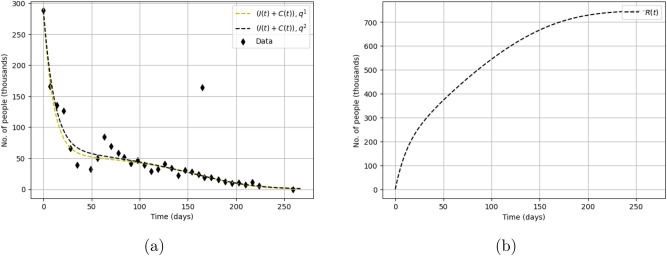
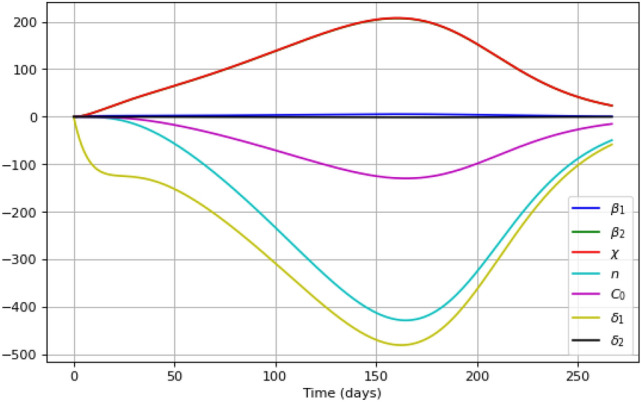
Social protests, in particular in the form of street protests, are a frequent phenomenon of modern world often making a significant disruptive effect on the society. Understanding the factors that can affect their duration and intensity is therefore an important problem. In this paper, we consider a mathematical model of protests dynamics describing how the number of protesters change with time. We apply the model to two events such as the Yellow Vest Movement 2018-2019 in France and Khabarovsk protests 2019-2020 in Russia. We show that in both cases our model provides a good description of the protests dynamics. We consider how the model parameters can be estimated by solving the inverse problem based on the available data on protesters number at different time. The analysis of parameter sensitivity then allows for determining which factor(s) may have the strongest effect on the protests dynamics.
社会抗议活动,特别是街头抗议活动,是现代世界的一种常见现象,它们经常对社会产生重大的破坏性影响。因此,了解哪些因素可能会影响抗议活动的持续时间和强度是一个重要的问题。在本文中,我们考虑了一个描述抗议者数量随时间变化的抗议活动动力学数学模型。我们将该模型应用于法国 2018-2019 年的“黄背心”运动和俄罗斯 2019-2020 年的哈巴罗夫斯克抗议活动这两个事件。结果表明,在这两种情况下,我们的模型都能很好地描述抗议活动的动态。我们考虑了如何通过基于抗议者人数在不同时间的可用数据来解决反问题来估计模型参数。然后,对参数敏感性的分析可以确定哪些因素可能对抗议活动的动态产生最强的影响。