Silent Spring Institute, Newton, MA, USA.
Sci Rep. 2022 Nov 30;12(1):20647. doi: 10.1038/s41598-022-24889-w.
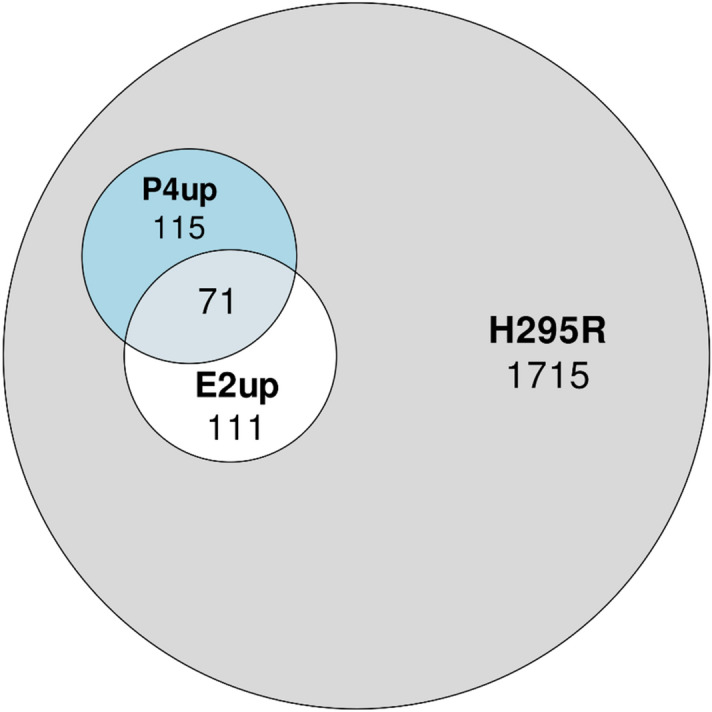
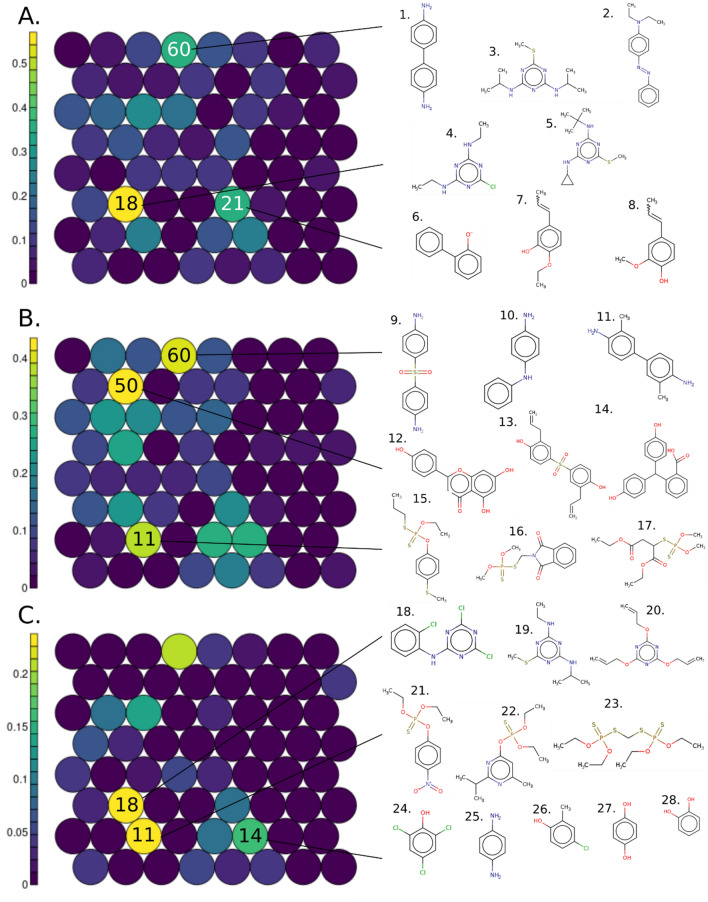
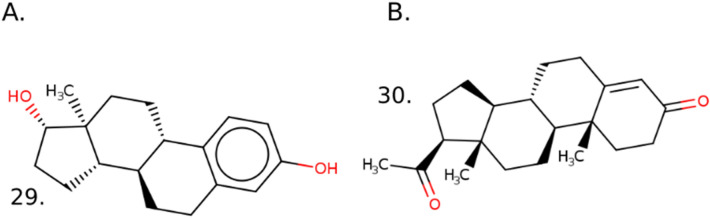
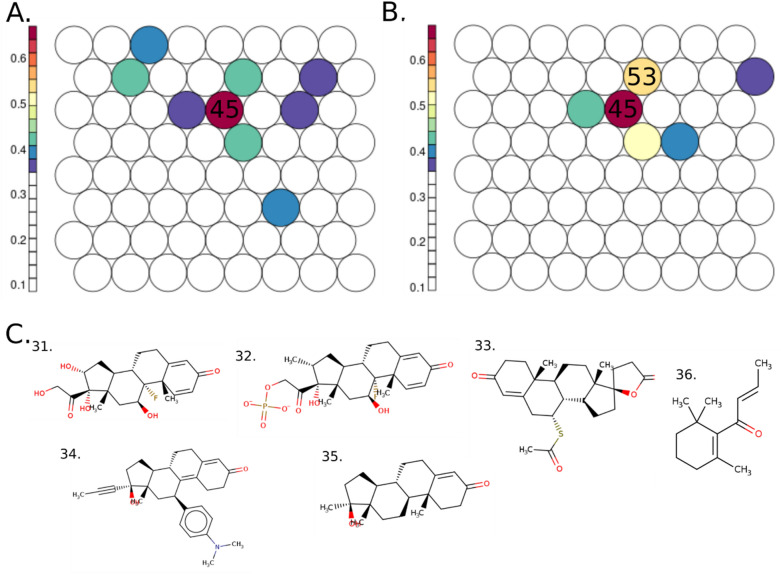
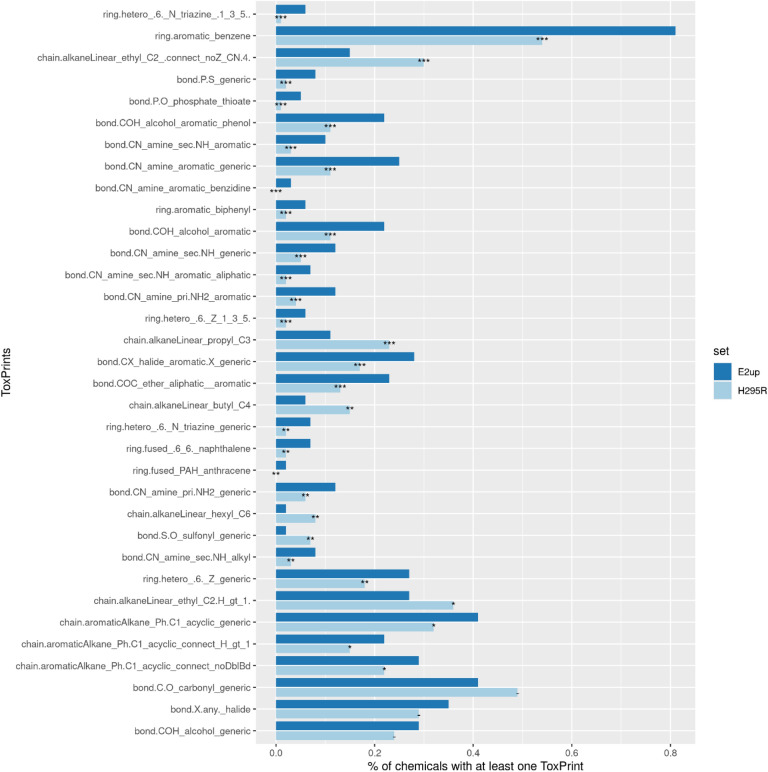
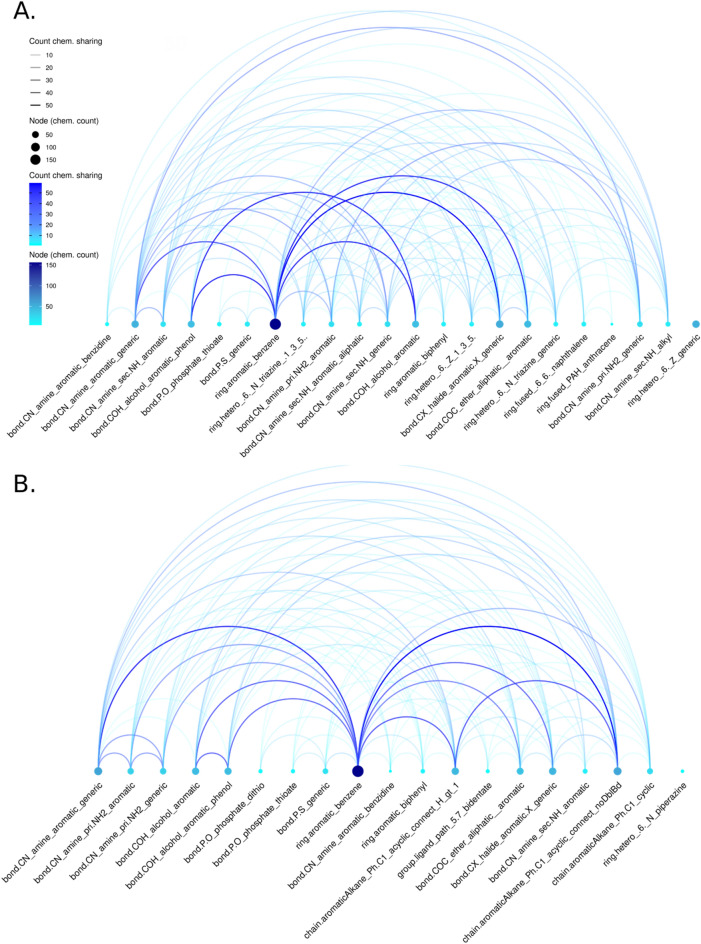
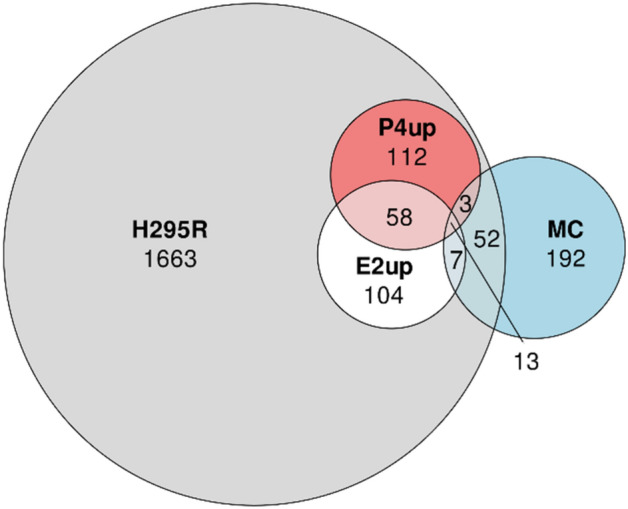
Factors that increase estrogen or progesterone (P4) action are well-established as increasing breast cancer risk, and many first-line treatments to prevent breast cancer recurrence work by blocking estrogen synthesis or action. In previous work, using data from an in vitro steroidogenesis assay developed for the U.S. Environmental Protection Agency (EPA) ToxCast program, we identified 182 chemicals that increased estradiol (E2up) and 185 that increased progesterone (P4up) in human H295R adrenocortical carcinoma cells, an OECD validated assay for steroidogenesis. Chemicals known to induce mammary effects in vivo were very likely to increase E2 or P4 synthesis, further supporting the importance of these pathways for breast cancer. To identify additional chemical exposures that may increase breast cancer risk through E2 or P4 steroidogenesis, we developed a cheminformatics approach to identify structural features associated with these activities and to predict other E2 or P4 steroidogens from their chemical structures. First, we used molecular descriptors and physicochemical properties to cluster the 2,012 chemicals screened in the steroidogenesis assay using a self-organizing map (SOM). Structural features such as triazine, phenol, or more broadly benzene ramified with halide, amine or alcohol, are enriched for E2 or P4up chemicals. Among E2up chemicals, phenol and benzenone are found as significant substructures, along with nitrogen-containing biphenyls. For P4up chemicals, phenol and complex aromatic systems ramified with oxygen-based groups such as flavone or phenolphthalein are significant substructures. Chemicals that are active for both E2up and P4up are enriched with substructures such as dihydroxy phosphanedithione or are small chemicals that contain one benzene ramified with chlorine, alcohol, methyl or primary amine. These results are confirmed with a chemotype ToxPrint analysis. Then, we used machine learning and artificial intelligence algorithms to develop and validate predictive classification QSAR models for E2up and P4up chemicals. These models gave reasonable external prediction performances (balanced accuracy ~ 0.8 and Matthews Coefficient Correlation ~ 0.5) on an external validation. The QSAR models were enriched by adding a confidence score that considers the chemical applicability domain and a ToxPrint assessment of the chemical. This profiling and these models may be useful to direct future testing and risk assessments for chemicals related to breast cancer and other hormonally-mediated outcomes.
增加雌激素或孕激素(P4)作用的因素已被确定为增加乳腺癌风险的因素,许多预防乳腺癌复发的一线治疗方法通过阻断雌激素合成或作用来发挥作用。在之前的工作中,我们使用美国环境保护署(EPA)ToxCast 计划开发的体外类固醇生成测定法的数据,鉴定出 182 种化学物质可增加人 H295R 肾上腺皮质癌细胞中的雌二醇(E2up),以及 185 种可增加孕酮(P4up)的化学物质,该测定法是类固醇生成的经合组织验证的测定法。已知在体内诱导乳腺效应的化学物质很可能增加 E2 或 P4 的合成,这进一步支持了这些途径对乳腺癌的重要性。为了确定通过 E2 或 P4 类固醇生成可能增加乳腺癌风险的其他化学暴露,我们开发了一种化学信息学方法,以鉴定与这些活性相关的结构特征,并根据其化学结构预测其他 E2 或 P4 类固醇生成剂。首先,我们使用分子描述符和物理化学性质使用自组织映射(SOM)对类固醇生成测定法中筛选的 2012 种化学物质进行聚类。三嗪、苯酚或更广泛的卤代、胺或醇支化的苯等结构特征,富含 E2 或 P4up 化学物质。在 E2up 化学物质中,发现苯酚和苯酮作为重要的亚结构,以及含氮联苯。对于 P4up 化学物质,苯酚和含氧基团支化的复杂芳香系统,如黄酮或酚酞,是重要的亚结构。对 E2up 和 P4up 都有效的化学物质富含二羟膦二硫代或含有一个氯、醇、甲基或伯胺支化的苯的小分子。这些结果通过化学型 ToxPrint 分析得到了证实。然后,我们使用机器学习和人工智能算法为 E2up 和 P4up 化学物质开发和验证了预测分类 QSAR 模型。这些模型在外部验证中给出了合理的外部预测性能(平衡准确性约为 0.8,马修斯相关系数约为 0.5)。QSAR 模型通过添加置信度评分得到了丰富,该评分考虑了化学物质的适用性域和对化学物质的 ToxPrint 评估。这种分析和这些模型可能有助于指导与乳腺癌和其他激素介导的结果相关的化学物质的未来测试和风险评估。