Department of Gastroenterology and Hepatology, Tokyo Medical and Dental University (TMDU), 1-5-45 Yushima, Bunkyo-ku, Tokyo 113-8510, Japan.
Department of Clinical and Diagnostic Laboratory Science, Tokyo Medical and Dental University (TMDU), 1-5-45 Yushima, Bunkyo-ku, Tokyo 113-8510, Japan.
Cell Rep Methods. 2022 Nov 15;2(11):100337. doi: 10.1016/j.crmeth.2022.100337. eCollection 2022 Nov 21.
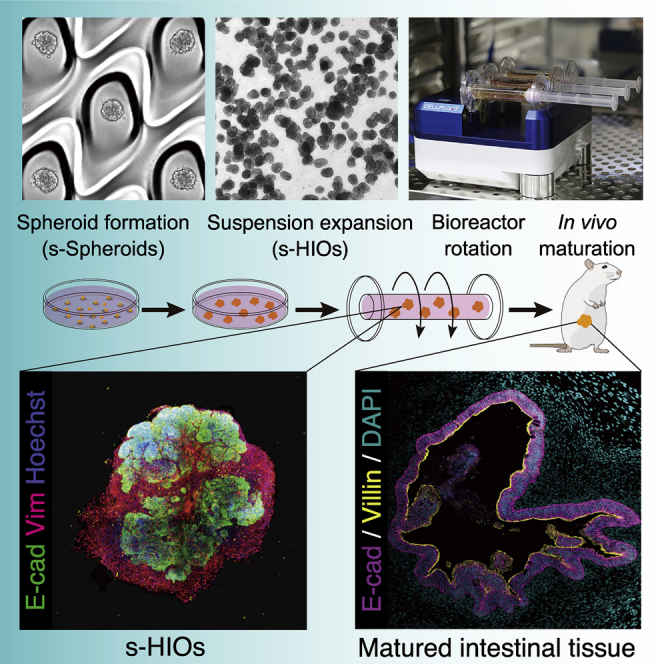
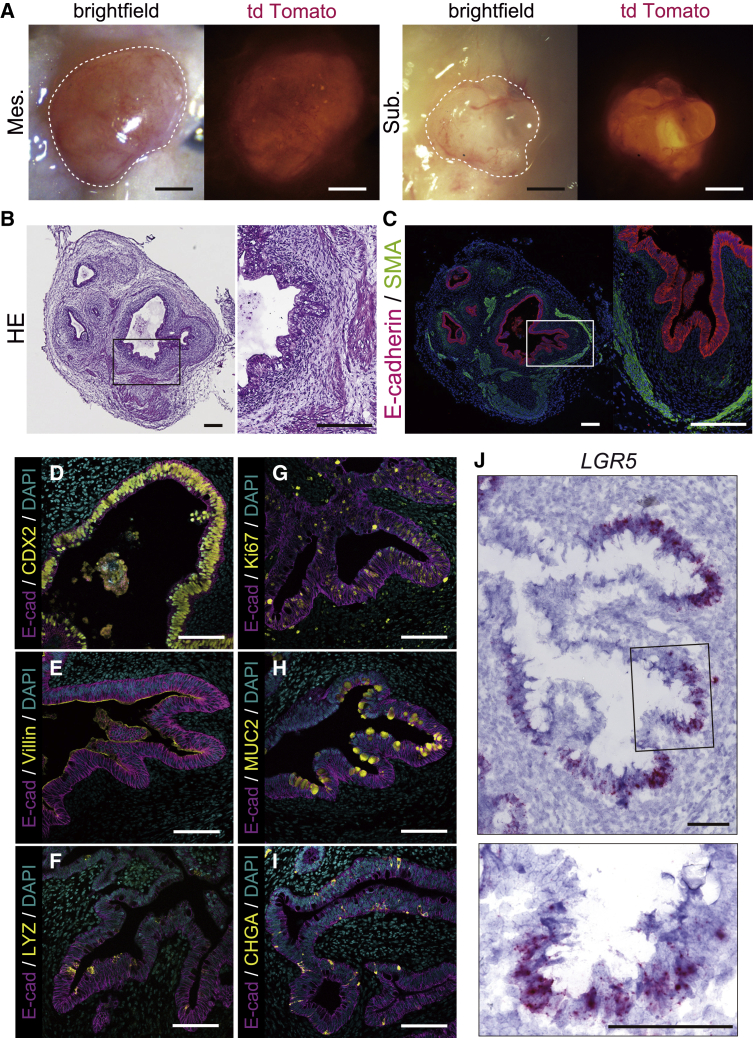
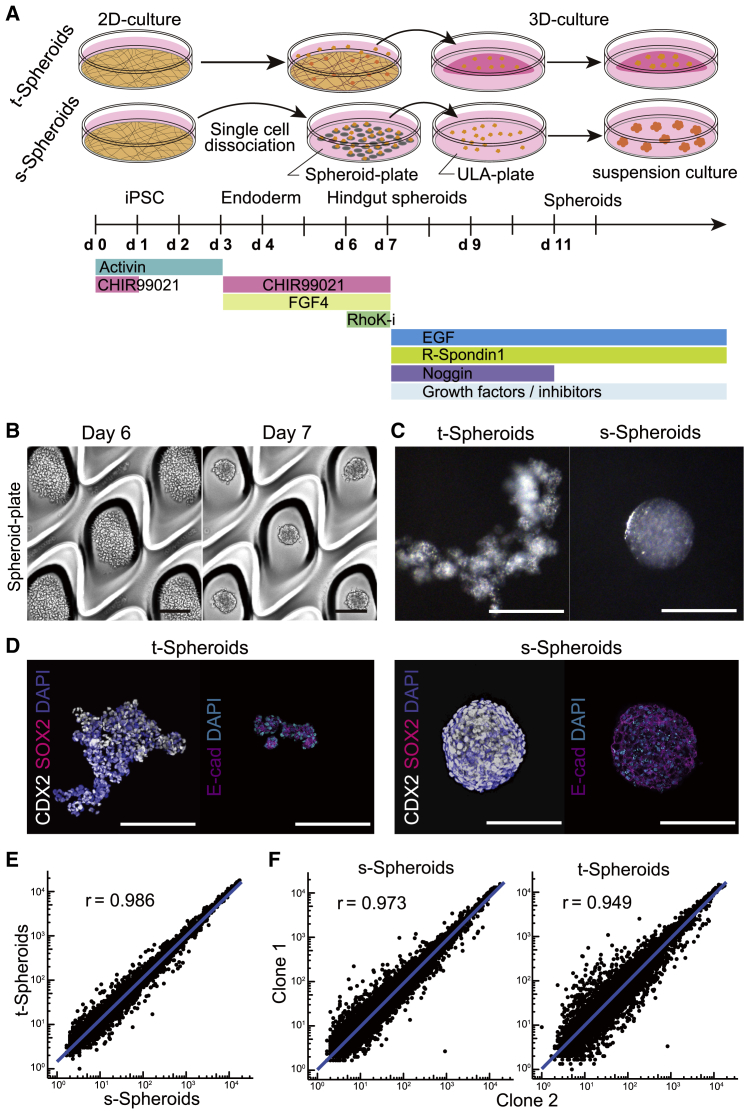
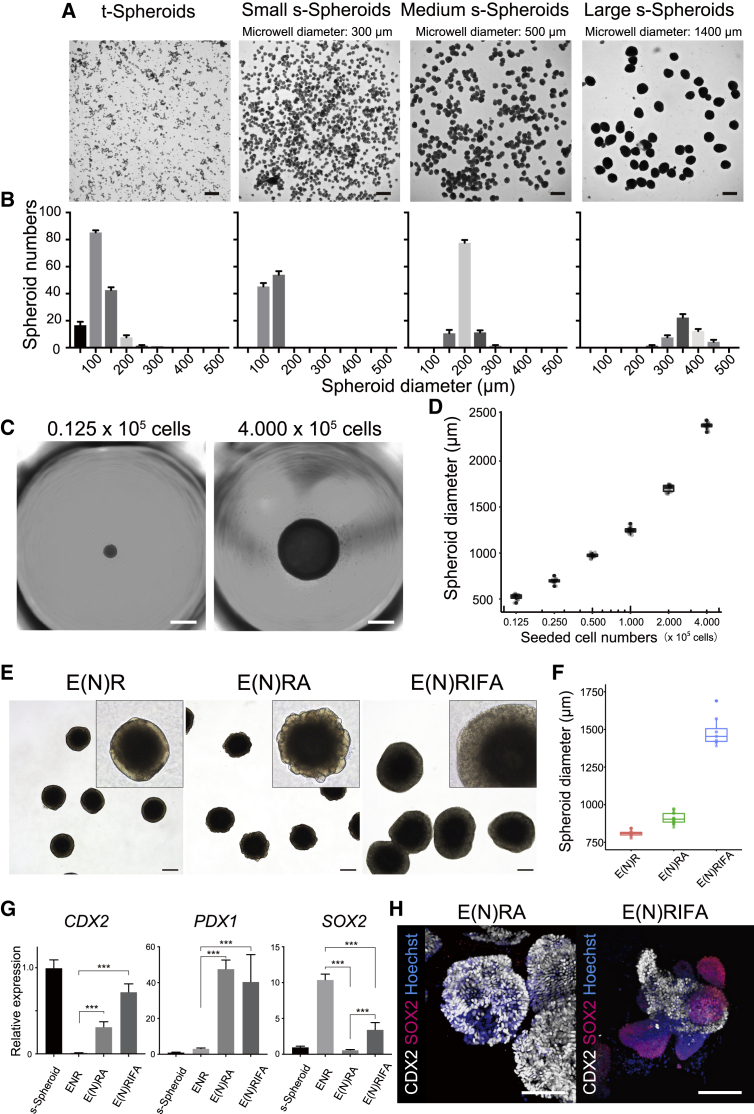
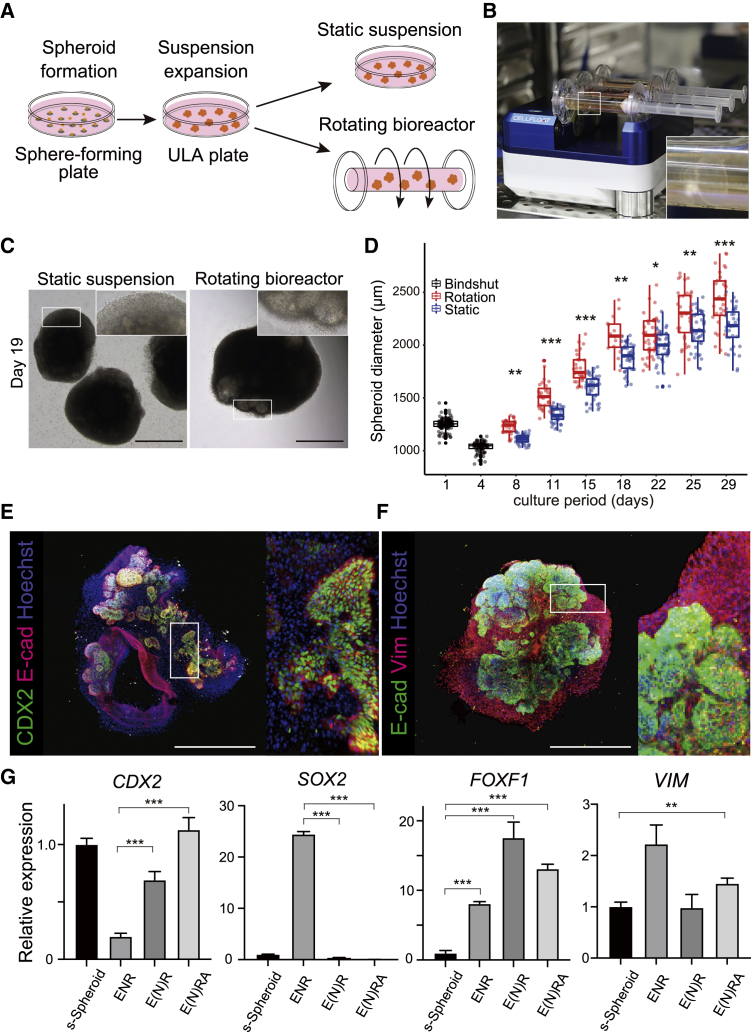
Human intestinal organoids (HIOs) derived from human pluripotent stem cells (hPSCs) hold great promise for translational medical applications. A common method to obtain HIOs has been to harvest floating hindgut spheroids arising from hPSCs. As this technique is elegant but burdensome due to the complex protocol and line-to-line variability, a more feasible method is desired. Here, we establish a robust differentiation method into suspension-cultured HIOs (s-HIOs) by seeding dissociated cells on a spheroid-forming plate. This protocol realizes the reliable generation of size-controllable spheroids. Under optimized conditions in a rotating bioreactor, the generated spheroids quickly grow and mature into large s-HIOs with supporting mesenchyme. Upon mesenteric transplantation, s-HIOs further mature and develop complex tissue architecture . This method demonstrates that intestinal tissue can be generated from iPSC-derived HIOs via suspension induction and bioreactor maturation, establishing a reliable culture platform with wide applications in regenerative medicine.
人多能干细胞(hPSC)衍生的人类肠类器官(HIO)在转化医学应用中具有巨大的应用前景。获得 HIO 的常用方法是从 hPSC 中收获漂浮的后肠球体。由于该技术由于复杂的方案和线对线的可变性,因此操作繁琐,但很优雅,因此需要一种更可行的方法。在这里,我们通过在球体形成板上播种分离细胞,建立了一种将细胞悬液培养的 HIO(s-HIO)的稳健分化方法。该方案实现了可控制大小的球体的可靠生成。在旋转生物反应器中的优化条件下,生成的球体迅速生长并成熟为具有支持间质的大 s-HIO。在肠系膜移植后,s-HIO 进一步成熟并发育出复杂的组织结构。该方法表明,肠组织可以通过悬浮诱导和生物反应器成熟从 iPSC 衍生的 HIO 中产生,建立了一个具有广泛再生医学应用的可靠培养平台。