State Key Laboratory for Organic Electronics and Information Displays & Institute of Advanced Materials (IAM), Jiangsu Key Laboratory for Biosensors, Nanjing University of Posts & Telecommunications, Nanjing, 210023, China.
Key Laboratory of Flexible Electronics (KLOFE) & Institute of Advanced Materials (IAM), Nanjing Tech University, 30 South Puzhu Road, Nanjing, 211800, P. R. China.
Adv Sci (Weinh). 2023 Jan;10(3):e2204695. doi: 10.1002/advs.202204695. Epub 2022 Dec 1.
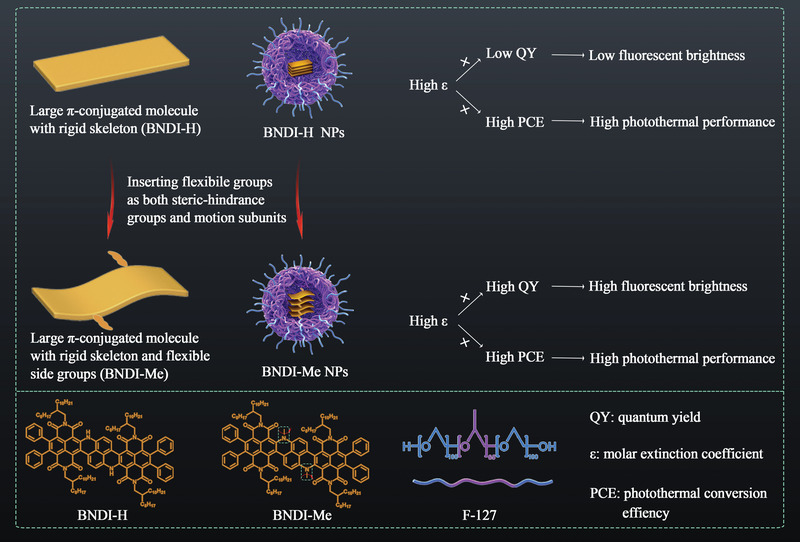
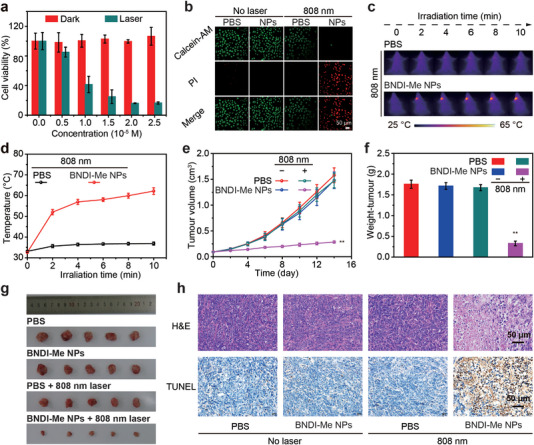
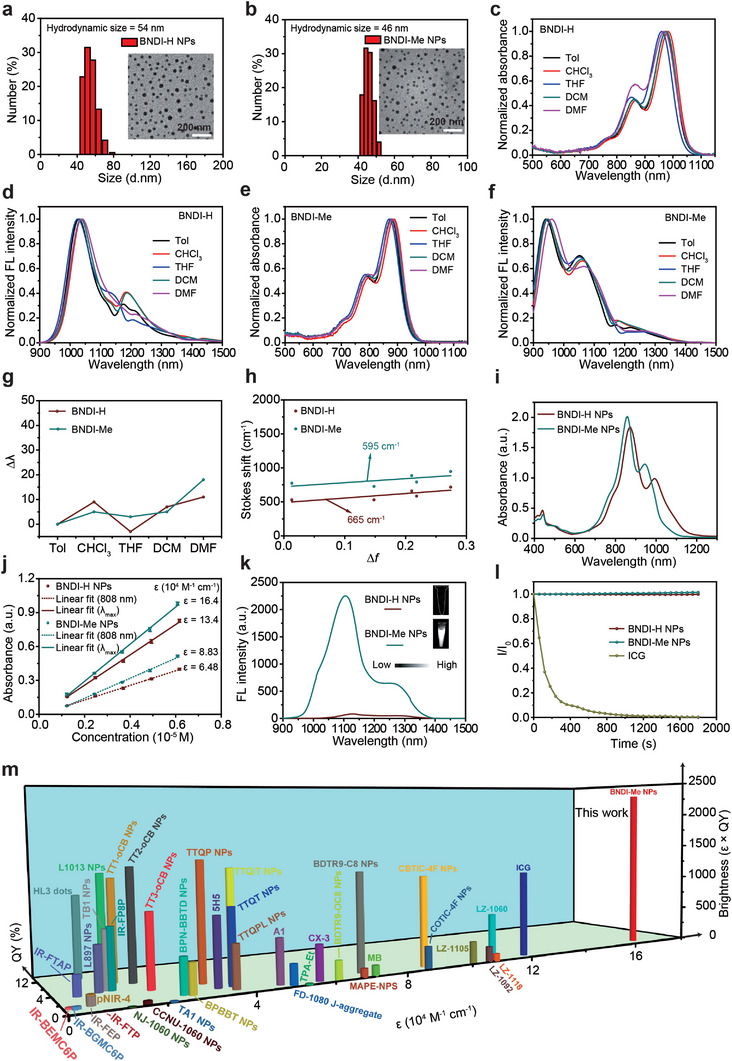
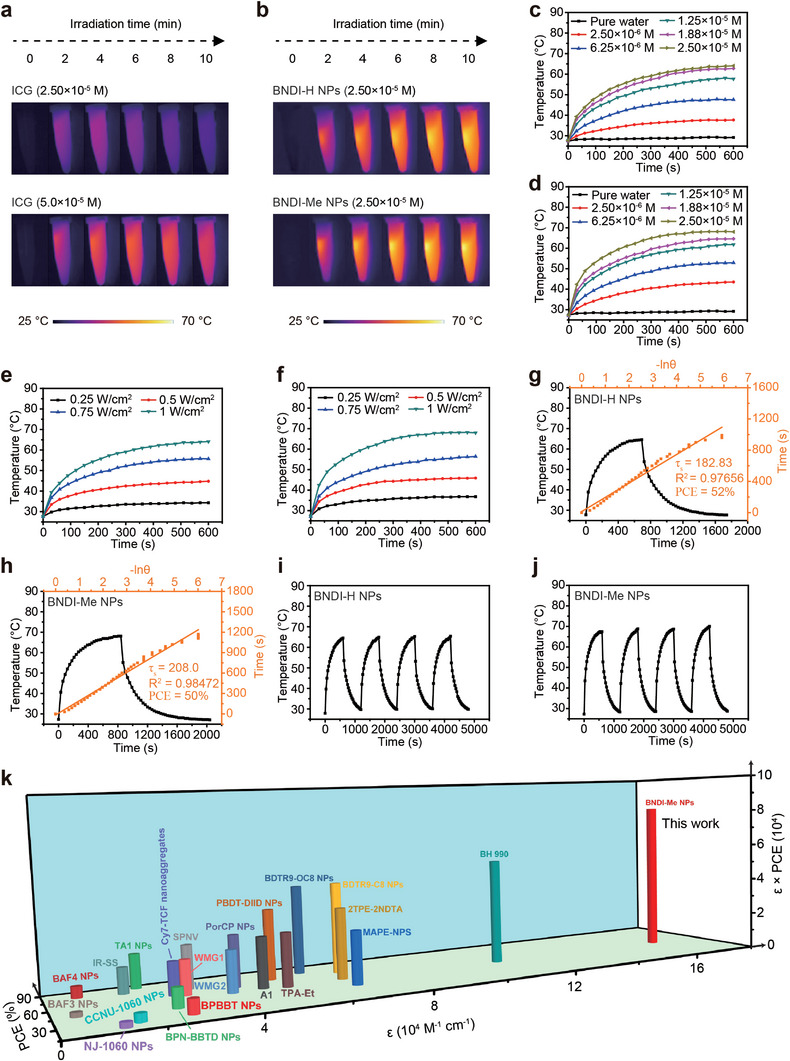
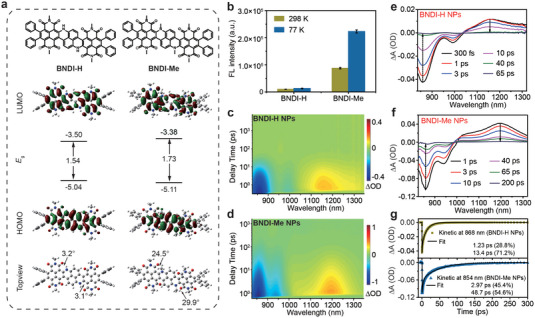
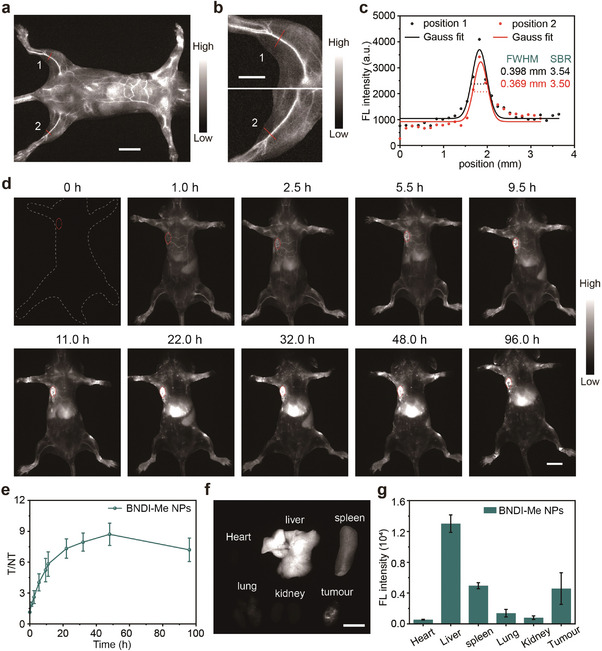
Second near-infrared (NIR-II, 1000-1700 nm) window fluorescence imaging-guided photothermal therapy probes are promising for precise cancer phototheranostics. However, most of the currently reported probes do not demonstrate high NIR-II fluorescent brightness (molar absorption coefficient (ε) × quantum yield (QY)) and photothermal performance (ε × photothermal conversion efficiency (PCE)) in a single molecule. Herein, a versatile strategy to solve this challenge is reported by fabricating a large π-conjugated molecule (BNDI-Me) with a rigid molecular skeleton and flexible side groups. The proposed BNDI-Me nanoprobe boosts the ε and simultaneously optimizes its QY and PCE. Therefore, high NIR-II fluorescent brightness (ε × QY = 2296 m cm ) and strong photothermal performance (ε × PCE = 82 000) are successfully incorporated in a single small molecule, and, to the best of knowledge, either of these two parameters is better than the best currently available fluorescent or photothermal probes. Thus, superior NIR-II imaging effect in vivo and high photothermal tumor inhibition rate (81.2%) at low systemic injection doses are obtained. The work provides further insights into the relationship of photophysical mechanisms and structures, and presents promising molecular design guidelines for the integration of more efficient multiple theranostic functions in a single molecule.
近红外二区(NIR-II,1000-1700nm)荧光成像是精准癌症光热治疗的研究热点。然而,目前大多数报道的探针在单个分子中不能同时具有高光热转换效率(ε×PCE)和近红外二区荧光亮度(摩尔消光系数(ε)×荧光量子产率(QY))。本工作报道了一种通用策略,通过构建具有刚性分子骨架和柔性侧基的大π共轭分子(BNDI-Me)来解决这一挑战。所提出的 BNDI-Me 纳米探针提高了 ε,并同时优化了其 QY 和 PCE。因此,成功地将高光热转换效率(ε×PCE=82000)和强荧光性能(ε×QY=2296 m cm)集成到单个小分子中,而且,就目前所知,这两个参数中的任何一个都优于现有的最佳荧光或光热探针。因此,在低全身注射剂量下,获得了优异的体内近红外二区成像效果和高的光热肿瘤抑制率(81.2%)。该工作进一步深入了解了光物理机制和结构之间的关系,并为在单个分子中集成更多高效的多功能治疗提供了有前景的分子设计指南。