Zhang Xinyi, Halberstam Alexandra A, Zhu Wanling, Leitner Brooks P, Thakral Durga, Bosenberg Marcus W, Perry Rachel J
Department of Internal Medicine (Endocrinology), Yale School of Medicine, P.O. Box 208026, 333 Cedar St., SHM BE36-B, New Haven, CT, 06520-8026, USA.
Department of Cellular & Molecular Physiology, Yale School of Medicine, New Haven, USA.
Cancer Metab. 2022 Dec 1;10(1):21. doi: 10.1186/s40170-022-00296-7.
Research about tumor "metabolic flexibility"-the ability of cells to toggle between preferred nutrients depending on the metabolic context-has largely focused on obesity-associated cancers. However, increasing evidence for a key role for nutrient competition in the tumor microenvironment, as well as for substrate regulation of immune function, suggests that substrate metabolism deserves reconsideration in immunogenic tumors that are not strongly associated with obesity.
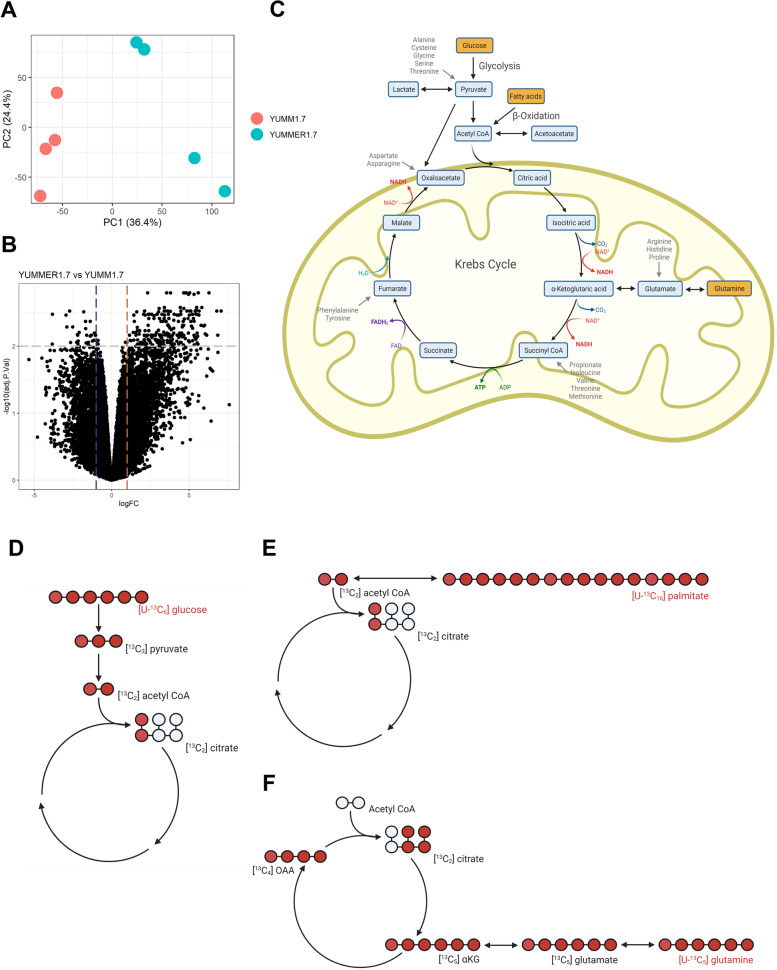
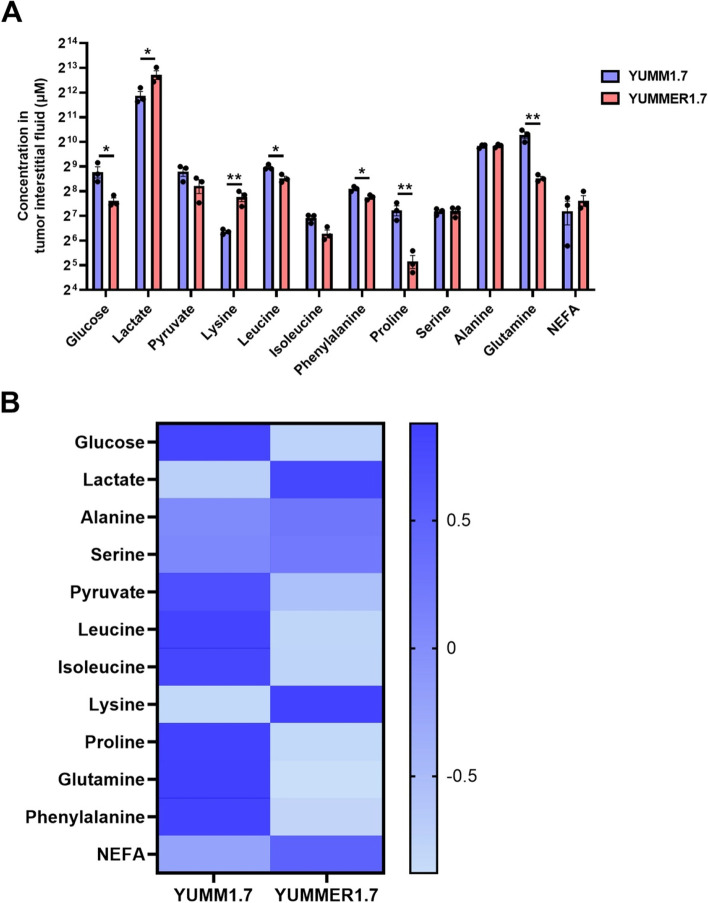
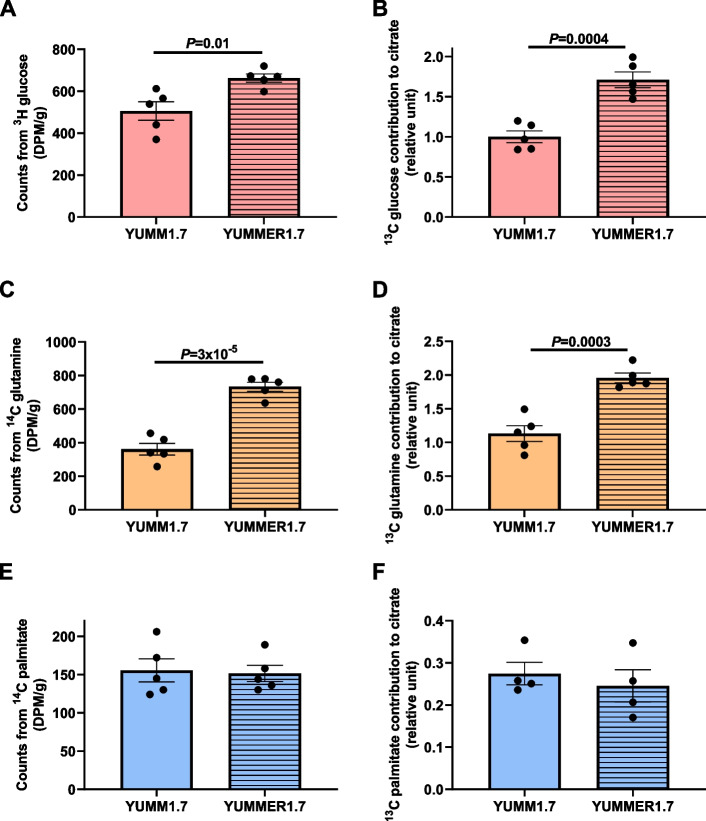
We compare two murine models: immunologically cold YUMM1.7 and immunologically-hot YUMMER1.7. We utilize stable isotope and radioisotope tracer-based metabolic flux studies as well as gas and liquid chromatography-based metabolomics analyses to comprehensively probe substrate preference in YUMM1.7 and YUMMER1.7 cells, with a subset of studies on the impact of available metabolites across a panel of five additional melanoma cell lines. We analyze bulk RNA-seq data and identify increased expression of amino acid and glucose metabolism genes in YUMMER1.7. Finally, we analyze melanoma patient RNA-seq data to identify potential prognostic predictors rooted in metabolism.
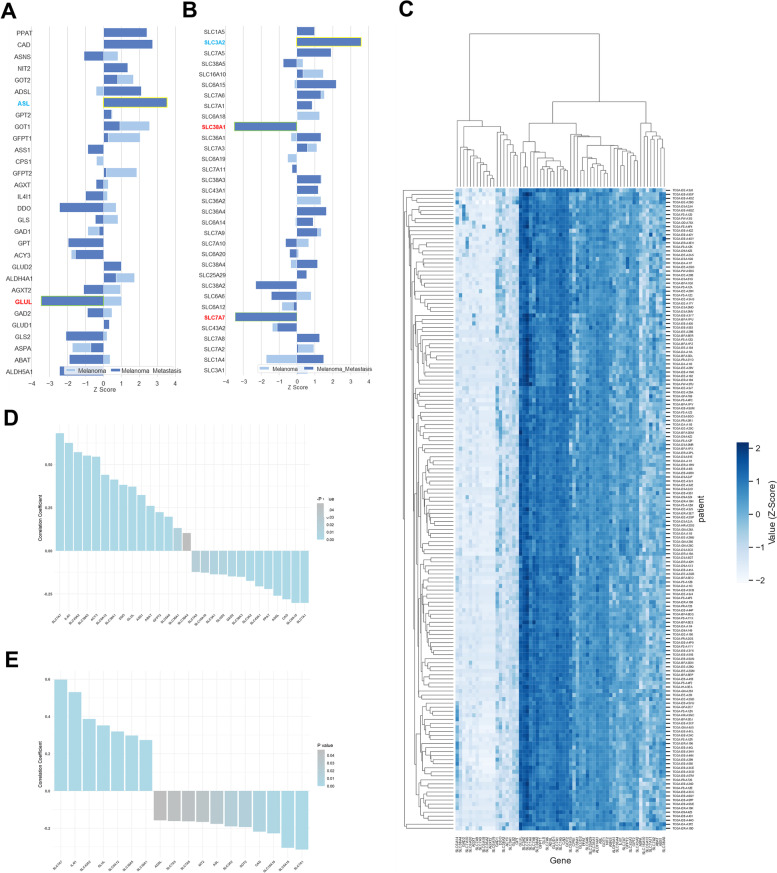
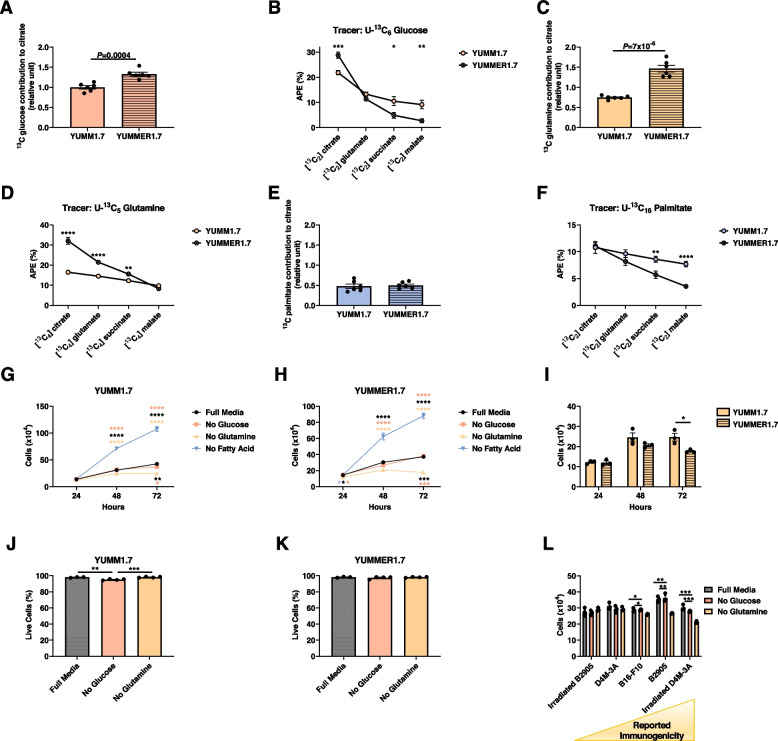
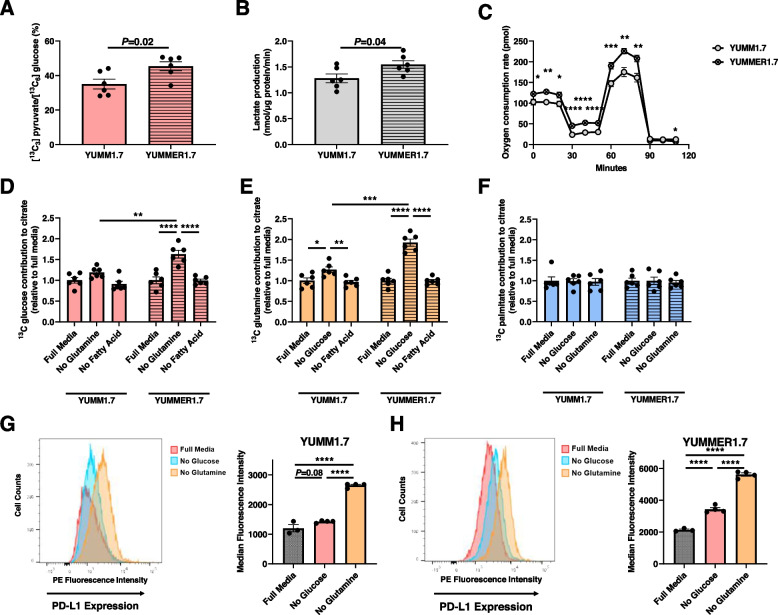
We demonstrate using stable isotope tracer-based metabolic flux studies as well as gas and liquid chromatography-based metabolomics that immunologically-hot melanoma utilizes more glutamine than immunologically-cold melanoma in vivo and in vitro. Analyses of human melanoma RNA-seq data demonstrate that glutamine transporter and other anaplerotic gene expression positively correlates with lymphocyte infiltration and function.
Here, we highlight the importance of understanding metabolism in non-obesity-associated cancers, such as melanoma. This work advances the understanding of the correlation between metabolism and immunogenicity in the tumor microenvironment and provides evidence supporting metabolic gene expression as potential prognostic factors of melanoma progression and may inform investigations of adjunctive metabolic therapy in melanoma.
Deidentified data from The Cancer Genome Atlas were analyzed.
关于肿瘤“代谢灵活性”——细胞根据代谢环境在首选营养物质之间切换的能力——的研究主要集中在与肥胖相关的癌症上。然而,越来越多的证据表明营养物质竞争在肿瘤微环境中起关键作用,以及底物对免疫功能的调节作用,这表明在与肥胖没有强烈关联的免疫原性肿瘤中,底物代谢值得重新审视。
我们比较了两种小鼠模型:免疫冷型的YUMM1.7和免疫热型的YUMMER1.7。我们利用基于稳定同位素和放射性同位素示踪的代谢通量研究以及基于气相和液相色谱的代谢组学分析,全面探究YUMM1.7和YUMMER1.7细胞中的底物偏好,并有一部分研究是关于一组另外五种黑色素瘤细胞系中可用代谢物的影响。我们分析大量RNA测序数据,并确定YUMMER1.7中氨基酸和葡萄糖代谢基因的表达增加。最后,我们分析黑色素瘤患者的RNA测序数据,以确定基于代谢的潜在预后预测指标。
我们通过基于稳定同位素示踪的代谢通量研究以及基于气相和液相色谱的代谢组学证明,免疫热型黑色素瘤在体内和体外比免疫冷型黑色素瘤利用更多的谷氨酰胺。对人类黑色素瘤RNA测序数据的分析表明,谷氨酰胺转运蛋白和其他回补基因的表达与淋巴细胞浸润和功能呈正相关。
在此,我们强调了理解非肥胖相关癌症(如黑色素瘤)中代谢的重要性。这项工作推进了对肿瘤微环境中代谢与免疫原性之间相关性的理解,并提供了证据支持代谢基因表达作为黑色素瘤进展的潜在预后因素,可能为黑色素瘤辅助代谢治疗的研究提供参考。
分析了来自癌症基因组图谱的去识别数据。