Hernandez-Beltran J Carlos R, Miró Pina Verónica, Siri-Jégousse Arno, Palau Sandra, Peña-Miller Rafael, González Casanova Adrián
Systems Biology Program, Center for Genomic Sciences Universidad Nacional Autónoma de México Cuernavaca Mexico.
Department of Microbial Population Biology Max Planck Institute for Evolutionary Biology Plön Germany.
Ecol Evol. 2022 Dec 4;12(12):e9469. doi: 10.1002/ece3.9469. eCollection 2022 Dec.
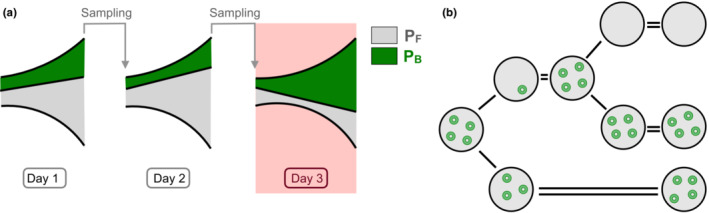
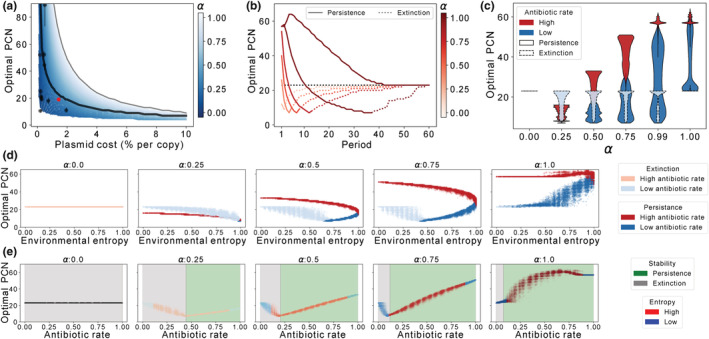
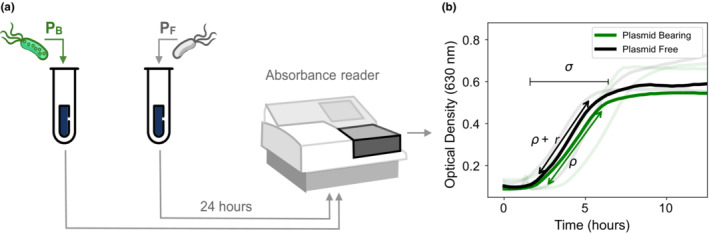
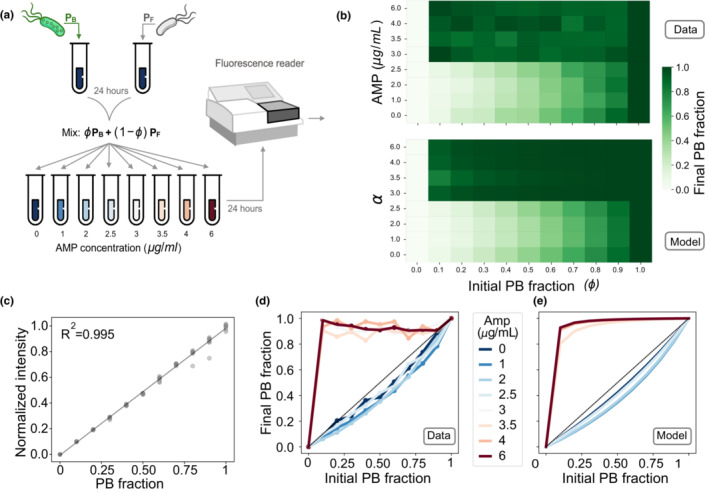
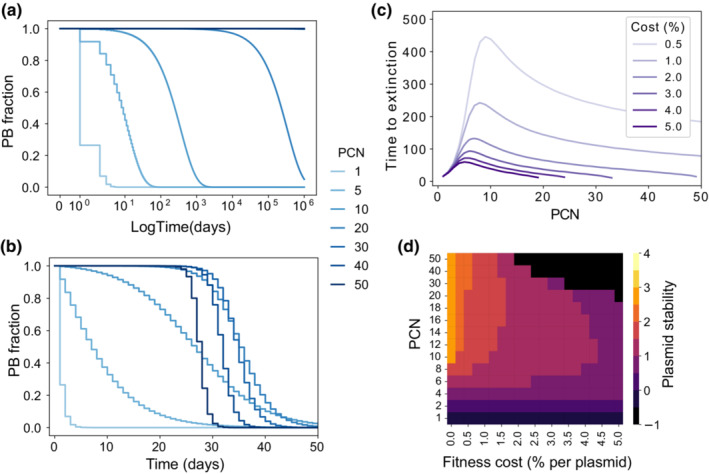
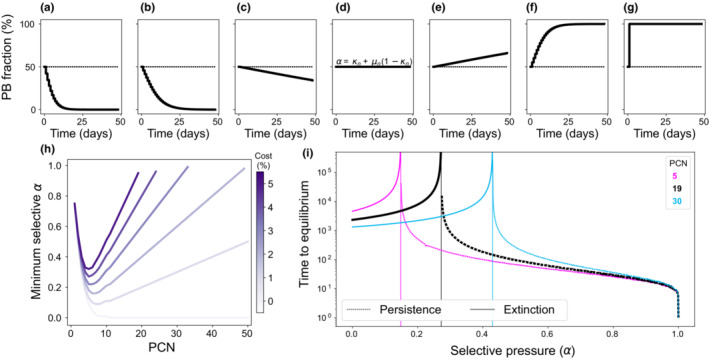
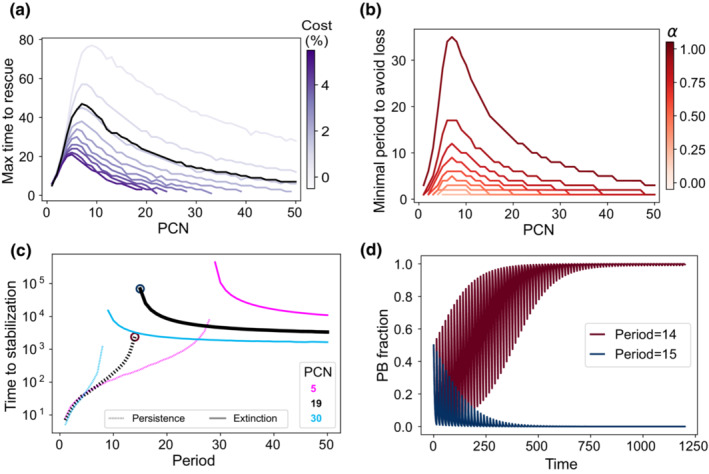
Plasmids are extra-chromosomal genetic elements that encode a wide variety of phenotypes and can be maintained in bacterial populations through vertical and horizontal transmission, thus increasing bacterial adaptation to hostile environmental conditions like those imposed by antimicrobial substances. To circumvent the segregational instability resulting from randomly distributing plasmids between daughter cells upon division, nontransmissible plasmids tend to be carried in multiple copies per cell, with the added benefit of exhibiting increased gene dosage and resistance levels. But carrying multiple copies also results in a high metabolic burden to the bacterial host, therefore reducing the overall fitness of the population. This trade-off poses an existential question for plasmids: What is the optimal plasmid copy number? In this manuscript, we address this question by postulating and analyzing a population genetics model to evaluate the interaction between selective pressure, the number of plasmid copies carried by each cell, and the metabolic burden associated with plasmid bearing in the absence of selection for plasmid-encoded traits. Parameter values of the model were estimated experimentally using K12 carrying a multicopy plasmid encoding for a fluorescent protein and , a gene conferring resistance to -lactam antibiotics. By numerically determining the optimal plasmid copy number for constant and fluctuating selection regimes, we show that plasmid copy number is a highly optimized evolutionary trait that depends on the rate of environmental fluctuation and balances the benefit between increased stability in the absence of selection with the burden associated with carrying multiple copies of the plasmid.
质粒是染色体外的遗传元件,编码多种表型,可通过垂直和水平传播在细菌群体中维持,从而增强细菌对诸如抗菌物质所施加的恶劣环境条件的适应性。为了规避细胞分裂时质粒在子代细胞间随机分配导致的分离不稳定性,非传递性质粒往往在每个细胞中以多拷贝形式存在,这还有增加基因剂量和抗性水平的额外好处。但携带多拷贝也会给细菌宿主带来高代谢负担,从而降低群体的整体适应性。这种权衡给质粒带来了一个根本性问题:最佳质粒拷贝数是多少?在本论文中,我们通过假定并分析一个群体遗传学模型来解决这个问题,以评估在不选择质粒编码性状的情况下,选择压力、每个细胞携带的质粒拷贝数以及与携带质粒相关的代谢负担之间的相互作用。使用携带编码荧光蛋白的多拷贝质粒的K12以及赋予对β-内酰胺抗生素抗性的基因,通过实验估计模型的参数值。通过数值确定恒定和波动选择模式下的最佳质粒拷贝数,我们表明质粒拷贝数是一个高度优化的进化性状,它取决于环境波动的速率,并在无选择时增加的稳定性与携带多拷贝质粒相关的负担之间平衡益处。