Department of Neuroscience, Central Clinical School, Monash University, Prahran, VIC 3004, Australia.
Laboratory of Experimental Neurology and Neuroimmunology, Department of Neurology, AHEPA University Hospital, Stilponos Kiriakides str. 1, 54636 Thessaloniki, Greece.
Cells. 2022 Nov 25;11(23):3768. doi: 10.3390/cells11233768.
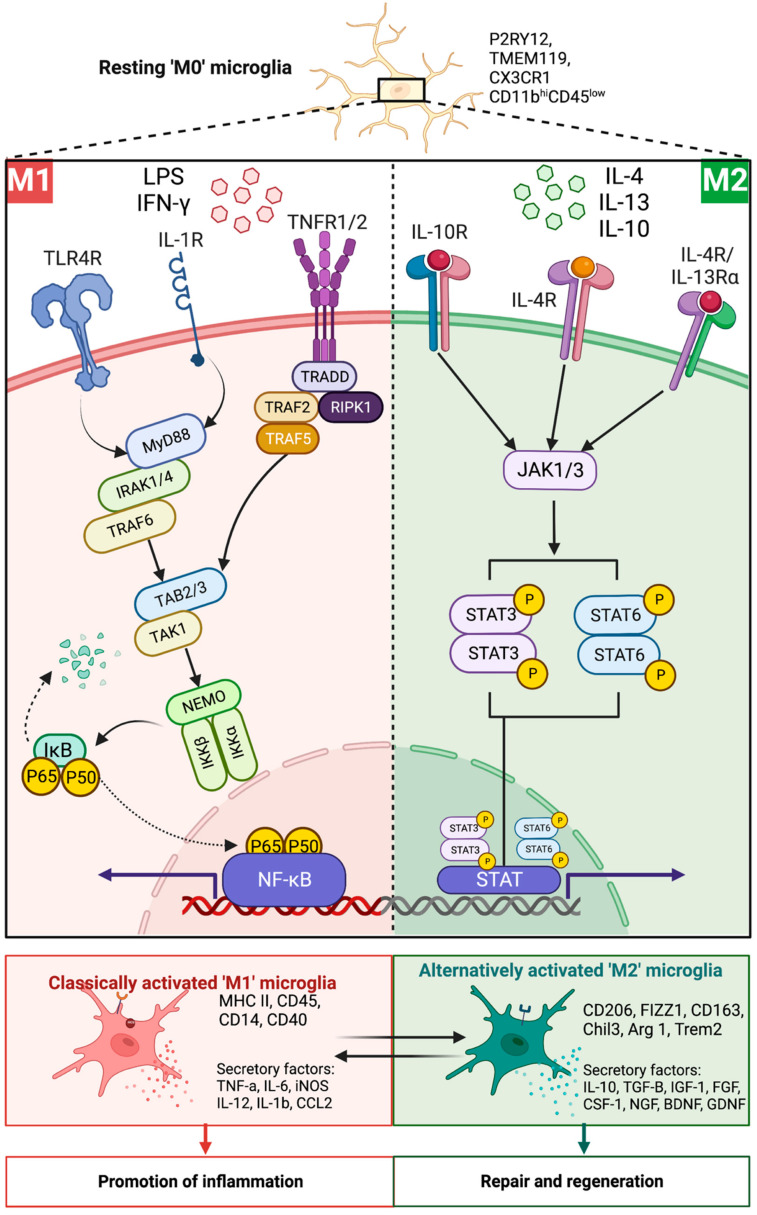
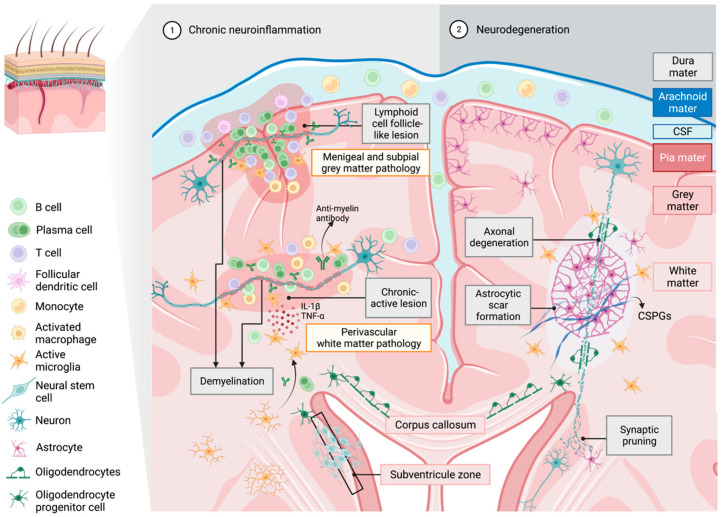
Current therapeutics targeting chronic phases of multiple sclerosis (MS) are considerably limited in reversing the neural damage resulting from repeated inflammation and demyelination insults in the multi-focal lesions. This inflammation is propagated by the activation of microglia, the endogenous immune cell aiding in the central nervous system homeostasis. Activated microglia may transition into polarized phenotypes; namely, the classically activated proinflammatory phenotype (previously categorized as M1) and the alternatively activated anti-inflammatory phenotype (previously, M2). These transitional microglial phenotypes are dynamic states, existing as a continuum. Shifting microglial polarization to an anti-inflammatory status may be a potential therapeutic strategy that can be harnessed to limit neuroinflammation and further neurodegeneration in MS. Our research has observed that the obstruction of signaling by inhibitory myelin proteins such as myelin-associated inhibitory factor, Nogo-A, with its receptor (NgR), can regulate microglial cell function and activity in pre-clinical animal studies. Our review explores the microglial role and polarization in MS pathology. Additionally, the potential therapeutics of targeting Nogo-A/NgR cellular mechanisms on microglia migration, polarization and phagocytosis for neurorepair in MS and other demyelination diseases will be discussed.
目前针对多发性硬化症(MS)慢性期的治疗方法在逆转反复炎症和脱髓鞘损伤引起的神经损伤方面受到了极大的限制,这些损伤发生在多灶性病变中。这种炎症是由小胶质细胞的激活传播的,小胶质细胞是一种有助于中枢神经系统内稳态的内源性免疫细胞。激活的小胶质细胞可能会过渡到极化表型;即经典激活的促炎表型(以前归类为 M1)和替代激活的抗炎表型(以前称为 M2)。这些过渡性小胶质细胞表型是动态状态,存在于一个连续体中。将小胶质细胞极化转向抗炎状态可能是一种潜在的治疗策略,可以用来限制 MS 中的神经炎症和进一步的神经退行性变。我们的研究观察到,抑制性髓鞘蛋白(如髓鞘相关抑制因子、Nogo-A 及其受体(NgR))的信号阻断可以调节临床前动物研究中小胶质细胞的功能和活性。我们的综述探讨了小胶质细胞在 MS 病理学中的作用和极化。此外,还将讨论针对 Nogo-A/NgR 细胞机制的潜在治疗方法,以调节小胶质细胞迁移、极化和吞噬作用,从而促进 MS 和其他脱髓鞘疾病的神经修复。