Chipeeva Nadezda, Deviaterikova Alena, Glebova Elena, Romanova Elizaveta, Karelin Alexander, Kasatkin Vladimir
Research Institute for Brain Development and Peak Performance, Peoples Friendship University of Russia, 117198 Moscow, Russia.
Dmitry Rogachev National Medical Research Center of Pediatric Hematology, Oncology, and Immunology, 117198 Moscow, Russia.
Cancers (Basel). 2022 Dec 3;14(23):5982. doi: 10.3390/cancers14235982.
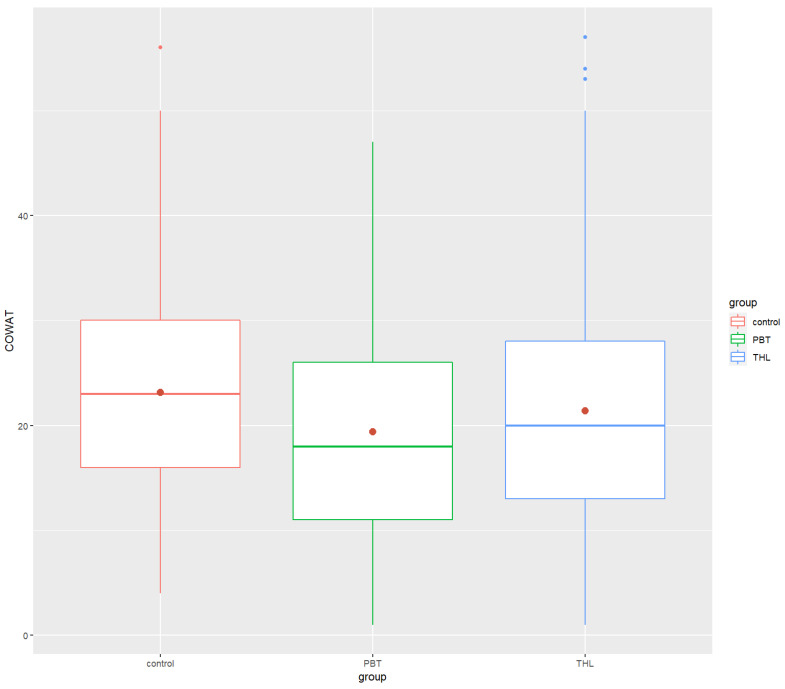
Background: The late treatment outcomes of pediatric brain tumors and of hematopoietic and lymphoid tissue tumors are an important focus of both rehabilitation and research. Neurocognitive and motor disorders induce further learning problems impeding social-emotional adaptation throughout a whole lifespan. Core deficits in short-term and working memory, visuospatial constructional ability, verbal fluency, and fine motor skills underlie distorted intellectual and academic achievement. This study aimed to assess the individual differences in cognitive ability and fine motor skills of pediatric tumor survivors and the age-matched healthy controls. Methods: A total of 504 tumor survivors after treatment and 646 age-matched healthy controls underwent neurocognitive and fine motor assessments. Findings: The group of tumor survivors scored significantly worse in both neurocognitive and fine motor skill in compared with the healthy control group. The pediatric brain tumor survivors (PBT group) performed worse in cognitive (p < 0.001 for verbal fluency and p < 0.001 for visuospatial constructional ability) and motor tests (p < 0.001) compared to the healthy controls. Hematopoietic and Lymphoid Tissues tumors survivors (THL group) performed worse in verbal fluency (p < 0.01) and visuospatial constructional test (p < 0.001) compared to the control group. Furthermore, the PBT group had worse results in visuospatial constructional ability (p < 0.05) and fine motor (p < 0.001) ability than the THL group. Significant differences between females and males were found in fine motor test performance in the PBT group (p < 0.05), as well as in verbal fluency (p < 0.01) and visuospatial constructional ability (p < 0.01) in the control group. Neurocognitive and fine motor skill characteristics in the THL group did not correlate with age.
小儿脑肿瘤以及造血和淋巴组织肿瘤的晚期治疗结果是康复和研究的重要焦点。神经认知和运动障碍会引发更多学习问题,在整个生命周期中阻碍社会情感适应。短期和工作记忆、视觉空间构建能力、语言流畅性以及精细运动技能的核心缺陷是智力和学业成绩扭曲的基础。本研究旨在评估小儿肿瘤幸存者与年龄匹配的健康对照者在认知能力和精细运动技能方面的个体差异。
共有504名接受治疗后的肿瘤幸存者和646名年龄匹配的健康对照者接受了神经认知和精细运动评估。
与健康对照组相比,肿瘤幸存者组在神经认知和精细运动技能方面的得分显著更低。与健康对照组相比,小儿脑肿瘤幸存者(PBT组)在认知测试(语言流畅性p < 0.001,视觉空间构建能力p < 0.001)和运动测试(p < 0.001)中的表现更差。与对照组相比,造血和淋巴组织肿瘤幸存者(THL组)在语言流畅性(p < 0.01)和视觉空间构建测试(p < 0.001)中的表现更差。此外,PBT组在视觉空间构建能力(p < 0.05)和精细运动能力(p < 0.001)方面的结果比THL组更差。在PBT组的精细运动测试表现中发现了女性和男性之间的显著差异(p < 0.05),在对照组的语言流畅性(p < 0.01)和视觉空间构建能力(p < 0.01)方面也存在显著差异。THL组的神经认知和精细运动技能特征与年龄无关。