Hu Yueli, Zhang Chen, Zou Lihua, Zheng Zhaojuan, Ouyang Jia
Jiangsu Co-Innovation Centre of Efficient Processing and Utilization of Forest Resources, Nanjing Forestry University, Nanjing, 210037, People's Republic of China.
College of Chemical Engineering, Nanjing Forestry University, Nanjing, 210037, People's Republic of China.
Biotechnol Biofuels Bioprod. 2022 Dec 12;15(1):136. doi: 10.1186/s13068-022-02236-5.
The conversion of lignin-derived aromatic monomers into valuable chemicals has promising potential to improve the economic competitiveness of biomass biorefineries. Pinosylvin is an attractive pharmaceutical with multiple promising biological activities.
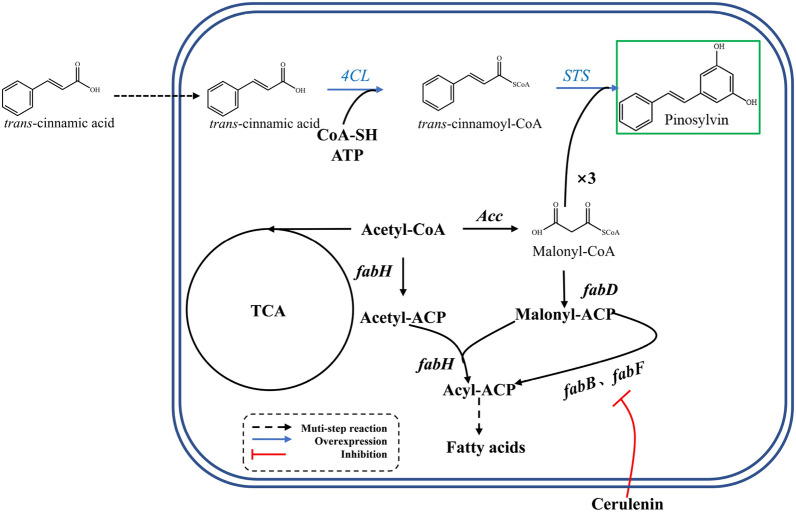
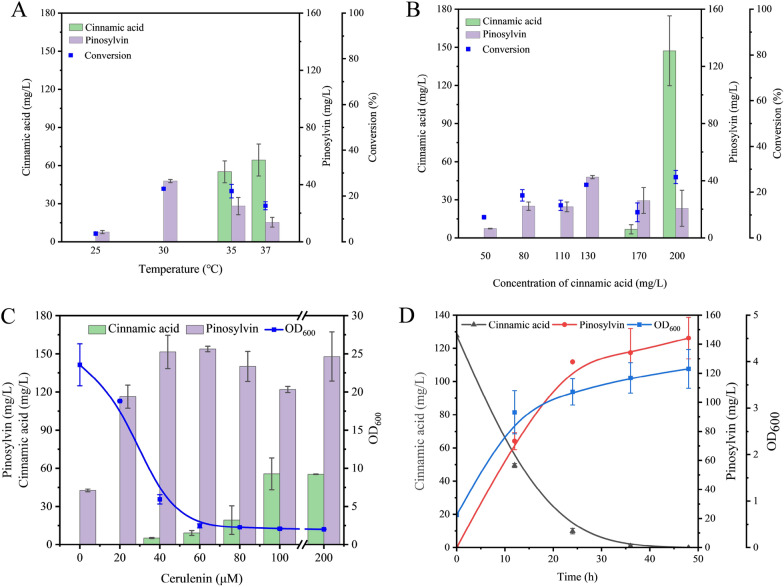
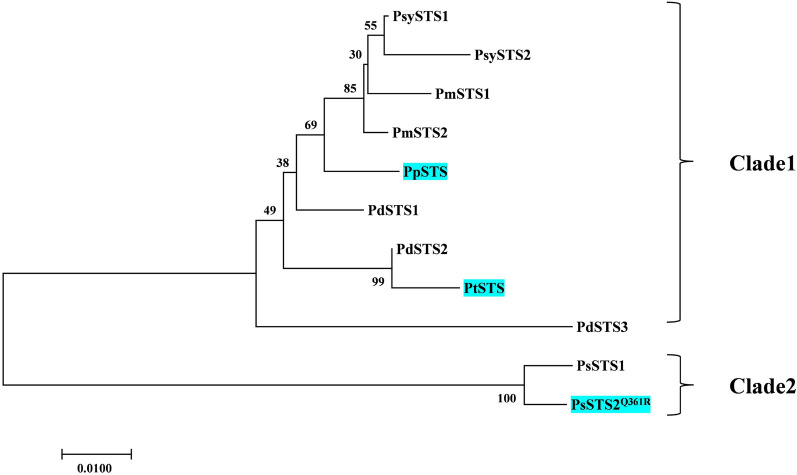
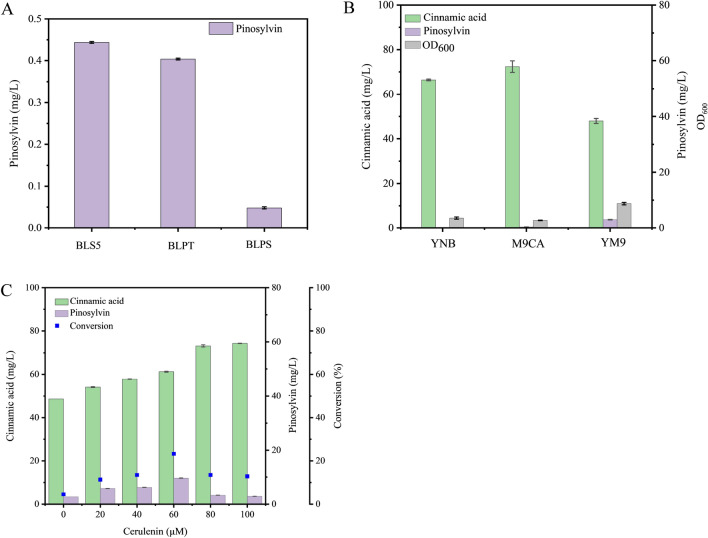
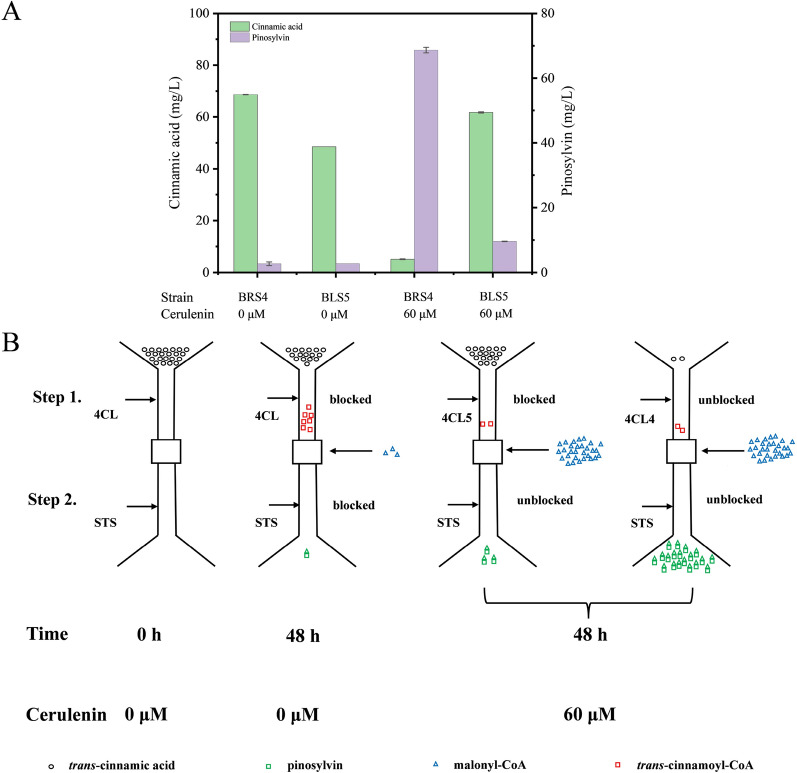
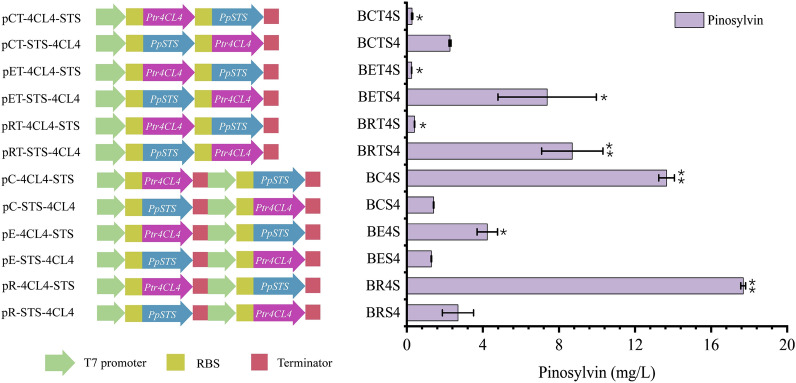
Herein, Escherichia coli was engineered to convert the lignin-derived standard model monomer cinnamic acid into pinosylvin by introducing two novel enzymes from the wood plant: stilbene synthase from Pinus pinea (PpSTS) and 4-Coumarate-CoA ligase from Populus trichocarpa (Ptr4CL4). The expression of Ptr4CL4 drastically improved the production of pinosylvin (42.5 ± 1.1 mg/L), achieving values 15.7-fold higher than that of Ptr4CL5 (another 4-Coumarate-CoA ligase from Populus trichocarpa) in the absence of cerulenin. By adjusting the expression strategy, the optimized engineered strain produced pinosylvin at 153.7 ± 2.2 mg/L with an extremely high yield of 1.20 ± 0.02 mg/mg cinnamic acid in the presence of cerulenin, which is 83.9% ± 1.17 of the theoretical yield. This is the highest reported pinosylvin yield directly from cinnamic acid to date.
Our work highlights the feasibility of microbial production of pinosylvin from cinnamic acid and paves the way for converting lignin-related aromatics to valuable chemicals.
将木质素衍生的芳香单体转化为有价值的化学品,对于提高生物质生物精炼厂的经济竞争力具有广阔的潜力。松白木素是一种具有多种潜在生物活性的有吸引力的药物。
在此,通过引入来自木本植物的两种新酶,对大肠杆菌进行工程改造,使其将木质素衍生的标准模型单体肉桂酸转化为松白木素:来自欧洲赤松的芪合酶(PpSTS)和来自毛果杨的4-香豆酸辅酶A连接酶(Ptr4CL4)。Ptr4CL4的表达显著提高了松白木素的产量(42.5±1.1毫克/升),在没有浅蓝菌素的情况下,其产量比Ptr4CL5(来自毛果杨的另一种4-香豆酸辅酶A连接酶)高15.7倍。通过调整表达策略,优化后的工程菌株在浅蓝菌素存在的情况下,以153.7±2.2毫克/升的产量生产松白木素,肉桂酸的产率极高,为1.20±0.02毫克/毫克,达到理论产率的83.9%±1.17%。这是迄今为止报道的直接从肉桂酸生产松白木素的最高产量。
我们的工作突出了从肉桂酸微生物生产松白木素的可行性,并为将木质素相关芳烃转化为有价值的化学品铺平了道路。