• 文献检索
  • 文档翻译
  • 深度研究
  • 学术资讯
  • Suppr Zotero 插件Zotero 插件
  • 邀请有礼
  • 套餐&价格
  • 历史记录
应用&插件
Suppr Zotero 插件Zotero 插件浏览器插件Mac 客户端Windows 客户端微信小程序
定价
高级版会员购买积分包购买API积分包
服务
文献检索文档翻译深度研究API 文档MCP 服务
关于我们
关于 Suppr公司介绍联系我们用户协议隐私条款
关注我们

Suppr 超能文献

核心技术专利:CN118964589B侵权必究
粤ICP备2023148730 号-1Suppr @ 2026

文献检索

告别复杂PubMed语法,用中文像聊天一样搜索,搜遍4000万医学文献。AI智能推荐,让科研检索更轻松。

立即免费搜索

文件翻译

保留排版,准确专业,支持PDF/Word/PPT等文件格式,支持 12+语言互译。

免费翻译文档

深度研究

AI帮你快速写综述,25分钟生成高质量综述,智能提取关键信息,辅助科研写作。

立即免费体验

语言理解中的情境效应:情绪状态和注意力对语义及句法加工的作用。

Context effects in language comprehension: The role of emotional state and attention on semantic and syntactic processing.

作者信息

Chwilla Dorothee J

机构信息

Donders Centre for Cognition, Donders Institute for Brain, Cognition and Behaviour, Radboud University Nijmegen, Nijmegen, Netherlands.

出版信息

Front Hum Neurosci. 2022 Nov 25;16:1014547. doi: 10.3389/fnhum.2022.1014547. eCollection 2022.

DOI:10.3389/fnhum.2022.1014547
PMID:36504628
原文链接:https://pmc.ncbi.nlm.nih.gov/articles/PMC9732474/
Abstract

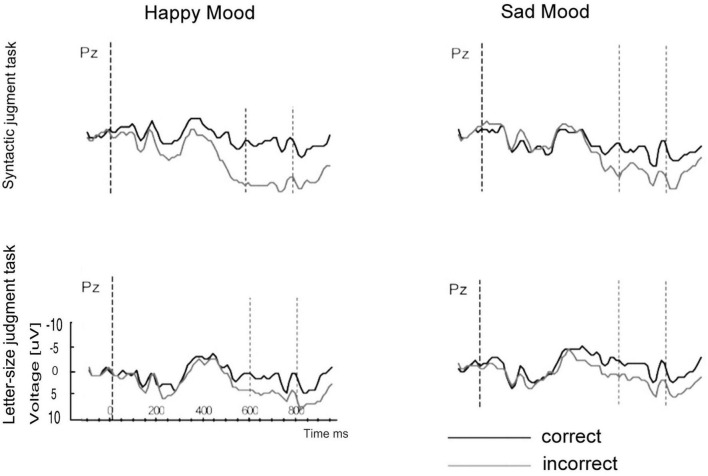
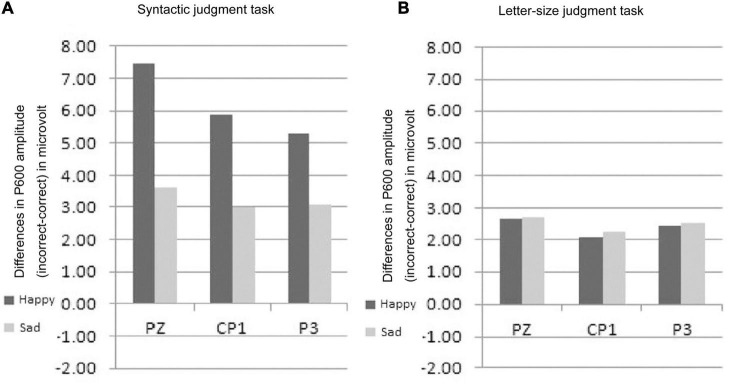
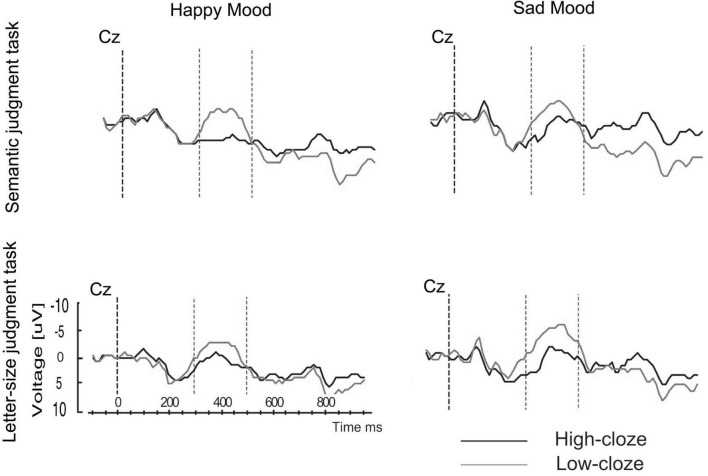
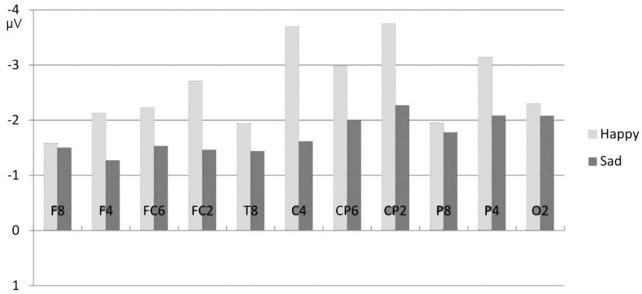
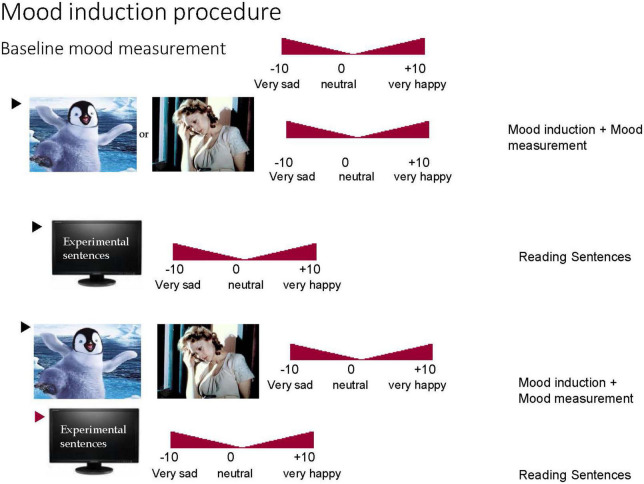
Semantics and syntax are core components of language. The prevailing view was that processing of word meaning and syntactic processing happens in isolation from other systems. In light of proofed interactions between language and other systems, especially with perception, action and emotion, this view became untenable. This article reviews Event-related potential studies conducted at the Donders Centre for Cognition exploring the interplay between language comprehension and a person's emotional state. The research program was aimed at an investigation of the online effects of emotional state on semantic processing and syntactic processing. To this aim we manipulated mood via film fragments (happy vs. sad) before participants read neutral sentences while their EEG was recorded. In Part 1, it is shown that mood impacts online semantic processing (as indicated by N400) and the processing of syntactic violations (as indicated by P600). Part 2 was directed at a further determination of the mechanisms underlying these interactions. The role of heuristics was examined by investigating the effects of mood on the P600 to semantic reversals. The results revealed that mood affects heuristic processing. The next step consisted of an assessment of the role of attention, in the mood-by-semantics and mood-by-syntax interaction. This was accomplished by recording EEG while manipulating attention via task next to emotional state. Participants performed a semantic or syntactic judgment task vs. a letter-size judgment task. The main ERP results were as follows: (i) attention interacts with the mood effect on semantic processing and syntactic processing, respectively, (ii) the effects of mood on semantic processing and syntactic processing are reliable, and (iii) the mood effects on semantic processing are not fixed but context-dependent. In Part 3 the effects of mood on the processing of script knowledge and general world knowledge are presented. Part 4 closes with a discussion of the mechanisms involved in the mood-by-language interactions and recommendations for future research. Regarding the underlying mechanism we propose that heuristics based on semantic expectancies or syntactic expectancies play a key role in the mood-by-language interactions. The results support the view that language takes place in continuous interaction with other (non-language) systems.

摘要

语义和句法是语言的核心组成部分。主流观点认为,词义处理和句法处理与其他系统相互独立进行。鉴于语言与其他系统之间已被证实的相互作用,尤其是与感知、行动和情感的相互作用,这种观点变得站不住脚。本文回顾了在唐德斯认知中心进行的与事件相关电位研究,该研究探索了语言理解与一个人的情绪状态之间的相互作用。该研究项目旨在调查情绪状态对语义处理和句法处理的即时影响。为了实现这一目标,我们在参与者阅读中性句子并记录其脑电图时,通过电影片段(快乐与悲伤)来操纵他们的情绪。在第一部分中,研究表明情绪会影响即时语义处理(由N400表示)和句法违规处理(由P600表示)。第二部分旨在进一步确定这些相互作用背后的机制。通过研究情绪对语义反转的P600的影响来检验启发式的作用。结果表明情绪会影响启发式处理。下一步是评估注意力在情绪与语义以及情绪与句法相互作用中的作用。这是通过在操纵情绪状态的同时通过任务操纵注意力来记录脑电图来完成的。参与者执行语义或句法判断任务与字母大小判断任务。主要的事件相关电位结果如下:(i)注意力分别与情绪对语义处理和句法处理的影响相互作用,(ii)情绪对语义处理和句法处理的影响是可靠的,(iii)情绪对语义处理的影响不是固定的,而是依赖于上下文的。在第三部分中,展示了情绪对脚本知识和一般世界知识处理的影响。第四部分以对情绪与语言相互作用中涉及的机制的讨论以及对未来研究的建议作为结尾。关于潜在机制,我们提出基于语义预期或句法预期的启发式在情绪与语言的相互作用中起关键作用。这些结果支持了语言与其他(非语言)系统持续相互作用的观点。
https://cdn.ncbi.nlm.nih.gov/pmc/blobs/9743/9732474/d060b24da60f/fnhum-16-1014547-g012.jpg
https://cdn.ncbi.nlm.nih.gov/pmc/blobs/9743/9732474/df52c909bfe7/fnhum-16-1014547-g001.jpg
https://cdn.ncbi.nlm.nih.gov/pmc/blobs/9743/9732474/addf8cebff9b/fnhum-16-1014547-g002.jpg
https://cdn.ncbi.nlm.nih.gov/pmc/blobs/9743/9732474/6e1d44b62d74/fnhum-16-1014547-g003.jpg
https://cdn.ncbi.nlm.nih.gov/pmc/blobs/9743/9732474/80f5213b45e7/fnhum-16-1014547-g004.jpg
https://cdn.ncbi.nlm.nih.gov/pmc/blobs/9743/9732474/c5b628c5427f/fnhum-16-1014547-g005.jpg
https://cdn.ncbi.nlm.nih.gov/pmc/blobs/9743/9732474/9312bd8f07d9/fnhum-16-1014547-g006.jpg
https://cdn.ncbi.nlm.nih.gov/pmc/blobs/9743/9732474/3ff198e365f9/fnhum-16-1014547-g007.jpg
https://cdn.ncbi.nlm.nih.gov/pmc/blobs/9743/9732474/9f83e1a76eef/fnhum-16-1014547-g008.jpg
https://cdn.ncbi.nlm.nih.gov/pmc/blobs/9743/9732474/e89754aaaaf2/fnhum-16-1014547-g009.jpg
https://cdn.ncbi.nlm.nih.gov/pmc/blobs/9743/9732474/0458b4e57238/fnhum-16-1014547-g010.jpg
https://cdn.ncbi.nlm.nih.gov/pmc/blobs/9743/9732474/b5c6a83579db/fnhum-16-1014547-g011.jpg
https://cdn.ncbi.nlm.nih.gov/pmc/blobs/9743/9732474/d060b24da60f/fnhum-16-1014547-g012.jpg
https://cdn.ncbi.nlm.nih.gov/pmc/blobs/9743/9732474/df52c909bfe7/fnhum-16-1014547-g001.jpg
https://cdn.ncbi.nlm.nih.gov/pmc/blobs/9743/9732474/addf8cebff9b/fnhum-16-1014547-g002.jpg
https://cdn.ncbi.nlm.nih.gov/pmc/blobs/9743/9732474/6e1d44b62d74/fnhum-16-1014547-g003.jpg
https://cdn.ncbi.nlm.nih.gov/pmc/blobs/9743/9732474/80f5213b45e7/fnhum-16-1014547-g004.jpg
https://cdn.ncbi.nlm.nih.gov/pmc/blobs/9743/9732474/c5b628c5427f/fnhum-16-1014547-g005.jpg
https://cdn.ncbi.nlm.nih.gov/pmc/blobs/9743/9732474/9312bd8f07d9/fnhum-16-1014547-g006.jpg
https://cdn.ncbi.nlm.nih.gov/pmc/blobs/9743/9732474/3ff198e365f9/fnhum-16-1014547-g007.jpg
https://cdn.ncbi.nlm.nih.gov/pmc/blobs/9743/9732474/9f83e1a76eef/fnhum-16-1014547-g008.jpg
https://cdn.ncbi.nlm.nih.gov/pmc/blobs/9743/9732474/e89754aaaaf2/fnhum-16-1014547-g009.jpg
https://cdn.ncbi.nlm.nih.gov/pmc/blobs/9743/9732474/0458b4e57238/fnhum-16-1014547-g010.jpg
https://cdn.ncbi.nlm.nih.gov/pmc/blobs/9743/9732474/b5c6a83579db/fnhum-16-1014547-g011.jpg
https://cdn.ncbi.nlm.nih.gov/pmc/blobs/9743/9732474/d060b24da60f/fnhum-16-1014547-g012.jpg

相似文献

1
Context effects in language comprehension: The role of emotional state and attention on semantic and syntactic processing.语言理解中的情境效应:情绪状态和注意力对语义及句法加工的作用。
Front Hum Neurosci. 2022 Nov 25;16:1014547. doi: 10.3389/fnhum.2022.1014547. eCollection 2022.
2
Contributions of emotional state and attention to the processing of syntactic agreement errors: evidence from P600.情绪状态和注意力对句法一致性错误加工的影响:来自P600的证据
Front Psychol. 2015 Apr 9;6:388. doi: 10.3389/fpsyg.2015.00388. eCollection 2015.
3
The interplay between mood and language comprehension: evidence from P600 to semantic reversal anomalies.心境与语言理解的相互作用:来自 P600 对语义反转异常的证据。
Neuropsychologia. 2013 May;51(6):1027-39. doi: 10.1016/j.neuropsychologia.2013.02.007. Epub 2013 Feb 27.
4
The relationship of language and emotion: N400 support for an embodied view of language comprehension.语言与情绪的关系:N400 对语言理解具身观的支持。
J Cogn Neurosci. 2011 Sep;23(9):2400-14. doi: 10.1162/jocn.2010.21578. Epub 2010 Sep 17.
5
Interplay between syntax and semantics during sentence comprehension: ERP effects of combining syntactic and semantic violations.句子理解过程中句法与语义的相互作用:句法和语义违反相结合的事件相关电位效应
J Cogn Neurosci. 2003 Aug 15;15(6):883-99. doi: 10.1162/089892903322370807.
6
The influence of mood on the processing of syntactic anomalies: evidence from P600.情绪对句法异常加工的影响:来自 P600 的证据。
Neuropsychologia. 2010 Oct;48(12):3521-31. doi: 10.1016/j.neuropsychologia.2010.08.001. Epub 2010 Aug 7.
7
Neural mechanisms of language comprehension: challenges to syntax.语言理解的神经机制:句法面临的挑战
Brain Res. 2007 May 18;1146:23-49. doi: 10.1016/j.brainres.2006.12.063. Epub 2006 Dec 23.
8
The Effect of Emotional State on the Processing of Morphosyntactic and Semantic Reversal Anomalies in Japanese: Evidence from Event-Related Brain Potentials.情绪状态对日语形态句法和语义反转异常加工的影响:来自事件相关脑电位的证据。
J Psycholinguist Res. 2018 Feb;47(1):261-277. doi: 10.1007/s10936-017-9528-5.
9
Melodic pitch expectation interacts with neural responses to syntactic but not semantic violations.旋律音高期望与句法而非语义违反的神经反应相互作用。
Cortex. 2013 Sep;49(8):2186-200. doi: 10.1016/j.cortex.2012.08.024. Epub 2012 Sep 20.
10
Re-examination of Chinese semantic processing and syntactic processing: evidence from conventional ERPs and reconstructed ERPs by residue iteration decomposition (RIDE).重新审视汉语语义加工和句法加工:来自传统事件相关电位及残差迭代分解重构事件相关电位的证据
PLoS One. 2015 Jan 23;10(1):e0117324. doi: 10.1371/journal.pone.0117324. eCollection 2015.

引用本文的文献

1
Effects of subliminal emotional facial expressions on language comprehension as revealed by event-related brain potentials.事件相关脑电位揭示的阈下情绪面部表情对语言理解的影响。
Sci Rep. 2025 Jul 1;15(1):20449. doi: 10.1038/s41598-025-06037-2.
2
The cognitive science of language diversity: achievements and challenges.语言多样性的认知科学:成就与挑战
Cogn Process. 2025 Feb 25. doi: 10.1007/s10339-025-01262-z.

本文引用的文献

1
A pre-registered, multi-lab non-replication of the action-sentence compatibility effect (ACE).一项预先注册的、多实验室的动作句子兼容性效应(ACE)的非复制研究。
Psychon Bull Rev. 2022 Apr;29(2):613-626. doi: 10.3758/s13423-021-01927-8. Epub 2021 Nov 9.
2
Decoding subjective emotional arousal from EEG during an immersive virtual reality experience.从沉浸式虚拟现实体验中的 EEG 解码主观情绪唤醒。
Elife. 2021 Oct 28;10:e64812. doi: 10.7554/eLife.64812.
3
Gradual positive and negative affect induction: The effect of verbalizing affective content.
渐进式正负面情感诱导:表达情感内容的影响。
PLoS One. 2020 May 29;15(5):e0233592. doi: 10.1371/journal.pone.0233592. eCollection 2020.
4
Collaborating with individuals with lived experience to adapt CANMAT clinical depression guidelines into a patient treatment guide: The CHOICE-D co-design process.与有过亲身体验的个人合作,将 CANMAT 临床抑郁症指南改编为患者治疗指南:CHOICE-D 共同设计过程。
J Eval Clin Pract. 2020 Aug;26(4):1259-1269. doi: 10.1111/jep.13308. Epub 2019 Nov 14.
5
Predicting while comprehending language: A theory and review.预测与理解语言:理论与综述。
Psychol Bull. 2018 Oct;144(10):1002-1044. doi: 10.1037/bul0000158. Epub 2018 Jun 28.
6
Negative induced mood influences word production: An event-related potentials study with a covert picture naming task.消极诱发情绪影响词汇生成:一项采用隐蔽图片命名任务的事件相关电位研究。
Neuropsychologia. 2017 Jan 27;95:227-239. doi: 10.1016/j.neuropsychologia.2016.12.025. Epub 2016 Dec 23.
7
What do we mean by prediction in language comprehension?我们所说的语言理解中的预测是什么意思?
Lang Cogn Neurosci. 2016;31(1):32-59. doi: 10.1080/23273798.2015.1102299. Epub 2015 Nov 13.
8
The cognitive-emotional brain: Opportunities [corrected] and challenges for understanding neuropsychiatric disorders.认知-情感大脑:理解神经精神障碍的机遇[已修正]与挑战
Behav Brain Sci. 2015;38:e86. doi: 10.1017/S0140525X14001010.
9
Just out of reach: On the reliability of the action-sentence compatibility effect.难以企及:论动作 - 句子兼容性效应的可靠性。
J Exp Psychol Gen. 2015 Dec;144(6):e116-41. doi: 10.1037/xge0000125.
10
Contributions of emotional state and attention to the processing of syntactic agreement errors: evidence from P600.情绪状态和注意力对句法一致性错误加工的影响:来自P600的证据
Front Psychol. 2015 Apr 9;6:388. doi: 10.3389/fpsyg.2015.00388. eCollection 2015.