Department of Neurology, Max Planck Institute for Human Cognitive and Brain Sciences, Leipzig, Germany.
Humboldt-Universität zu Berlin, Faculty of Philosophy, Berlin School of Mind and Brain, Berlin, Germany.
Elife. 2021 Oct 28;10:e64812. doi: 10.7554/eLife.64812.
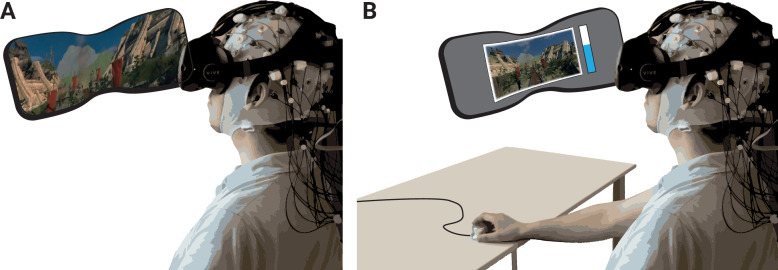
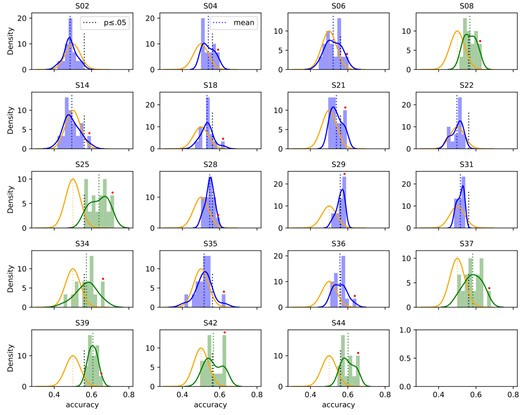
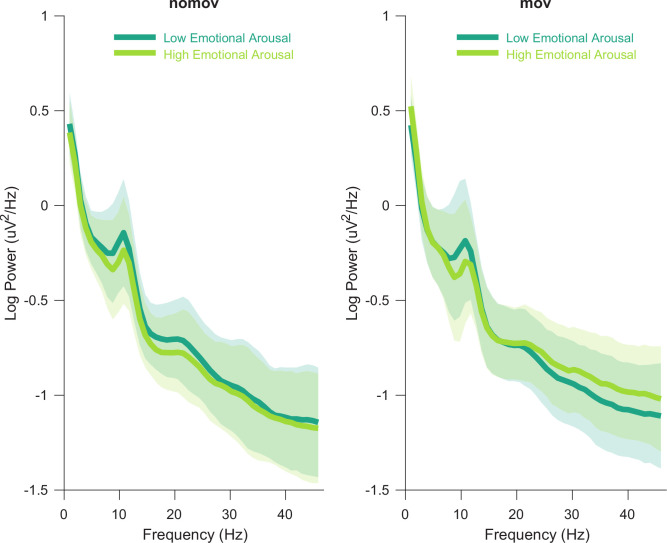
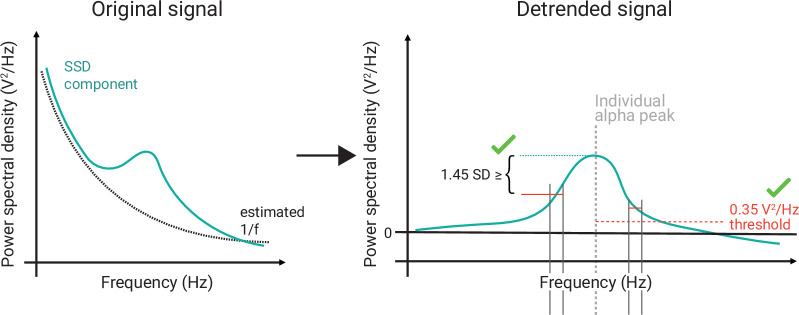
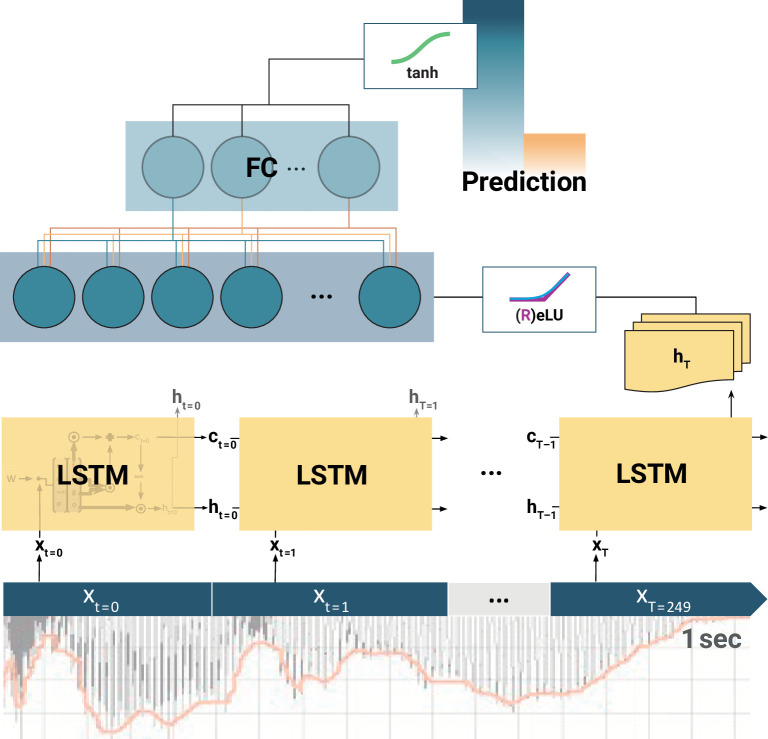
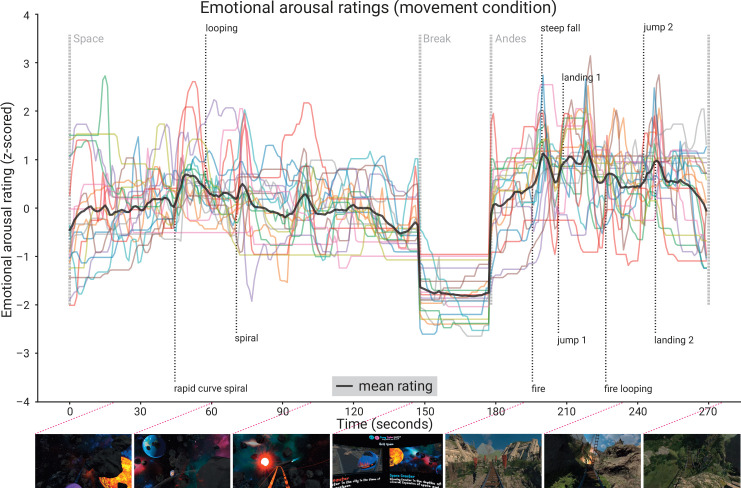
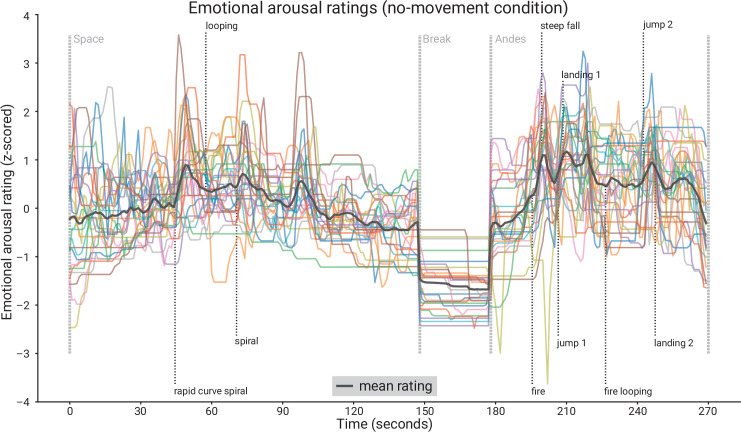
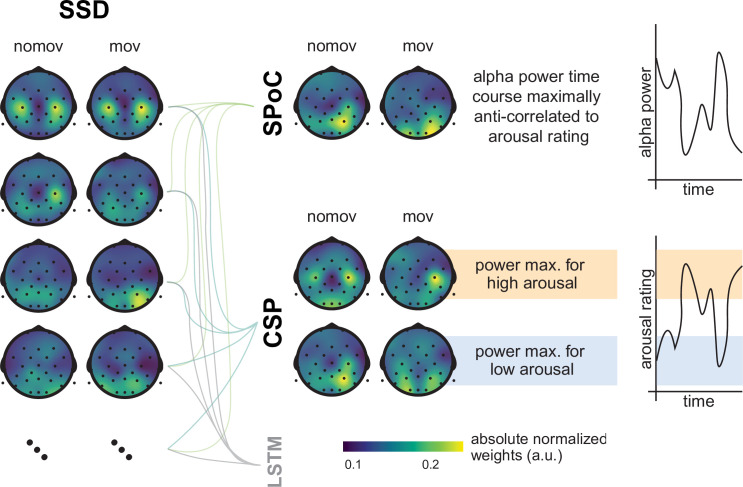
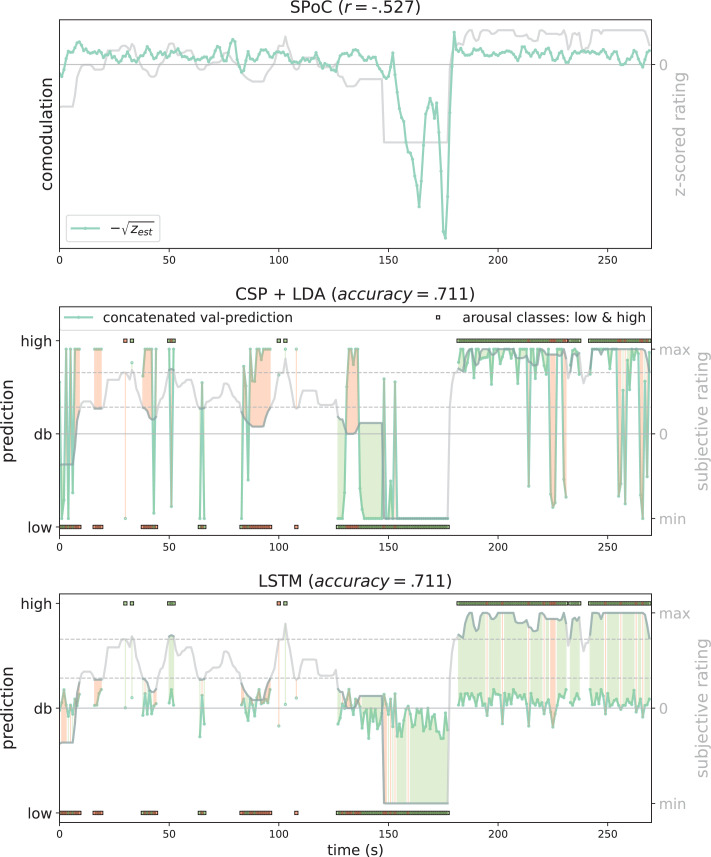
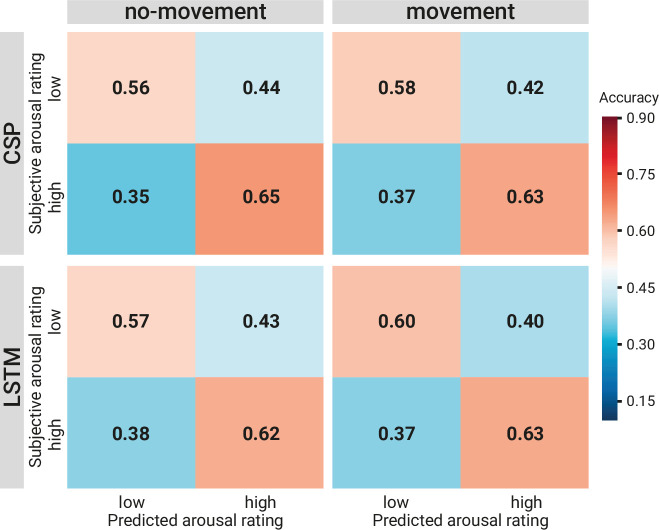
Immersive virtual reality (VR) enables naturalistic neuroscientific studies while maintaining experimental control, but dynamic and interactive stimuli pose methodological challenges. We here probed the link between emotional arousal, a fundamental property of affective experience, and parieto-occipital alpha power under naturalistic stimulation: 37 young healthy adults completed an immersive VR experience, which included rollercoaster rides, while their EEG was recorded. They then continuously rated their subjective emotional arousal while viewing a replay of their experience. The association between emotional arousal and parieto-occipital alpha power was tested and confirmed by (1) decomposing the continuous EEG signal while maximizing the comodulation between alpha power and arousal ratings and by (2) decoding periods of high and low arousal with discriminative common spatial patterns and a long short-term memory recurrent neural network. We successfully combine EEG and a naturalistic immersive VR experience to extend previous findings on the neurophysiology of emotional arousal towards real-world neuroscience.
沉浸式虚拟现实 (VR) 能够在保持实验控制的同时进行自然主义的神经科学研究,但动态和交互的刺激带来了方法学上的挑战。我们在这里探讨了情感唤醒(情感体验的基本属性)与自然刺激下顶枕部 alpha 功率之间的联系:37 名年轻健康的成年人在完成一次沉浸式 VR 体验,其中包括过山车骑行的同时,记录他们的 EEG。然后,他们在观看体验重播的同时连续对自己的主观情感唤醒进行评分。通过(1)在最大程度地增加 alpha 功率和唤醒评分之间的共调制的情况下分解连续 EEG 信号,以及(2)使用判别式公共空间模式和长短时记忆递归神经网络对高唤醒和低唤醒的时间段进行解码,我们验证了情感唤醒和顶枕部 alpha 功率之间的关联。我们成功地将 EEG 与自然主义的沉浸式 VR 体验相结合,将情感唤醒的神经生理学研究扩展到了真实世界的神经科学领域。