Harvard Medical School, Boston, MA, United States.
Ann Romney Center for Neurologic Diseases, Department of Neurology, Brigham and Women's Hospital, Boston, MA, United States.
Front Immunol. 2022 Nov 23;13:956907. doi: 10.3389/fimmu.2022.956907. eCollection 2022.
Parenteral anti-CD3 Mab (OKT3) has been used to treat transplant rejection and parental administration of a humanized anti-CD3 Mab (Teplizumab) showed positive effects in diabetes. Nasal administration of anti-CD3 Mab has not been carried out in humans. Nasal anti-CD3 Mab suppresses autoimmune diseases and central nervous system (CNS) inflammation in animal models. We investigated the safety and immune effects of a fully humanized, previously uncharacterized nasal anti-CD3 Mab (Foralumab) in humans and its stimulatory properties.
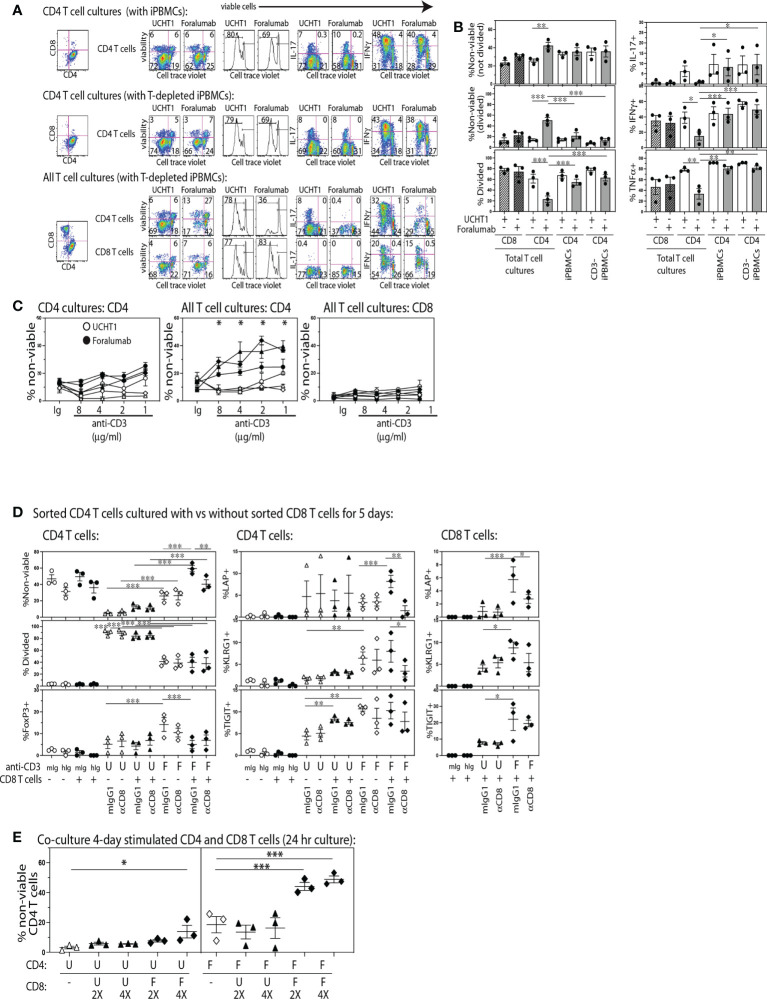
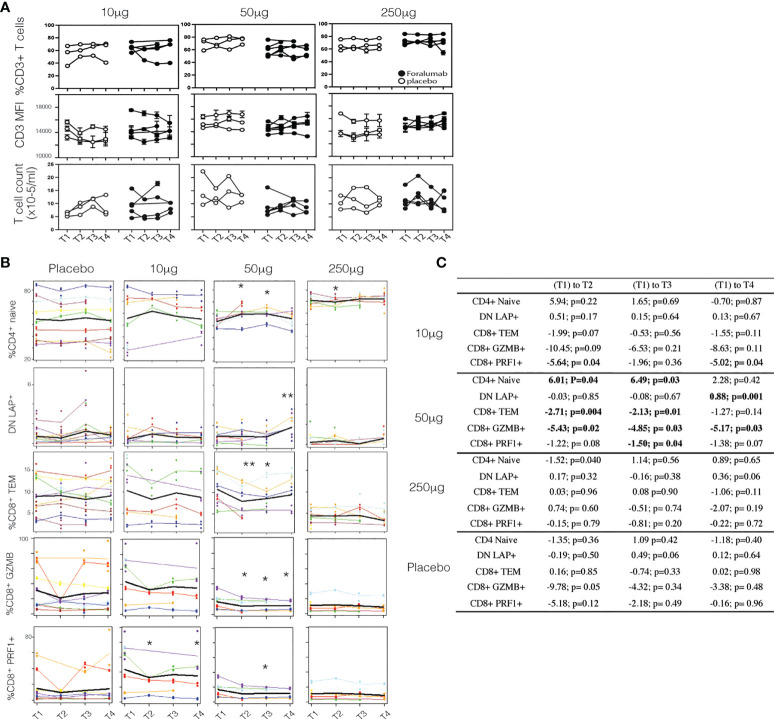
, Foralumab were compared to UCHT1 anti-human CD3 mAb. For human administration, 27 healthy volunteers (9 per group) received nasal Foralumab or placebo at a dose of 10ug, 50ug, or 250ug daily for 5 days. Safety was assessed and immune parameters measured on day 1 (pre-treatment), 7, 14, and 30 by FACS and by scRNAseq.
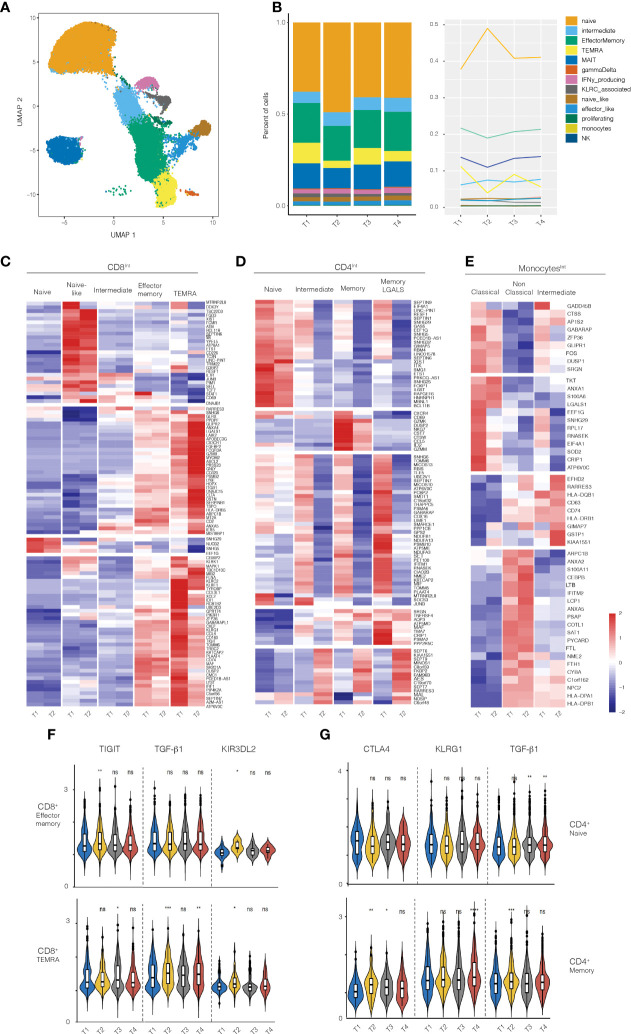
, Foralumab preferentially induced CD8+ T cell stimulation, reduced CD4+ T cell proliferation and lowered expression of IFNg, IL-17 and TNFa. Foralumab induced LAP, TIGIT, and KLRG1 immune checkpoint molecules on CD8+ and CD4+ T cells in a mechanism independent of CD8 T cells. , nasal Foralumab did not modulate CD3 from the T cell surface at any dose. Immune effects were primarily observed at the 50ug dose and consisted of reduction of CD8+ effector memory cells, an increase in naive CD8+ and CD4+ T cells, and reduced CD8+ T cell granzyme B and perforin expression. Differentially expressed genes observed by scRNAseq in CD8+ and CD4+ populations promoted survival and were anti-inflammatory. In the CD8+ TEMRA population there was induction of TIGIT, TGFB1 and KIR3DL2, indicative of a regulatory phenotype. In the memory CD4+ population, there was induction of CTLA4, KLRG1, and TGFB whereas there was an induction of TGF-B1 in naïve CD4+ T cells. In monocytes, there was induction of genes (HLA-DP, HLA-DQ) that promote a less inflammatory immune response. No side effects were observed, and no subjects developed human anti-mouse antibodies.
These findings demonstrate that nasal Foralumab is safe and immunologically active in humans and presents a new avenue for the treatment of autoimmune and CNS diseases.
静脉注射抗 CD3 MAb(OKT3)已被用于治疗移植排斥反应,而人源化抗 CD3 MAb(Teplizumab)的母体给药在糖尿病中显示出积极的效果。尚未在人体中进行鼻内给予抗 CD3 MAb 的治疗。鼻内给予抗 CD3 MAb 可抑制动物模型中的自身免疫性疾病和中枢神经系统(CNS)炎症。我们研究了一种全新的、以前未被描述的人源化鼻内抗 CD3 MAb(Foralumab)在人体中的安全性和免疫效果,以及其刺激特性。
在这项研究中,我们比较了鼻腔给予 Foralumab 与UCHT1 抗人 CD3 mAb 的效果。对于人体给药,27 名健康志愿者(每组 9 人)每天接受鼻腔给予 10μg、50μg 或 250μg 的 Foralumab 或安慰剂,连续 5 天。在第 1 天(预处理)、第 7 天、第 14 天和第 30 天,通过流式细胞术和 scRNAseq 评估安全性并测量免疫参数。
鼻腔给予 Foralumab 可选择性地诱导 CD8+T 细胞的刺激,减少 CD4+T 细胞的增殖,并降低 IFNg、IL-17 和 TNFa 的表达。Foralumab 诱导 CD8+和 CD4+T 细胞上的 LAP、TIGIT 和 KLRG1 免疫检查点分子,其机制与 CD8 T 细胞无关。此外,在任何剂量下,鼻腔给予的 Foralumab 均不会调节 T 细胞表面的 CD3。免疫效应主要在 50μg 剂量时观察到,包括减少 CD8+效应记忆细胞,增加幼稚的 CD8+和 CD4+T 细胞,以及降低 CD8+T 细胞颗粒酶 B 和穿孔素的表达。scRNAseq 在 CD8+和 CD4+群体中观察到的差异表达基因促进了细胞的存活并具有抗炎作用。在 CD8+TEMRA 群体中,诱导了 TIGIT、TGFB1 和 KIR3DL2,表明存在调节表型。在记忆性 CD4+群体中,诱导了 CTLA4、KLRG1 和 TGFB,而在幼稚的 CD4+T 细胞中诱导了 TGF-B1。在单核细胞中,诱导了(HLA-DP、HLA-DQ)促进炎症反应减轻的基因。未观察到不良反应,也没有受试者产生人抗鼠抗体。
这些发现表明,鼻腔给予 Foralumab 在人体中是安全且具有免疫活性的,并为治疗自身免疫性和中枢神经系统疾病提供了新的途径。