cBRAIN, Department of Child and Adolescent Psychiatry, Psychosomatics, and Psychotherapy, Ludwig-Maximilians-Universität, Munich, Germany.
Psychiatry Neuroimaging Laboratory, Department of Psychiatry, Brigham and Women's Hospital, Mass General Brigham, Harvard Medical School, Boston, MA, 02115, USA.
Neuropsychol Rev. 2023 Mar;33(1):122-143. doi: 10.1007/s11065-022-09566-z. Epub 2022 Dec 12.
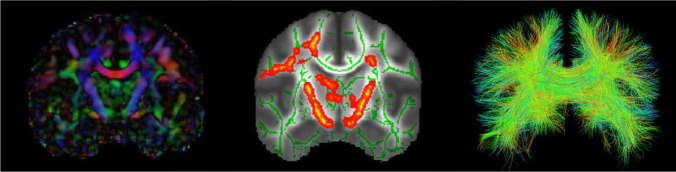
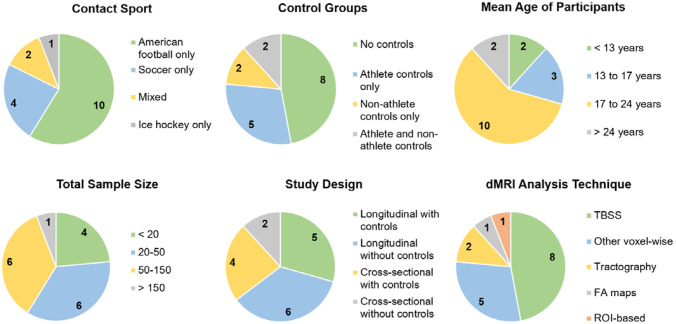
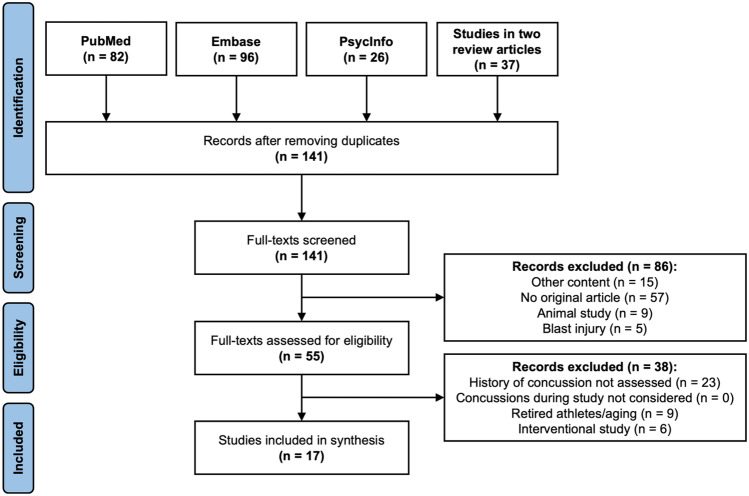
Repetitive head impacts (RHI) are commonly observed in athletes participating in contact sports such as American football, ice hockey, and soccer. RHI usually do not result in acute symptoms and are therefore often referred to as subclinical or "subconcussive" head impacts. Epidemiological studies report an association between exposure to RHI and an increased risk for the development of neurodegenerative diseases. Diffusion magnetic resonance imaging (dMRI) has emerged as particularly promising for the detection of subtle alterations in brain microstructure following exposure to sport-related RHI. The purpose of this study was to perform a systematic review of studies investigating the effects of exposure to RHI on brain microstructure using dMRI. We used the Preferred Reporting Items for Systematic Reviews and Meta-Analyses (PRISMA) to determine studies that met inclusion and exclusion criteria across three databases. Seventeen studies were identified and critically evaluated. Results from these studies suggest an association between white matter alterations and RHI exposure in youth and young adult athletes. The most consistent finding across studies was lower or decreased fractional anisotropy (FA), a measure of the directionality of the diffusion of water molecules, associated with greater exposure to sport-related RHI. Whether decreased FA is associated with functional outcome (e.g., cognition) in those exposed to RHI is yet to be determined. This review further identified areas of importance for future research to increase the diagnostic and prognostic value of dMRI in RHI and to improve our understanding of the effects of RHI on brain physiology and microstructure.
重复性头部撞击(RHI)在参与接触性运动的运动员中很常见,如美式橄榄球、冰球和足球。RHI 通常不会导致急性症状,因此通常被称为亚临床或“亚脑震荡性”头部撞击。流行病学研究报告称,暴露于 RHI 与神经退行性疾病发展风险增加之间存在关联。扩散磁共振成像(dMRI)已成为检测与运动相关的 RHI 后大脑微观结构细微变化的一种很有前途的方法。本研究旨在对使用 dMRI 研究暴露于 RHI 对大脑微观结构影响的研究进行系统综述。我们使用系统评价和荟萃分析的首选报告项目(PRISMA)来确定符合三个数据库纳入和排除标准的研究。确定了 17 项研究并进行了批判性评估。这些研究的结果表明,青少年和年轻成年运动员的白质改变与 RHI 暴露之间存在关联。研究中最一致的发现是与运动相关的 RHI 暴露量更大时,水分子扩散的方向性的衡量标准(即各向异性分数,FA)降低或减少。FA 降低是否与暴露于 RHI 者的功能结果(例如认知)相关仍有待确定。本综述还确定了未来研究的重要领域,以提高 dMRI 在 RHI 中的诊断和预后价值,并增进我们对 RHI 对大脑生理学和微观结构的影响的理解。