Laboratory of Chromatin and Gene Regulation during Development, Imagine Institute, INSERM UMR1163, Paris Cité University, Paris, France.
Biotherapy Clinical Investigation Center, Necker Children's Hospital, Assistance Publique Hopitaux de Paris, Paris, France.
Blood. 2023 Mar 9;141(10):1169-1179. doi: 10.1182/blood.2022016629.
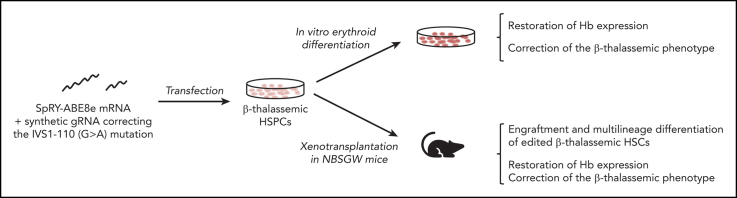
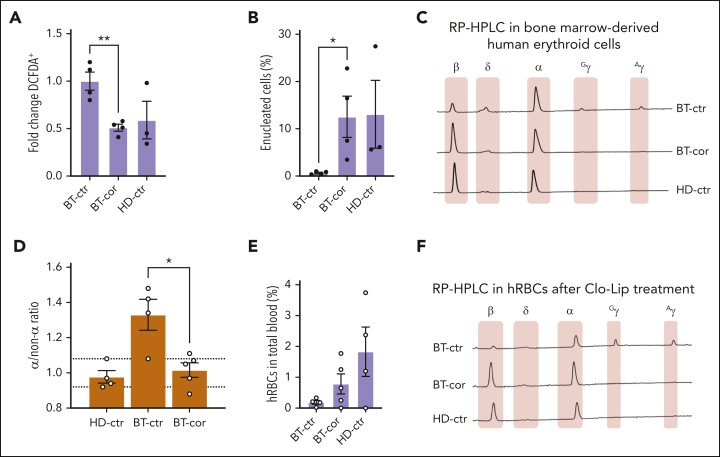
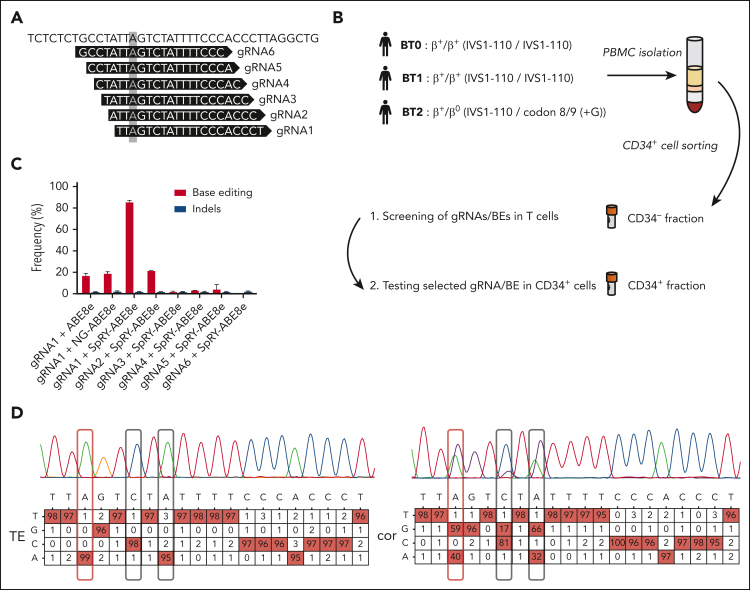
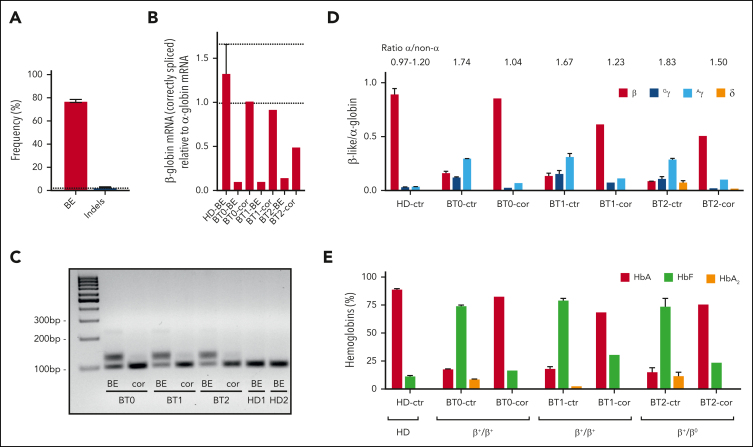
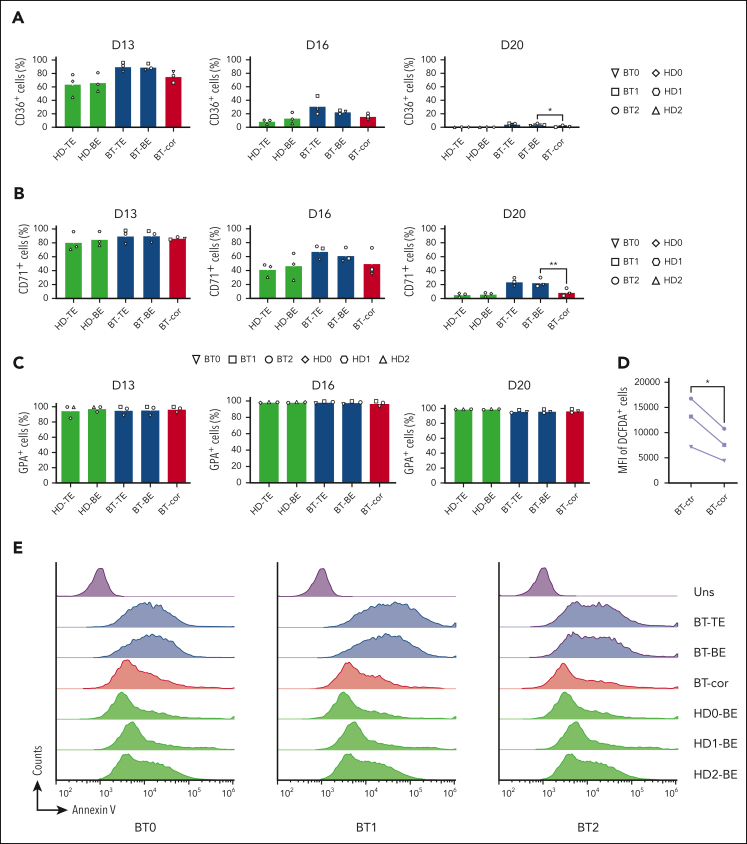
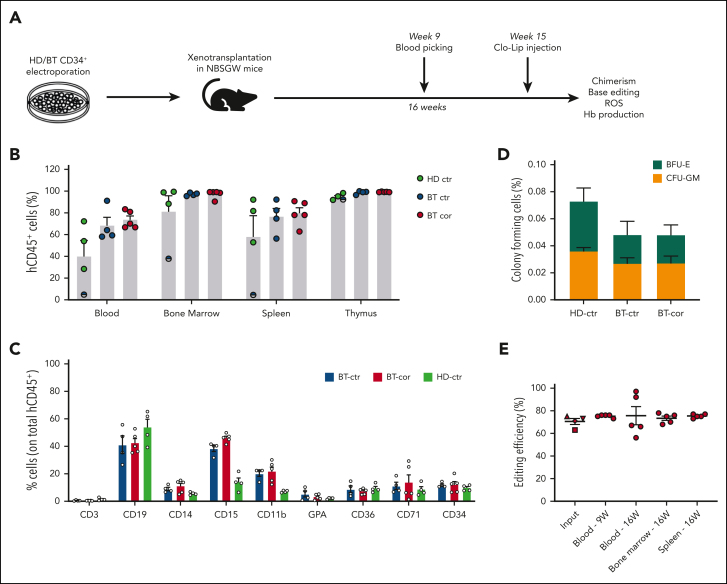
β-Thalassemia (BT) is one of the most common genetic diseases worldwide and is caused by mutations affecting β-globin production. The only curative treatment is allogenic hematopoietic stem/progenitor cells (HSPCs) transplantation, an approach limited by compatible donor availability and immunological complications. Therefore, transplantation of autologous, genetically-modified HSPCs is an attractive therapeutic option. However, current gene therapy strategies based on the use of lentiviral vectors are not equally effective in all patients and CRISPR/Cas9 nuclease-based strategies raise safety concerns. Thus, base editing strategies aiming to correct the genetic defect in patients' HSPCs could provide safe and effective treatment. Here, we developed a strategy to correct one of the most prevalent BT mutations (IVS1-110 [G>A]) using the SpRY-ABE8e base editor. RNA delivery of the base editing system was safe and led to ∼80% of gene correction in the HSPCs of patients with BT without causing dangerous double-strand DNA breaks. In HSPC-derived erythroid populations, this strategy was able to restore β-globin production and correct inefficient erythropoiesis typically observed in BT both in vitro and in vivo. In conclusion, this proof-of-concept study paves the way for the development of a safe and effective autologous gene therapy approach for BT.
β-地中海贫血症(BT)是全球最常见的遗传性疾病之一,由影响β-球蛋白产生的基因突变引起。唯一的根治方法是异体造血干细胞/祖细胞(HSPCs)移植,但这种方法受到供体匹配和免疫并发症的限制。因此,移植自体、基因修饰的 HSPCs 是一种有吸引力的治疗选择。然而,目前基于慢病毒载体的基因治疗策略在所有患者中的效果并不相同,而基于 CRISPR/Cas9 核酸酶的策略则引发了安全性问题。因此,旨在纠正患者 HSPCs 中遗传缺陷的碱基编辑策略可能为患者提供安全有效的治疗方法。在这里,我们开发了一种使用 SpRY-ABE8e 碱基编辑器来纠正最常见的 BT 突变之一(IVS1-110[G>A])的策略。碱基编辑系统的 RNA 递送是安全的,可使 BT 患者的 HSPCs 中约 80%的基因得到纠正,而不会导致危险的双链 DNA 断裂。在 HSPC 衍生的红细胞群体中,该策略能够恢复β-球蛋白的产生,并纠正 BT 中通常观察到的低效红细胞生成,无论是在体外还是体内。总之,这项概念验证研究为开发安全有效的 BT 自体基因治疗方法铺平了道路。