Department of General Surgery, Guangdong Provincial People's Hospital, Guangdong Academy of Medical Sciences, Guangzhou, Guangdong 510080, China.
Guangdong Cardiovascular Institute, Guangdong Provincial People's Hospital, Guangdong Academy of Medical Sciences, Guangzhou, Guangdong 510080, China.
Mediators Inflamm. 2022 Dec 6;2022:5184721. doi: 10.1155/2022/5184721. eCollection 2022.
Amentoflavone, a natural biflavone, exerts anti-inflammation, antioxidation, and antiapoptosis effects on many diseases. However, the mechanism of amentoflavone on neuroinflammation-related diseases has not been comprehensively examined clearly.
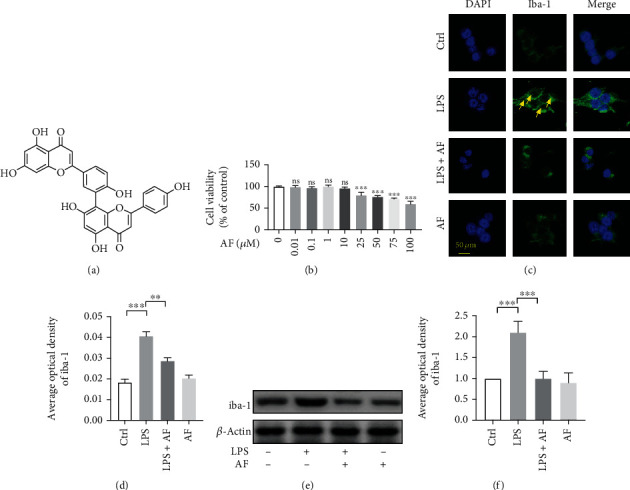
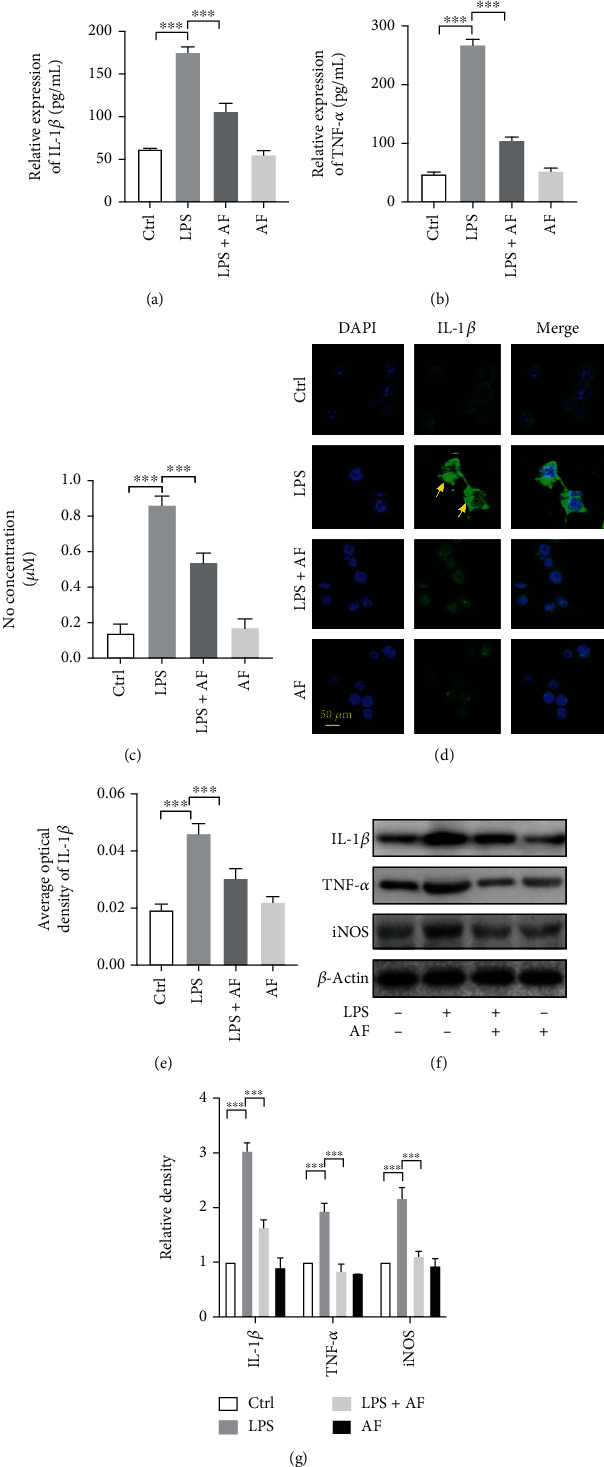
BV2 microglial cells were treated with amentoflavone (10 M), followed by lipopolysaccharide (LPS). Microglial activation and migration ability and the expression of proinflammatory cytokines and other signaling proteins were determined using immunohistochemistry, immunofluorescence, quantitative real-time polymerase chain reaction, Western blotting, enzyme-linked immunosorbent assay, and wound-healing assays.
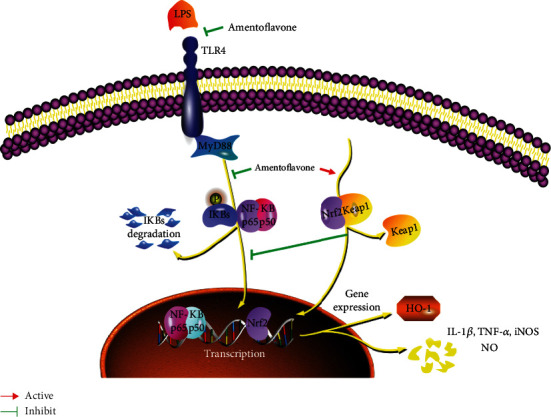
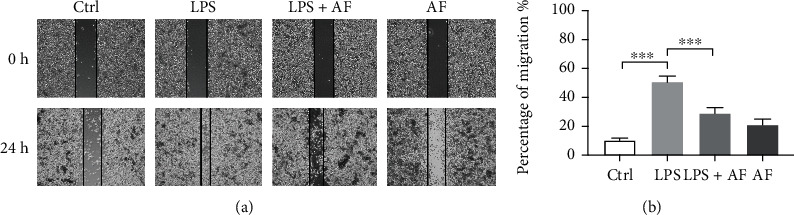
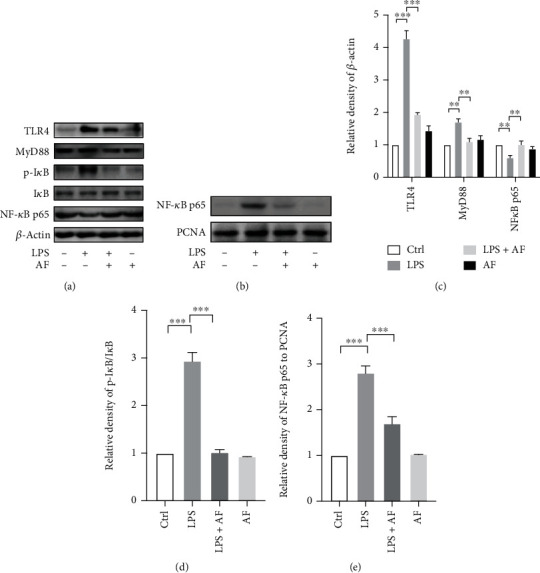
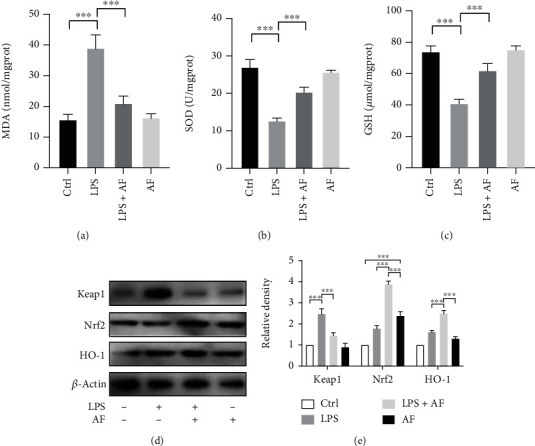
Amentoflavone restored LPS-induced microglia activation, migration, and inflammation response which depends on regulating toll-like receptor 4 (TLR4)/myeloid differentiation factor 88 (MyD88)/nuclear factor kappa B (NF-B) pathway. In addition, amentoflavone also enhanced nuclear factor erythroid 2-related factor 2 (Nrf2)/heme oxygenase-1 (HO-1) levels in LPS-treated BV2 microglial cells.
Amentoflavone ameliorated LPS-induced neuroinflammatory response and oxidative stress in BV2 microglia. These data provide new insight into the mechanism of amentoflavone in the treatment of neuroinflammation-related diseases. Therefore, amentoflavone may be a potential therapeutic option for neurological disorders.
穗花杉双黄酮是一种天然的双黄酮,对许多疾病具有抗炎、抗氧化和抗凋亡作用。然而,穗花杉双黄酮在神经炎症相关疾病中的作用机制尚未得到全面深入的研究。
用穗花杉双黄酮(10μM)处理 BV2 小胶质细胞,然后用脂多糖(LPS)处理。用免疫组织化学、免疫荧光、实时定量聚合酶链反应、Western blot、酶联免疫吸附试验和划痕愈合试验测定小胶质细胞的激活和迁移能力以及促炎细胞因子和其他信号蛋白的表达。
穗花杉双黄酮恢复了 LPS 诱导的小胶质细胞激活、迁移和炎症反应,这依赖于调节 Toll 样受体 4(TLR4)/髓样分化因子 88(MyD88)/核因子 kappa B(NF-B)途径。此外,穗花杉双黄酮还增强了 LPS 处理的 BV2 小胶质细胞中核因子红细胞 2 相关因子 2(Nrf2)/血红素加氧酶 1(HO-1)的水平。
穗花杉双黄酮改善了 LPS 诱导的 BV2 小胶质细胞神经炎症反应和氧化应激。这些数据为穗花杉双黄酮在治疗神经炎症相关疾病中的作用机制提供了新的见解。因此,穗花杉双黄酮可能是治疗神经紊乱的一种潜在治疗选择。