Bongolo Christian Cedric, Thokerunga Erick, Yan Qian, Yacouba Mohamed Bassirou Moukeila, Wang Chao
Wuhan Sheba Precision Medical Technology Co. Ltd., Wuhan, 430022 Hubei, China.
Department & Program of Clinical Laboratory Medicine, Center for Gene Diagnosis, Zhongnan Hospital of Wuhan University, Wuhan 43007, China.
Stem Cells Int. 2022 Dec 7;2022:9748714. doi: 10.1155/2022/9748714. eCollection 2022.
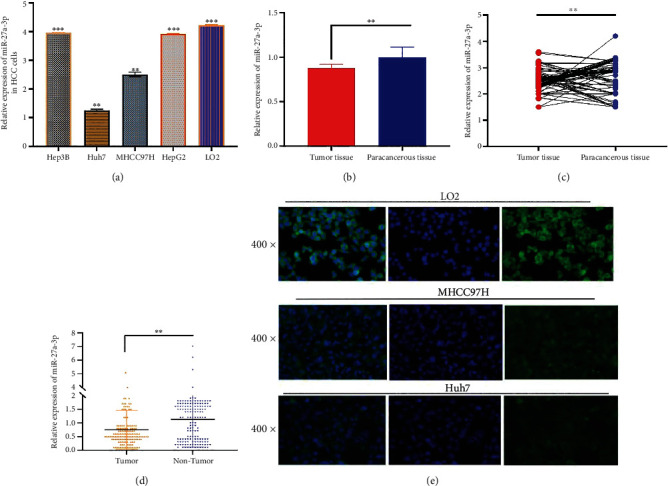
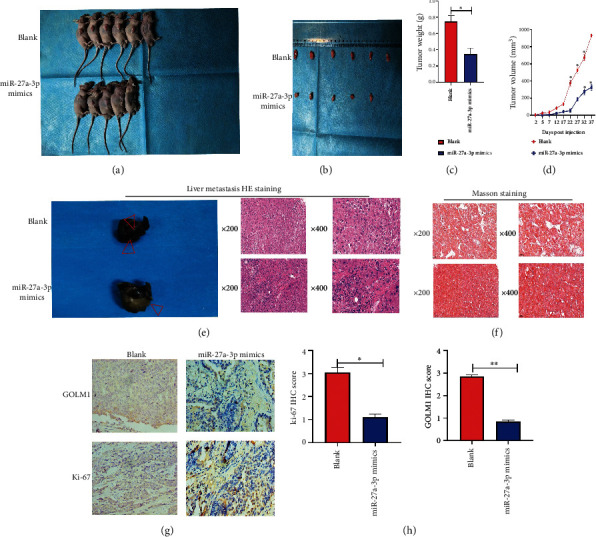
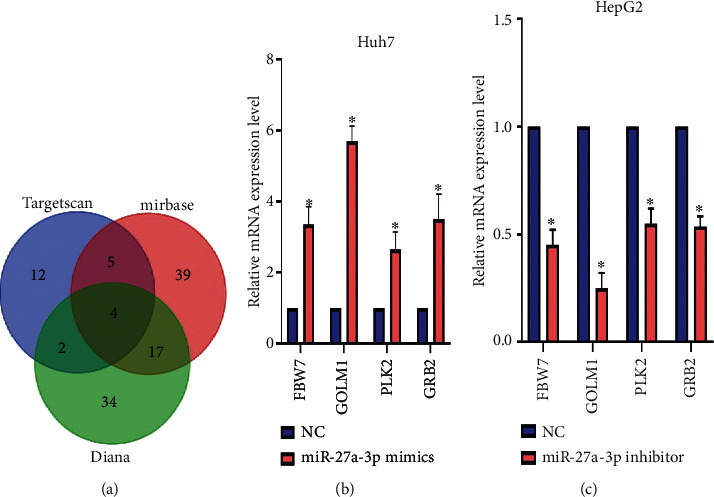
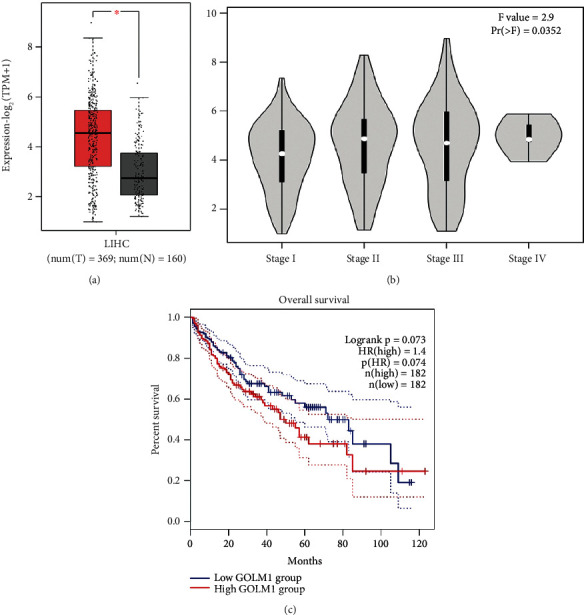
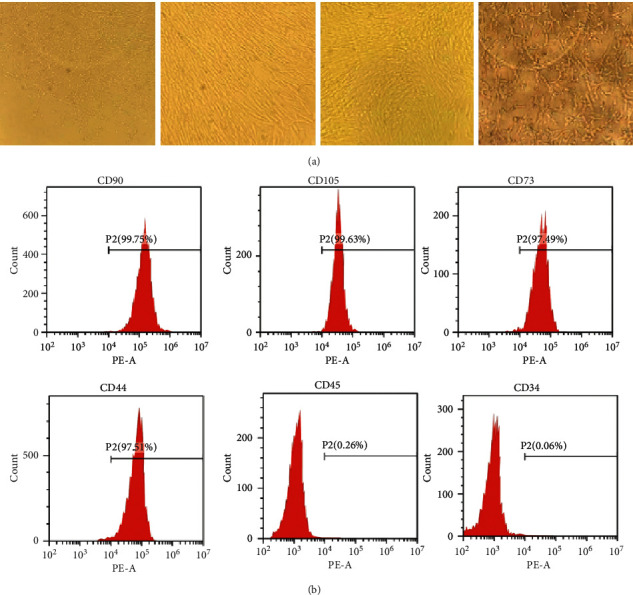
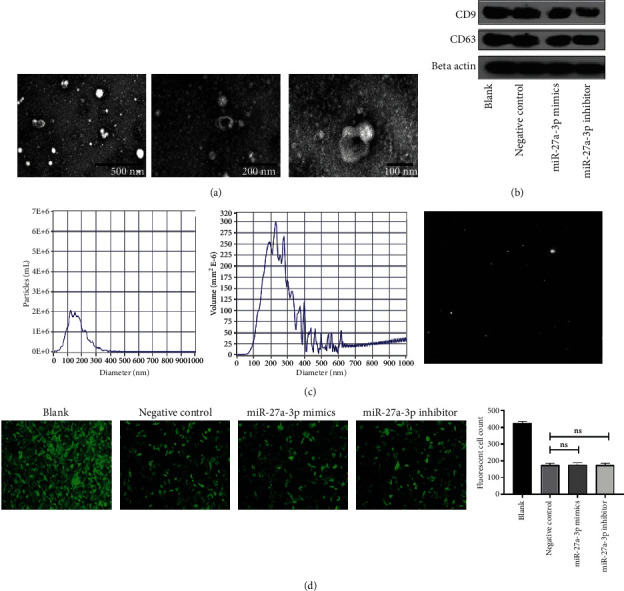
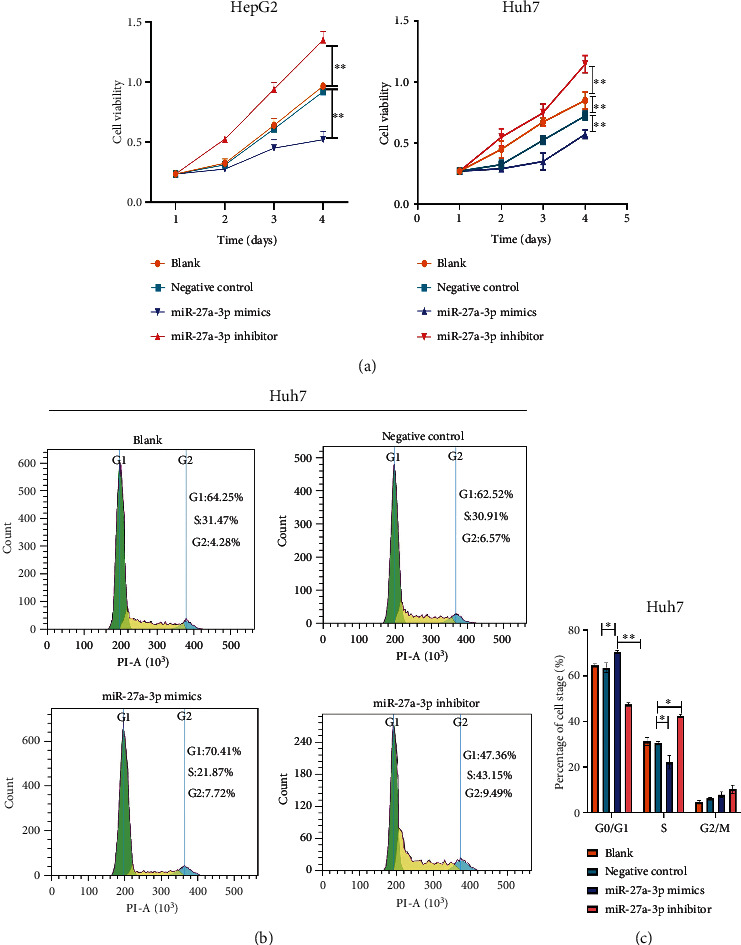
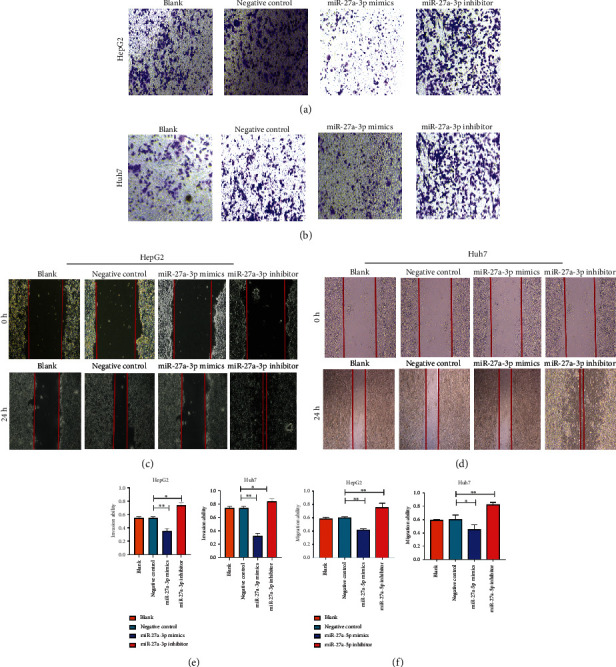
Hepatocellular carcinoma (HCC) remains a significant health burden to date. Its early diagnosis and treatment are complicated by the lack of early diagnosis markers and multidrug resistance. microRNA regulation of HCC oncogenes are among the new diagnostic and therapeutic strategies being explored, although the mode of delivery of a therapeutic dose of the miRNA remains a challenge. In this study, we explored the use of exosomes from umbilical mesenchymal stem cells transfected with miR-27a-3p to interact with the oncogene GOLM1 in HCC and inhibit HCC progression both in vitro and in vivo. We first determined and compared the expression levels of miR-27a-3p in blood, various cell lines and tissues of HCC and their corresponding normal controls. We then employed bioinformatics analysis to determine the gene target for miR-27a-3p in HCC and later transfected upregulated miR-27a-3p in mesenchymal stem cells, and treated HCC cells with exosomes extracted from the transfected stem cells. We then created mouse models of HCC using balbc/nude mice and equally treated them with exosomes from miR-27a-3p transfected stem cells. The results showed that miR-27a-3p is downregulated in blood, cell lines, and tissues of HCC patients compared to normal controls. Exosomes from the miR-27a-3p transfected mesenchymal stem cells prevented HCC cell proliferation, invasion, and metastasis both in vitro and in vivo. Upregulation of miR-27a-3p prevented HCC through interacting with and downregulating GOLM1 as its target oncogene. In conclusion, miR-27a-3p is a potential therapeutic target for HCC acting through GOLM1.
肝细胞癌(HCC)迄今为止仍然是一个重大的健康负担。由于缺乏早期诊断标志物和多药耐药性,其早期诊断和治疗变得复杂。尽管治疗剂量的微小RNA(miRNA)的递送方式仍然是一个挑战,但miRNA对HCC癌基因的调控是正在探索的新诊断和治疗策略之一。在本研究中,我们探索了用转染了miR-27a-3p的脐带间充质干细胞来源的外泌体与HCC中的癌基因GOLM1相互作用,并在体外和体内抑制HCC进展。我们首先测定并比较了miR-27a-3p在HCC患者的血液、各种细胞系和组织及其相应正常对照中的表达水平。然后我们采用生物信息学分析来确定HCC中miR-27a-3p的基因靶点,随后在间充质干细胞中上调miR-27a-3p的表达,并用从转染的干细胞中提取的外泌体处理HCC细胞。然后我们用balbc/裸鼠建立了HCC小鼠模型,并用来自miR-27a-3p转染干细胞的外泌体对它们进行同样的处理。结果表明,与正常对照相比,miR-27a-3p在HCC患者的血液、细胞系和组织中表达下调。来自miR-27a-3p转染的间充质干细胞的外泌体在体外和体内均能阻止HCC细胞的增殖浸润和转移。miR-27a-3p的上调通过与作为其靶癌基因的GOLM1相互作用并下调GOLM1来预防HCC。总之,miR-27a-3p是通过GOLM1发挥作用的HCC的潜在治疗靶点。