Mongkol Nanthanida, Wang Fanny Sae, Suthisawat Sarocha, Likhit Oranit, Charoen Pimphen, Boonnak Kobporn
Department of Microbiology and Immunology, Faculty of Tropical Medicine, Mahidol University, Bangkok, Thailand.
Division of Microbiology and Parasitology, Faculty of Medicine, Siam University, Bangkok, Thailand.
One Health. 2022 Nov 4;15:100455. doi: 10.1016/j.onehlt.2022.100455. eCollection 2022 Dec.
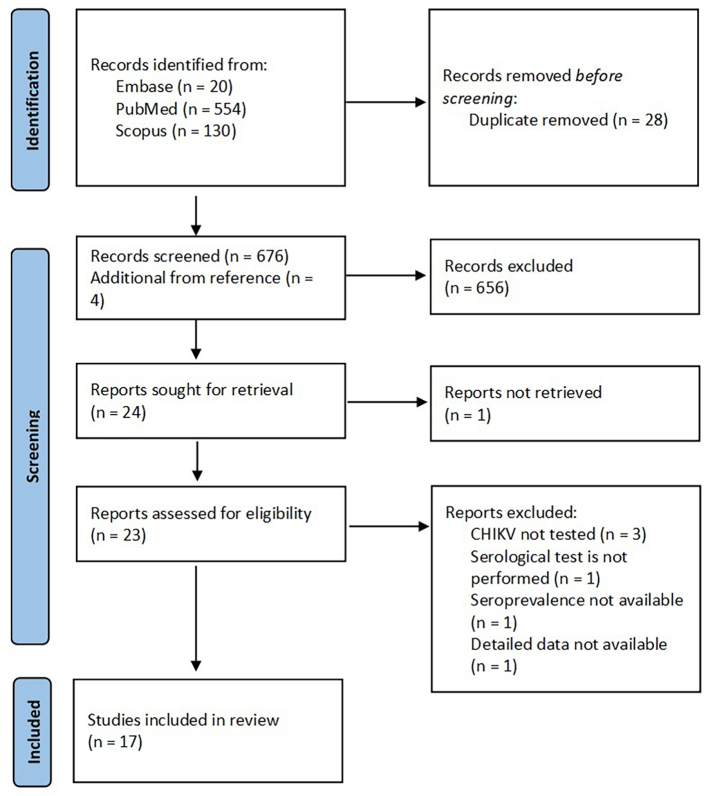
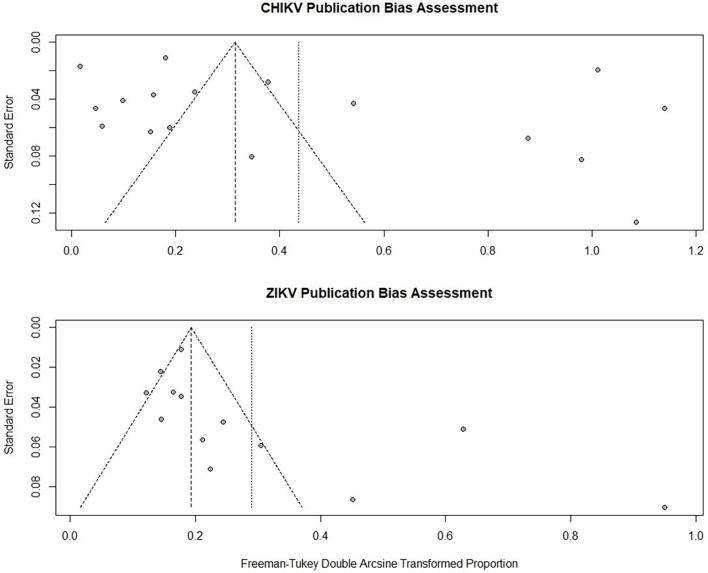
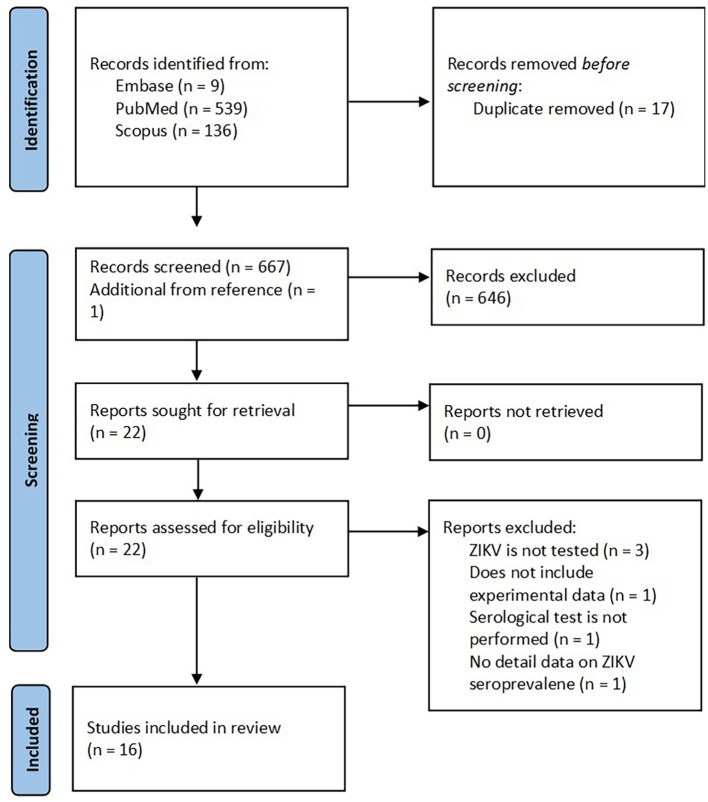
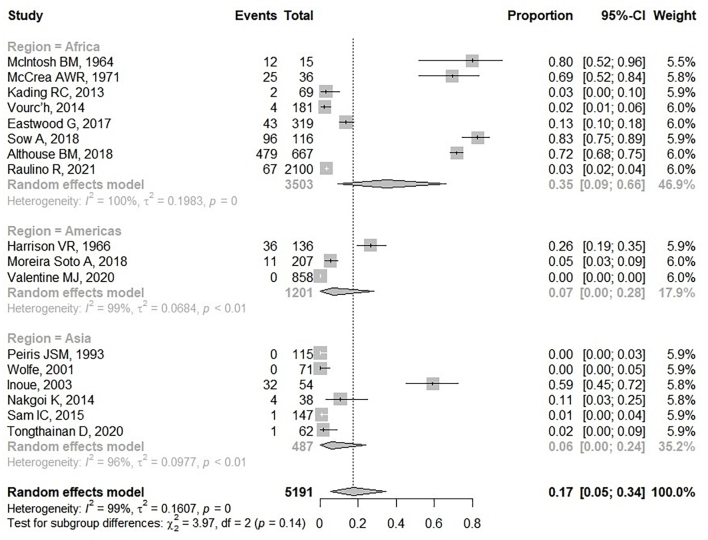
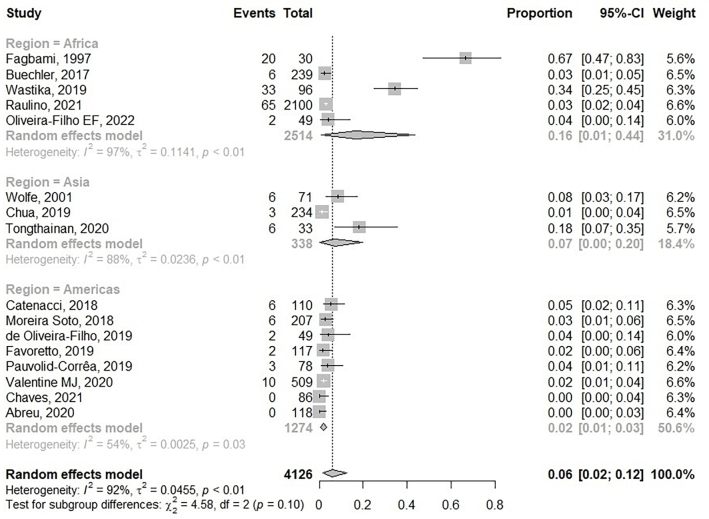
Chikungunya virus (CHIKV) and Zika virus (ZIKV) are mosquito-borne viruses that have caused several outbreaks worldwide. mosquitoes transmit these viruses mainly through sylvatic and urban transmission cycles. In the sylvatic cycle, nonhuman primates (NHPs) can be infected with CHIKV and ZIKV and may play an essential role as reservoirs for virus transmission. To improve our knowledge on the role of NHPs in the sylvatic cycle, we performed a systematic review and meta-analysis study on the seroprevalence of CHIKV and ZIKV worldwide in NHPs. According to the PRISMA guidelines, 17 CHIKV and 16 ZIKV seroprevalence studies in NHPs from 3 online databases: PubMed, Embase, and Scopus were selected. Data were extracted, including location and study year, type of NHP, sample size, serological tests, and seropositivity. All included studies have high-quality scores, between 5 and 8, corresponding to the grading criteria. Seroprevalence estimation was pooled using the ' package in the R statistical software. The estimated pooled seroprevalence of CHIKV and ZIKV in NHP was 17% (95%CI: 5-34, I: 99%, < 0.05) and 6% (95% CI: 2-12, : 92%, < 0.05), respectively. Most of the NHPs tested were wild Old World monkeys. The subgroup was analyzed by continents; high seropositive CHIKV and ZIKV were found in African NHPs at 35% (95% CI 9-66.0, = 100) and 16% (95% CI 1-44, = 97), respectively. While NHPs in America have 7% (95% CI 0-28, = 99) and 2% (95% CI 1-3, = 54) against CHIKV and ZIKV. In Asia, 6% (95% CI: 5-34, = 96) CHIKV seroprevalence and 7% (95% CI 0-20, = 98) ZIKV seroprevalence were found in NHP. This study provides a comprehensive overview of the seroprevalence of CHIKV and ZIKV among NHPs in various regions.
基孔肯雅病毒(CHIKV)和寨卡病毒(ZIKV)是通过蚊子传播的病毒,已在全球引发多次疫情。蚊子主要通过野生和城市传播循环来传播这些病毒。在野生传播循环中,非人类灵长类动物(NHPs)可感染CHIKV和ZIKV,并且可能作为病毒传播的宿主发挥重要作用。为了增进我们对NHPs在野生传播循环中作用的了解,我们对全球范围内NHPs中CHIKV和ZIKV的血清阳性率进行了系统评价和荟萃分析研究。根据PRISMA指南,从3个在线数据库(PubMed、Embase和Scopus)中选取了17项关于NHPs中CHIKV血清阳性率的研究以及16项关于NHPs中ZIKV血清阳性率的研究。提取的数据包括地点和研究年份、NHPs的类型、样本量、血清学检测以及血清阳性率。所有纳入研究的质量得分都很高,在5到8分之间,符合分级标准。使用R统计软件中的“ ”包对血清阳性率估计值进行合并。NHPs中CHIKV和ZIKV的估计合并血清阳性率分别为17%(95%CI:5 - 34,I:99%,<0.05)和6%(95%CI:2 - 12, :92%,<0.05)。大多数接受检测的NHPs是野生旧世界猴。按大洲进行亚组分析;在非洲的NHPs中发现CHIKV和ZIKV的血清阳性率较高,分别为35%(95%CI 9 - 66.0, = 100)和16%(95%CI 1 - 44, = 97)。而美洲的NHPs中针对CHIKV和ZIKV的血清阳性率分别为7%(95%CI 0 - 28, = 99)和2%(95%CI 1 - 3, = 54)。在亚洲,NHPs中CHIKV血清阳性率为6%(95%CI:5 - 34, = 96),ZIKV血清阳性率为7%(95%CI 0 - 20, = 98)。本研究全面概述了不同地区NHPs中CHIKV和ZIKV的血清阳性率情况。