Jordan Martin C, Bröer David, Fischer Christian, Heilig Philipp, Gilbert Fabian, Hölscher-Doht Stefanie, Kalogirou Charis, Popp Kevin, Grunz Jan-Peter, Huflage Henner, Jakubietz Rafael G, Ergün Süleyman, Meffert Rainer H
Department of Orthopaedic Trauma, Hand, Plastic and Reconstructive Surgery, University Hospital Würzburg, Oberdürrbacher Str. 6, 97080, Würzburg, Germany.
Headmade Materials, Langhausstraße 9, 97294, Unterpleichfeld, Germany.
Commun Med (Lond). 2022 Dec 22;2(1):164. doi: 10.1038/s43856-022-00227-z.
Traumatic separation of the pubic symphysis can destabilize the pelvis and require surgical fixation to reduce symphyseal gapping. The traditional approach involves open reduction and the implantation of a steel symphyseal plate (SP) on the pubic bone to hold the reposition. Despite its widespread use, SP-fixation is often associated with implant failure caused by screw loosening or breakage.
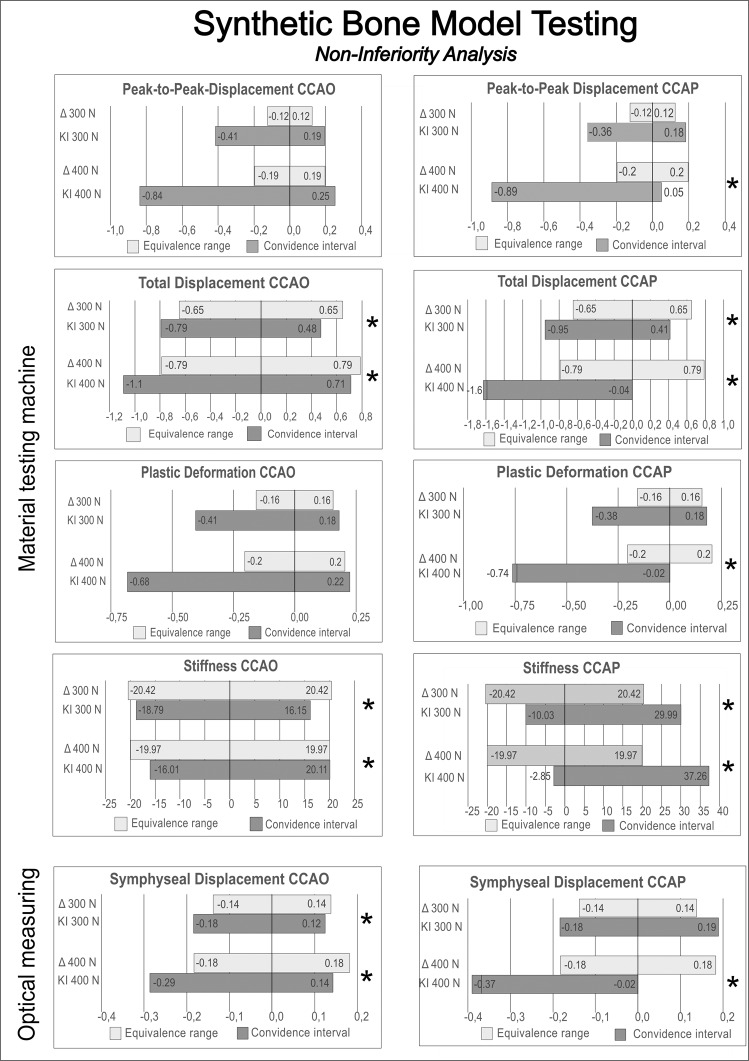
To address the need for a more reliable surgical intervention, we developed and tested two titanium cable-clamp implants. The cable served as tensioning device while the clamp secured the cable to the bone. The first implant design included a steel cable anterior to the pubic symphysis to simplify its placement outside the pelvis, and the second design included a cable encircling the pubic symphysis to stabilize the anterior pelvic ring. Using highly reproducible synthetic bone models and a limited number of cadaver specimens, we performed a comprehensive biomechanical study of implant stability and evaluated surgical feasibility.
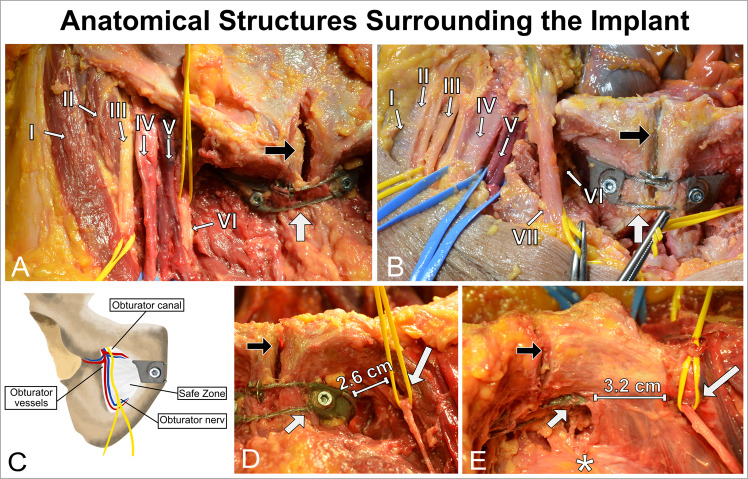
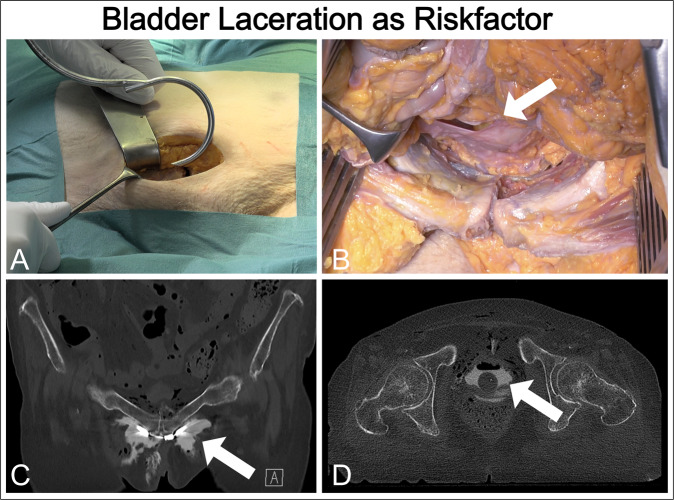
We were able to demonstrate that the cable-clamp implants provide stability equivalent to that of a traditional SP-fixation but without the same risks of implant failure. We also provide detailed ex vivo evaluations of the safety and feasibility of a trans-obturator surgical approach required for those kind of fixation.
We propose that the developed cable-clamp fixation devices may be of clinical value in treating pubic symphysis separation.
耻骨联合创伤性分离会使骨盆不稳定,需要手术固定以减少耻骨联合间隙。传统方法包括切开复位并在耻骨上植入耻骨联合钢板(SP)以维持复位。尽管其广泛应用,但SP固定常因螺钉松动或断裂导致植入失败。
为满足更可靠手术干预的需求,我们研发并测试了两种钛缆夹植入物。缆线作为张紧装置,而夹子将缆线固定于骨。第一种植入物设计在耻骨联合前方使用钢缆,以简化其在骨盆外的放置,第二种设计使用环绕耻骨联合的缆线以稳定骨盆前环。利用高度可重复的合成骨模型和有限数量的尸体标本,我们对植入物稳定性进行了全面的生物力学研究并评估了手术可行性。
我们能够证明缆夹植入物提供的稳定性与传统SP固定相当,但无相同的植入失败风险。我们还对这类固定所需的经闭孔手术入路的安全性和可行性进行了详细的体外评估。
我们提出,所研发的缆夹固定装置可能在治疗耻骨联合分离方面具有临床价值。