Redondo-Calvo Francisco Javier, Bejarano-Ramírez Natalia, Baladrón Víctor, Montenegro Omar, Gómez Luis Antonio, Velasco Rubén, Villasanti Natalia, Illescas Soledad, Franco-Sereno María Teresa, Gracia Ignacio, Rodríguez Juan Francisco, Muñoz-Rodríguez José Ramón, Pérez-Ortiz José Manuel
Department of Anesthesiology and Critical Care Medicine, University General Hospital, 13004 Ciudad Real, Spain.
Translational Research Unit, University General Hospital and Research Institute of Castilla-La Mancha (IDISCAM), 13004 Ciudad Real, Spain.
Biomedicines. 2022 Dec 1;10(12):3095. doi: 10.3390/biomedicines10123095.
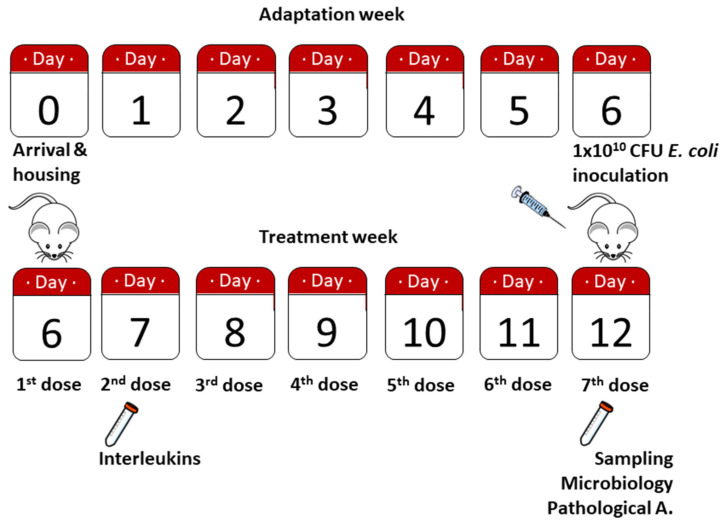
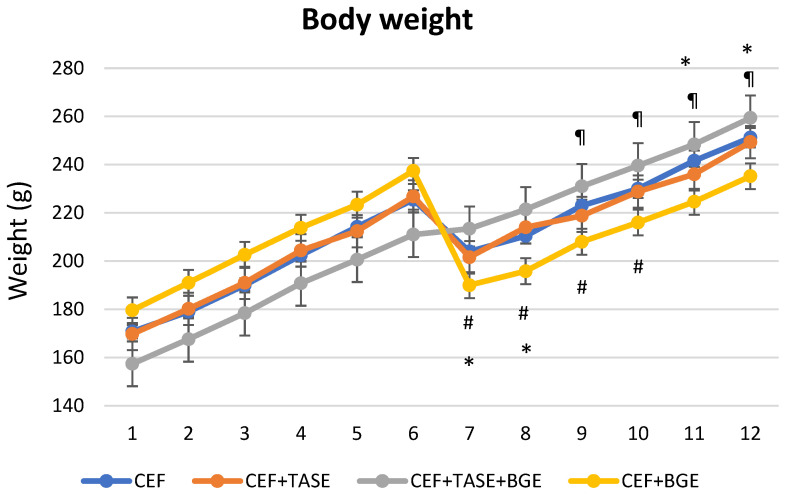
To date, there have been no new drugs or adjuvants able to decrease both morbidity and mortality in the context of sepsis and septic shock. Our objective was to evaluate the use of thiosulfinate-enriched and black garlic extracts as adjuvants in the management of sepsis. An experimental in vivo study was carried out with male Sprague-Dawley rats. Animals were randomized in four treatment groups: antibiotic (ceftriaxone) treatment (group I), ceftriaxone plus thiosulfinate-enriched extract (TASE, group II), ceftriaxone plus thiosulfinate-enriched extract and black garlic extracts (TASE + BGE, group III), and ceftriaxone plus black garlic extract (BGE, group IV). All animals were housed and inoculated with 1 × 10 CFU/15 mL of intraperitoneal ATCC 25922. Subsequently, they received a daily treatment according to each group for 7 days. Clinical, analytical, microbiological, and histopathological parameters were evaluated. Statistically significant clinical improvement was observed in rats receiving garlic extracts in weight (groups II and III), ocular secretions, and piloerection (group IV). Moreover, less liver edema, vacuolization, and inflammation were observed in groups receiving adjuvant support (groups II, III, and IV). When comparing interleukins 24 h after bacteria inoculum, we found statistically significant differences in TNF-alpha levels in groups receiving BGE (groups III and IV, ≤ 0.05). Blood and peritoneal liquid cultures were also analyzed, and we detected a certain level of in peritoneal cultures from all treatment groups and less bacteria presence in blood cultures in rats receiving garlic extracts (groups II, III, and IV). In conclusion, TASE and BGE could be promising nutraceutical or medicinal agents as coadjuvants in the treatment of sepsis because of its effects in modulating the inflammatory response.
迄今为止,尚无能够降低脓毒症和脓毒性休克发病率和死亡率的新药或佐剂。我们的目的是评估富含硫代亚磺酸盐的提取物和黑蒜提取物作为脓毒症治疗佐剂的用途。对雄性斯普拉格-道利大鼠进行了一项体内实验研究。将动物随机分为四个治疗组:抗生素(头孢曲松)治疗组(I组)、头孢曲松加富含硫代亚磺酸盐的提取物(TASE,II组)、头孢曲松加富含硫代亚磺酸盐的提取物和黑蒜提取物(TASE + BGE,III组)以及头孢曲松加黑蒜提取物(BGE,IV组)。所有动物均饲养并腹腔接种1×10 CFU/15 mL ATCC 25922。随后,它们根据每组情况接受每日治疗,持续7天。评估了临床、分析、微生物学和组织病理学参数。在接受大蒜提取物的大鼠中,观察到体重(II组和III组)、眼分泌物和竖毛(IV组)方面有统计学意义的临床改善。此外,在接受佐剂支持的组(II组、III组和IV组)中,观察到肝脏水肿、空泡化和炎症较少。在接种细菌24小时后比较白细胞介素时,我们发现接受BGE的组(III组和IV组,P≤0.05)中肿瘤坏死因子-α水平存在统计学意义的差异。还分析了血液和腹腔液培养物,我们在所有治疗组的腹腔培养物中检测到一定水平的细菌,而在接受大蒜提取物的大鼠(II组、III组和IV组)的血液培养物中细菌存在较少。总之,TASE和BGE作为脓毒症治疗的辅助佐剂可能是有前景的营养保健品或药物,因为它们在调节炎症反应方面有作用。