Department of Microbiology, University Hospital Ramón y Cajal and Instituto Ramón y Cajal de Investigación Sanitaria (IRYCIS), 28034 Madrid, Spain.
Centro de Investigación Biomédica en Red de Enfermedades Infecciosas (CIBERINFEC), Instituto de Salud Carlos III, 28029 Madrid, Spain.
Int J Mol Sci. 2023 Mar 25;24(7):6234. doi: 10.3390/ijms24076234.
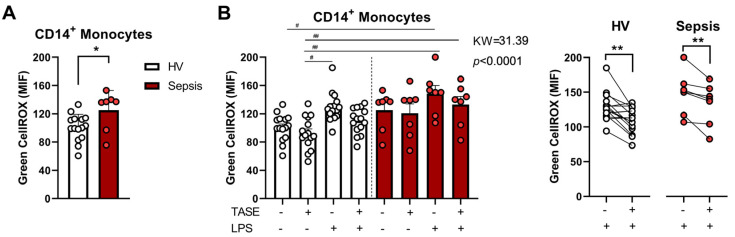
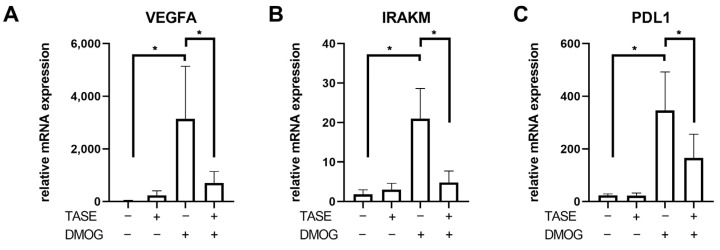
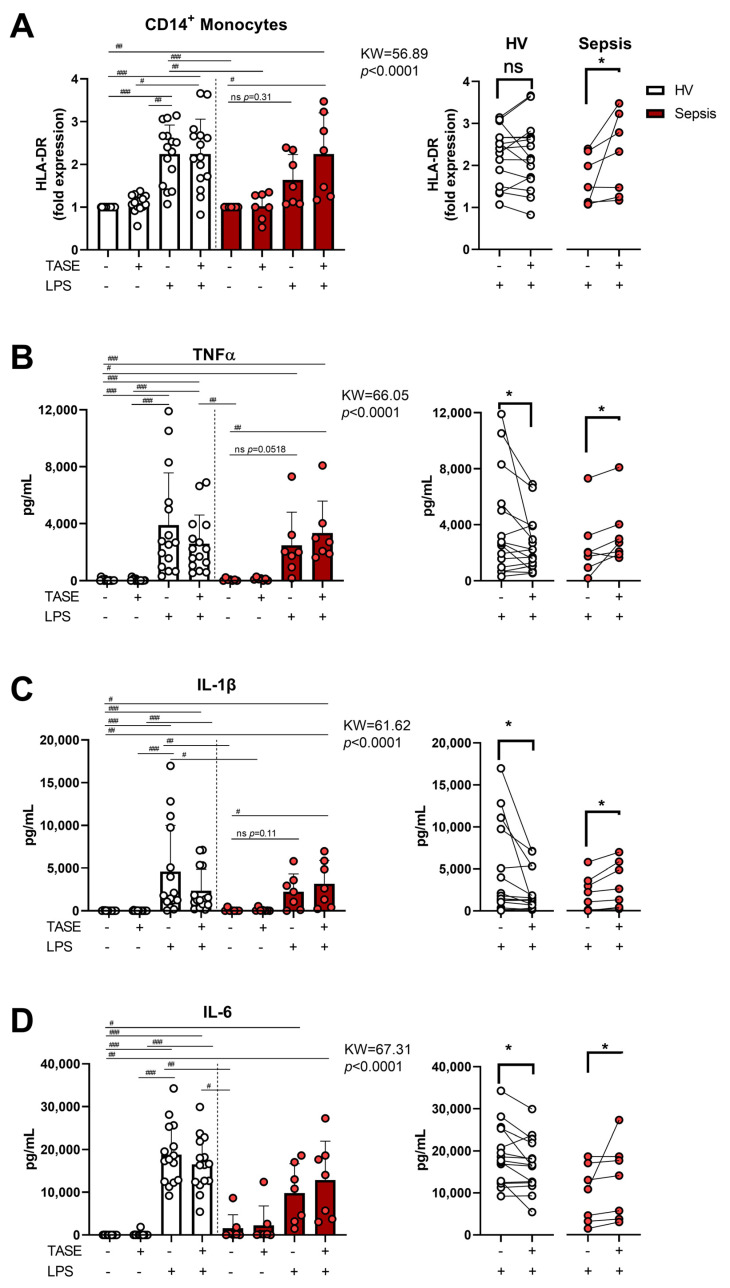
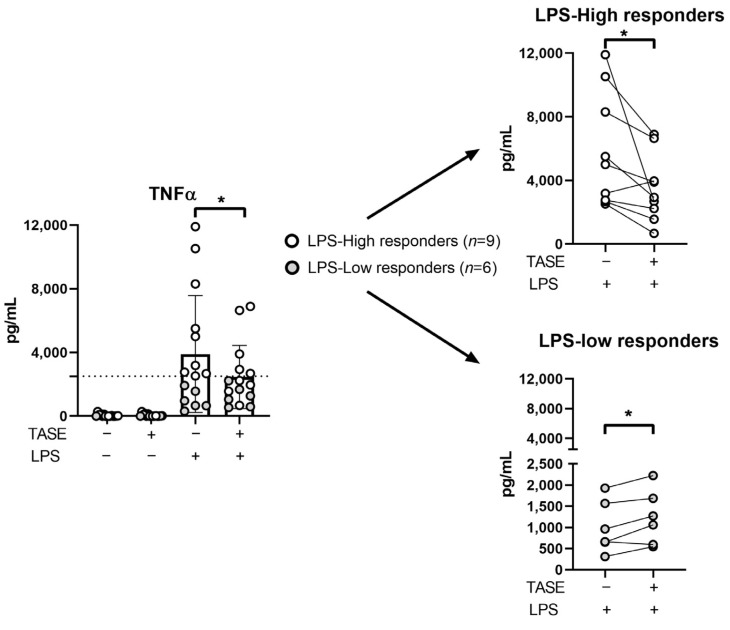
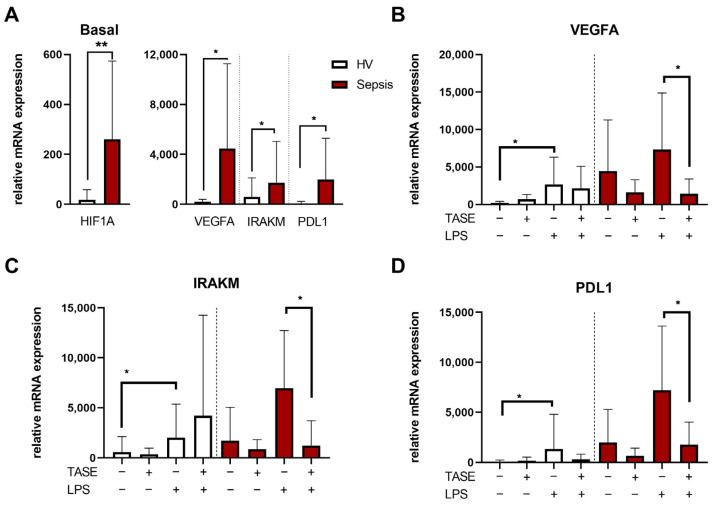
Garlic () has historically been associated with antioxidant, immunomodulatory, and microbiocidal properties, mainly due to its richness in thiosulfates and sulfur-containing phytoconstituents. Sepsis patients could benefit from these properties because it involves both inflammatory and refractory processes. We evaluated the effects of thiosulfinate-enriched extract (TASE) on the immune response to bacterial lipopolysaccharide (LPS) by monocytes from healthy volunteers (HVs) and patients with sepsis. We also explored the TASE effects in HIF-1α, described as the key transcription factor leading to endotoxin tolerance in sepsis monocytes through expression. Our results showed TASE reduced the LPS-triggered reactive oxygen species (ROS) production in monocytes from both patients with sepsis and HVs. Moreover, this extract significantly reduced tumor necrosis factor (TNF)-α, interleukin-1β, and interleukin-6 production in LPS-stimulated monocytes from HVs. However, TASE enhanced the inflammatory response in monocytes from patients with sepsis along with increased expression of human leukocyte antigen-DR. Curiously, these dual effects of TASE on immune response were also found when the HV cohort was divided into low- and high-LPS responders. Although TASE enhanced TNFα production in the LPS-low responders, it decreased the inflammatory response in the LPS-high responders. Furthermore, TASE decreased the HIF-1α pathway-associated genes , and in sepsis cells, suggesting HIF-1α inhibition by TASE leads to higher cytokine production in these cells as a consequence of IRAK-M downregulation. The suppression of this pathway by TASE was confirmed in vitro with the prolyl hydroxylase inhibitor dimethyloxalylglycine. Our data revealed TASE's dual effect on monocyte response according to status/phenotype and suggested the HIF-1α suppression as the possible underlying mechanism.
大蒜()历来与抗氧化、免疫调节和杀菌特性有关,主要归因于其富含硫代硫酸盐和含硫植物成分。败血症患者可能受益于这些特性,因为败血症既涉及炎症过程又涉及难治过程。我们评估了富含硫代亚磺酸酯的提取物(TASE)对健康志愿者(HV)和败血症患者单核细胞对细菌脂多糖(LPS)免疫反应的影响。我们还通过 表达探讨了 TASE 对 HIF-1α 的影响,HIF-1α 被描述为导致败血症单核细胞内毒素耐受的关键转录因子。我们的结果表明,TASE 降低了败血症和 HV 单核细胞中 LPS 触发的活性氧(ROS)产生。此外,该提取物还显著降低了 LPS 刺激的 HV 单核细胞中肿瘤坏死因子(TNF)-α、白细胞介素-1β 和白细胞介素-6 的产生。然而,TASE 增强了败血症患者单核细胞的炎症反应,同时增加了人类白细胞抗原-DR 的表达。奇怪的是,当 HV 队列分为低和高 LPS 反应者时,TASE 对免疫反应的这种双重作用也被发现。尽管 TASE 增强了 LPS-低反应者的 TNFα 产生,但它降低了 LPS-高反应者的炎症反应。此外,TASE 降低了败血症细胞中与 HIF-1α 途径相关的基因 、 和 ,这表明 TASE 抑制 HIF-1α 导致 IRAK-M 下调,从而导致这些细胞中细胞因子产生增加。在体外使用脯氨酰羟化酶抑制剂二甲氧酰甘氨酸证实了该途径的抑制作用。我们的数据根据状态/表型揭示了 TASE 对单核细胞反应的双重影响,并提出 HIF-1α 抑制可能是其潜在机制。