ICAR-Indian Institute of Wheat and Barley Research, Karnal 132001, India.
CIMMYT, Texcoco 56237, Mexico.
Genes (Basel). 2022 Dec 6;13(12):2298. doi: 10.3390/genes13122298.
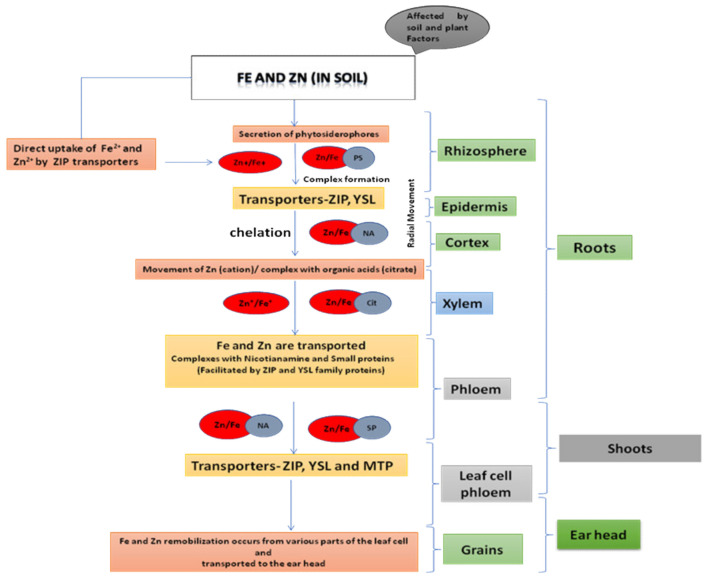
Undernourishment of nutrients, also known as hidden hunger, affects over 2 billion populace globally. Even though stunting among children below five years of age has decreased in India in the last ten years, India is home to roughly thirty percent of the world's population of stunted pre-schoolers. A significant improvement has been witnessed in the targeted development and deployment of biofortified crops; approximately 20 million farm households from developing counties benefit from cultivating and consuming biofortified crops. There is ample scope for including biofortified varieties in the seed chain, ensuring nutritional security. Wheat is a dietary staple in India, typically consumed as wholemeal flour in the form of flatbreads such as and . Wheat contributes to nearly one fifth of global energy requirements and can also provide better amounts of iron (Fe) and zinc (Zn). As a result, biofortified wheat can serve as a medium for delivery of essential micronutrients such as Fe and Zn to end users. This review discusses wheat biofortification components such as Fe and Zn dynamics, its uptake and movement in plants, the genetics of their buildup, and the inclusion of biofortified wheat varieties in the seed multiplication chain concerning India.
营养不足,也被称为隐性饥饿,影响着全球超过 20 亿的人口。尽管在过去十年中,印度五岁以下儿童发育迟缓的情况有所减少,但印度仍有约 30%的世界发育迟缓学龄前儿童。在有针对性地开发和部署生物强化作物方面取得了重大进展;大约 2000 万来自发展中国家的农户从种植和消费生物强化作物中受益。在种子链中纳入生物强化品种以确保营养安全方面还有很大的空间。小麦是印度的主食,通常以全麦面粉的形式食用,如 roti 和 chapati。小麦满足了近五分之一的全球能源需求,还可以提供更多的铁(Fe)和锌(Zn)。因此,生物强化小麦可以作为向最终用户提供铁和锌等必需微量营养素的媒介。这篇综述讨论了小麦生物强化的成分,如铁和锌的动态、它们在植物中的吸收和移动、它们积累的遗传学,以及关于印度的生物强化小麦品种在种子繁殖链中的纳入。