School of Medicine, Huanghe Science and Technology College, Zhengzhou 450006, China.
Artemisinin Research Center, China Academy of Chinese Medical Sciences, Beijing 100700, China.
Molecules. 2022 Dec 7;27(24):8645. doi: 10.3390/molecules27248645.
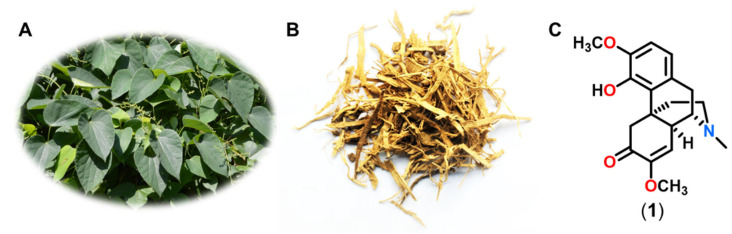
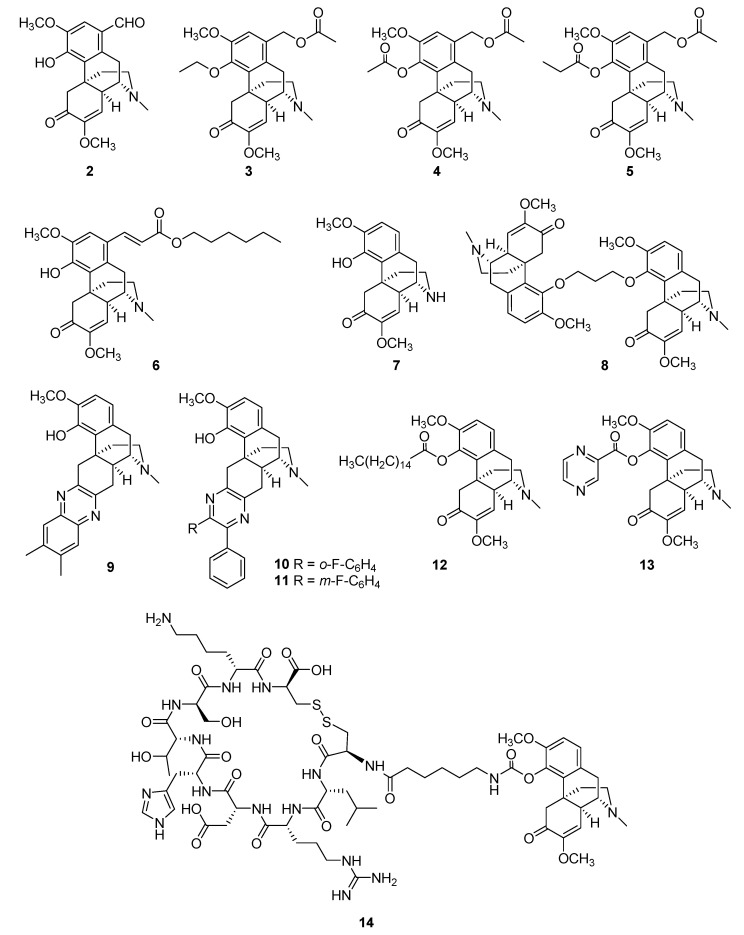
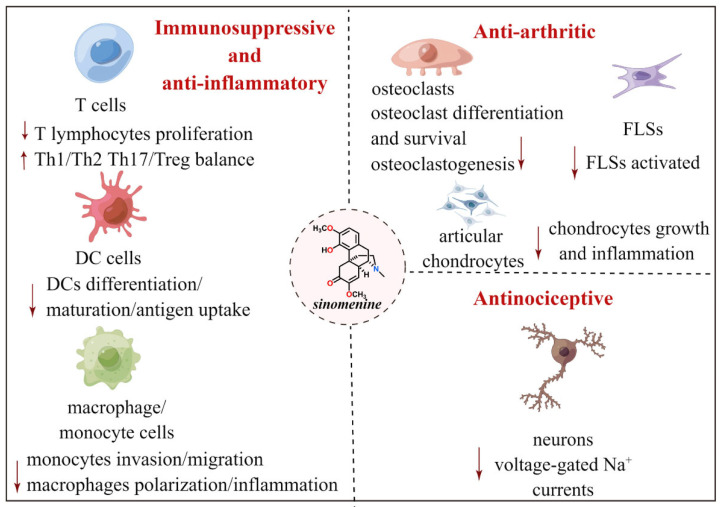
Sinomenine is the main component of the vine . It was first isolated in the early 1920s and has since attracted special interest as a potential anti-rheumatoid arthritis (RA) agent, owing to its successful application in traditional Chinese medicine for the treatment of neuralgia and rheumatoid diseases. In the past few decades, significant advances have broadened our understanding of the molecular mechanisms through which sinomenine treats RA, as well as the structural modifications necessary for improved pharmacological activity. In this review, we summarize up-to-date reports on the pharmacological properties of sinomenine in RA treatment, document their underlying mechanisms, and provide an overview of promising sinomenine derivatives as potential RA drug therapies.
青藤碱是青藤属植物的主要成分。它于 20 世纪 20 年代初首次被分离出来,由于在传统中医中成功地应用于治疗神经痛和类风湿病,青藤碱作为一种潜在的抗类风湿关节炎 (RA) 药物引起了人们的特别关注。在过去的几十年中,重大进展拓宽了我们对青藤碱治疗 RA 的分子机制的理解,以及对改善药理活性所需的结构修饰。在这篇综述中,我们总结了青藤碱在 RA 治疗中的药理学特性的最新报告,记录了它们的潜在机制,并概述了有前途的青藤碱衍生物作为潜在的 RA 药物治疗方法。