Sánchez-Sanuy Ferran, Mateluna-Cuadra Roberto, Tomita Keisuke, Okada Kazunori, Sacchi Gian Attilio, Campo Sonia, San Segundo Blanca
Centre for Research in Agricultural Genomics (CRAG), CSIC-IRTA-UAB-UB, Campus Universitat Autónoma de Barcelona (UAB), Bellaterra (Cerdanyola del Vallés), Barcelona, Spain.
Biotechnology Research Center, The University of Tokyo, Tokyo, Japan.
Rice (N Y). 2022 Dec 25;15(1):68. doi: 10.1186/s12284-022-00609-w.
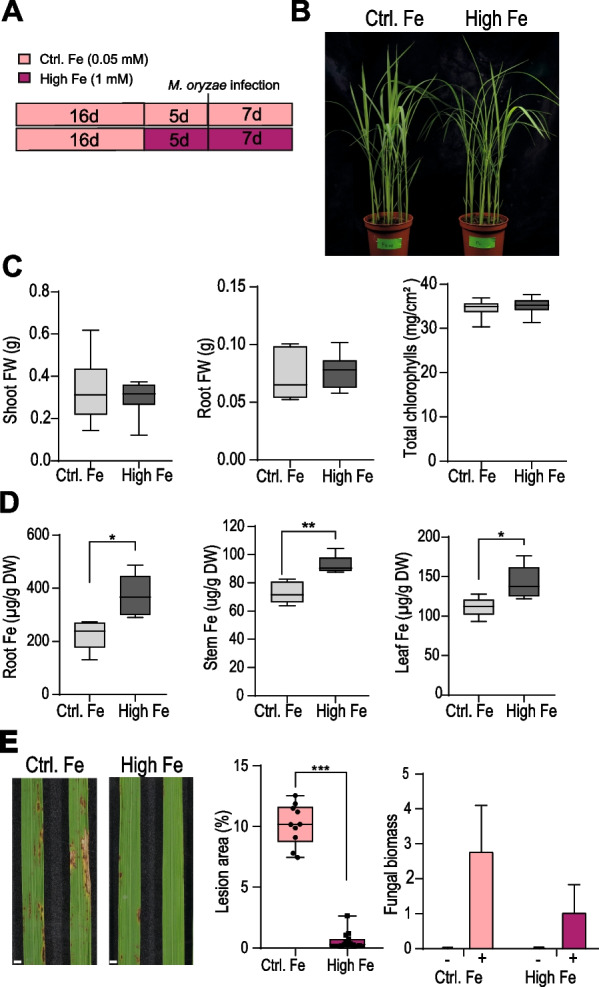
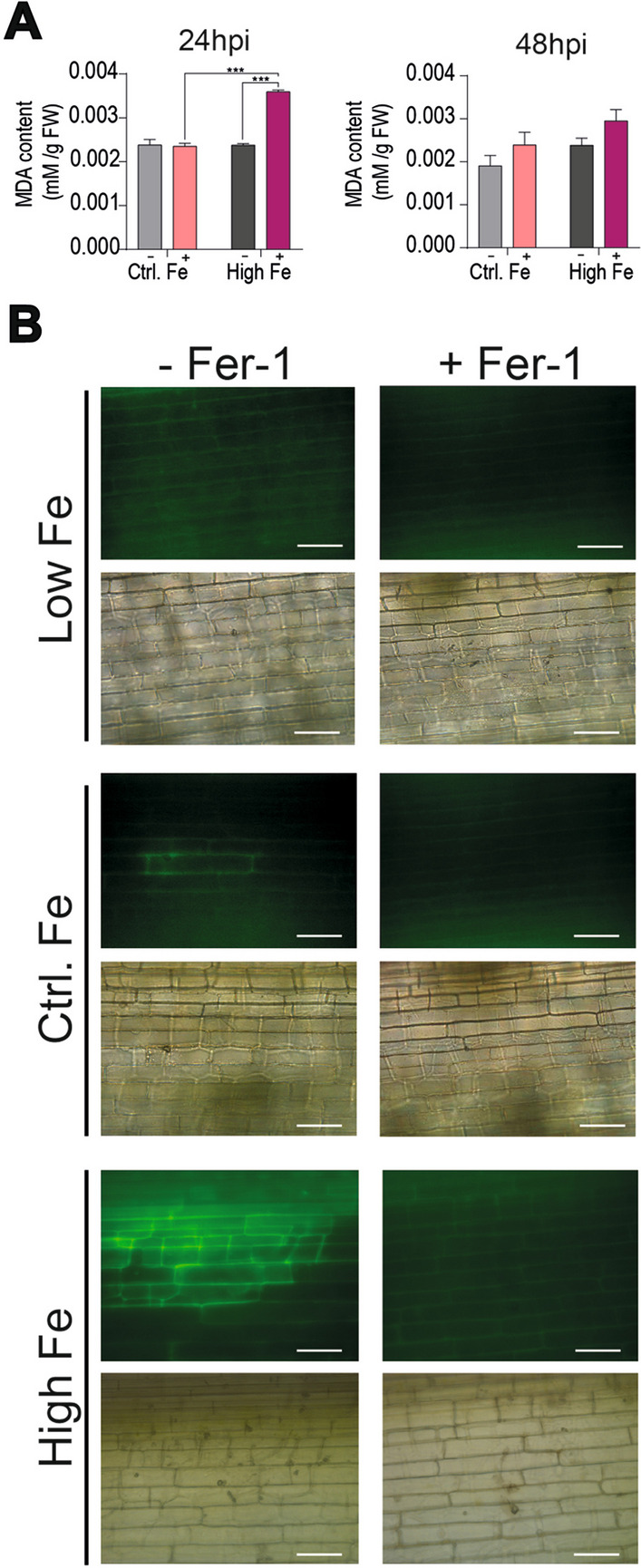
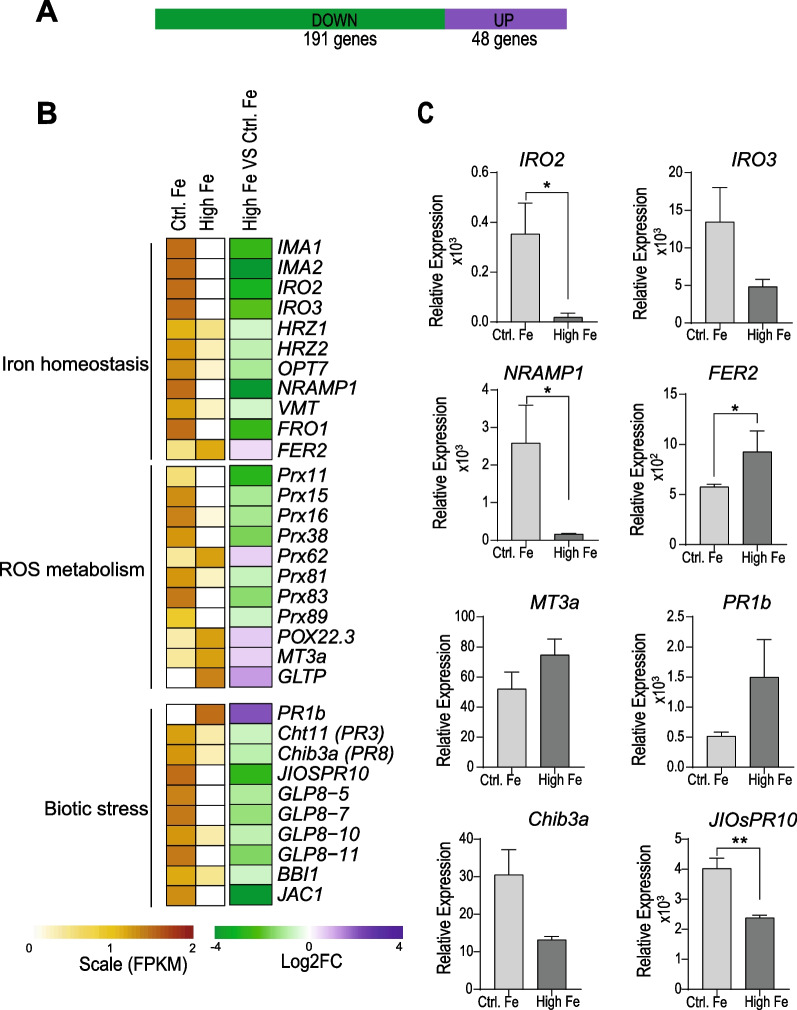
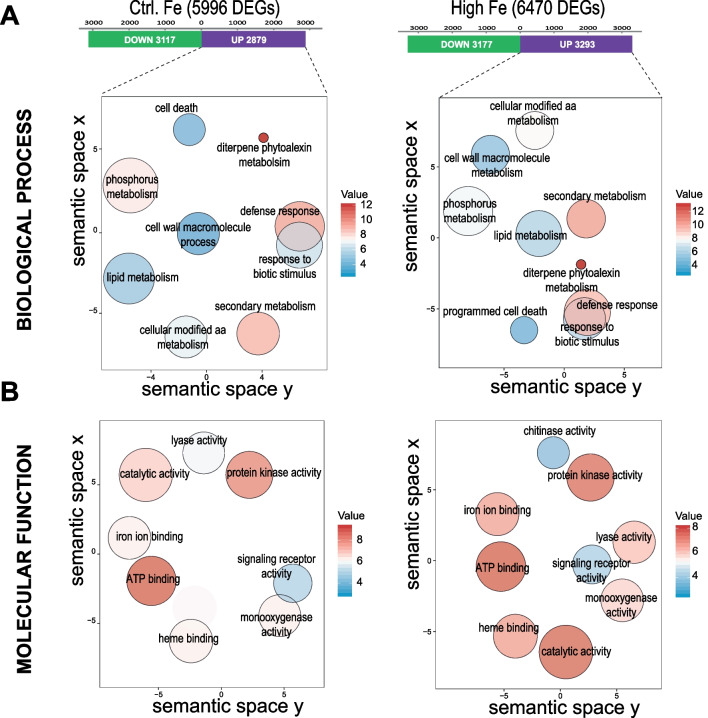
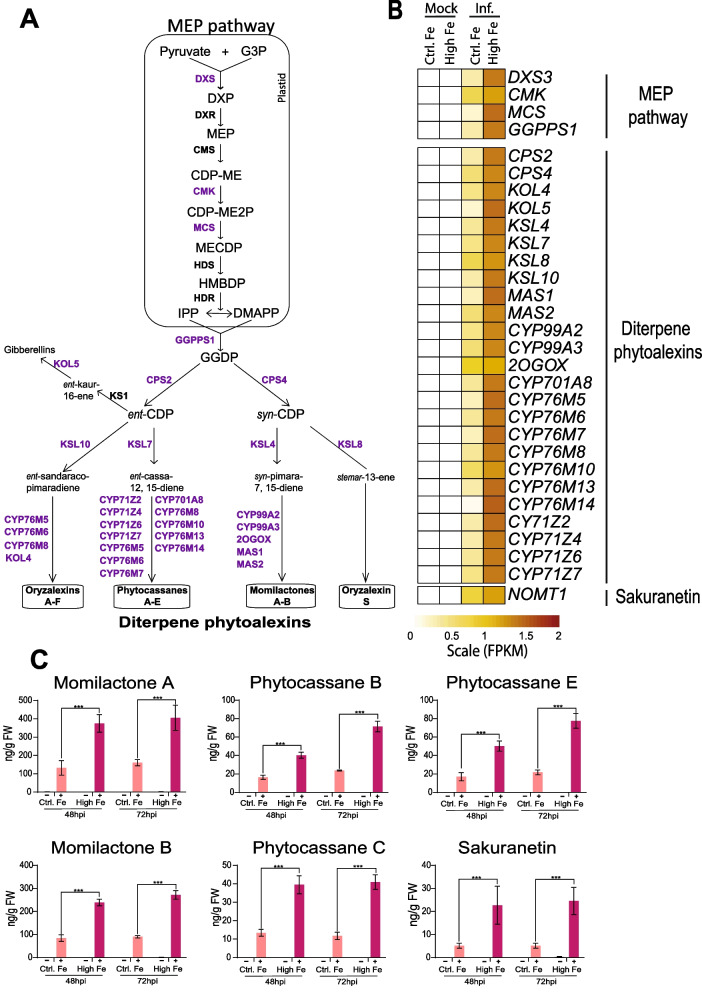
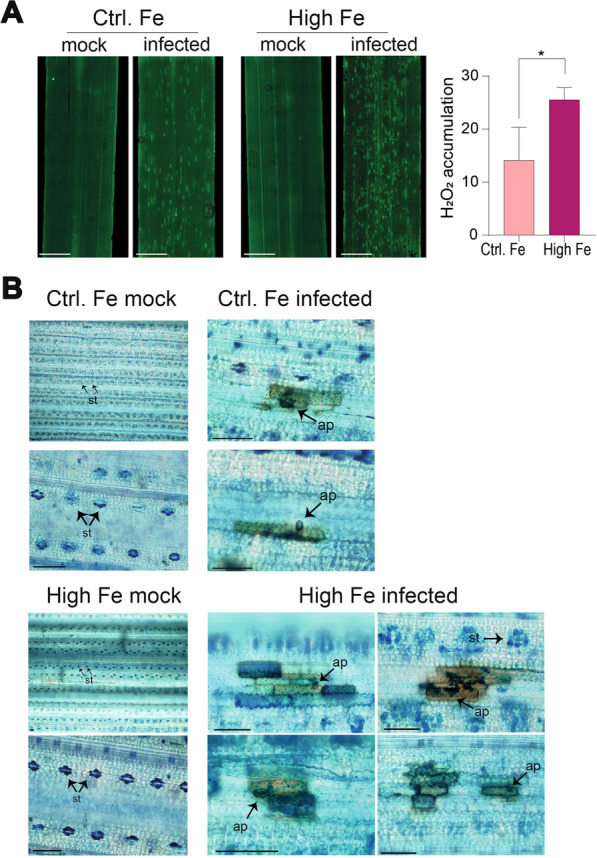
Iron is an essential nutrient required for plant growth and development. The availability of iron might also influence disease resistance in plants. However, the molecular mechanisms involved in the plant response to iron availability and immunity have been investigated separately from each other. In this work, we found that exposure of rice plants to high iron enhances resistance to infection by the fungal pathogen Magnaporthe oryzae, the causal agent of blast disease. RNA-Seq analysis revealed that blast resistance in iron-treated rice plants was associated with superinduction of defense-related genes during pathogen infection, including Pathogenesis-Related genes. The expression level of genes involved in the biosynthesis of phytoalexins, both diterpene phytoalexins and the flavonoid phytoalexin sakuranetin, was also higher in iron-treated plants compared with control plants, which correlated well with increased levels of phytoalexins in these plants during M. oryzae infection. Upon pathogen infection, lipid peroxidation was also higher in iron-treated plants compared with non-treated plants. We also show that M. oryzae infection modulates the expression of genes that play a pivotal role in the maintenance of iron homeostasis. Histochemical analysis of M. oryzae-infected leaves revealed colocalization of iron and reactive oxygen species in cells located in the vicinity of fungal penetration sites (e.g. appressoria) in rice plants that have been exposed to iron. Together these findings support that ferroptosis plays a role in the response of iron-treated rice plants to infection by virulent M. oryzae. Understanding interconnected regulations between iron signaling and immune signaling in rice holds great potential for developing novel strategies to improve blast resistance in rice.
铁是植物生长和发育所需的必需营养素。铁的有效性也可能影响植物的抗病性。然而,植物对铁有效性和免疫反应所涉及的分子机制一直是分别研究的。在这项研究中,我们发现将水稻植株暴露于高铁环境下可增强对真菌病原体稻瘟病菌(稻瘟病的病原体)感染的抗性。RNA测序分析表明,铁处理过的水稻植株中的稻瘟病抗性与病原体感染期间防御相关基因的超诱导有关,包括病程相关基因。与对照植株相比,经铁处理的植株中参与植保素生物合成的基因(包括二萜植保素和类黄酮植保素樱花素)的表达水平也更高,这与这些植株在稻瘟病菌感染期间植保素水平的增加密切相关。病原体感染后,与未处理的植株相比,铁处理过的植株中的脂质过氧化水平也更高。我们还表明,稻瘟病菌感染会调节在维持铁稳态中起关键作用的基因的表达。对感染稻瘟病菌的叶片进行组织化学分析发现,在暴露于铁的水稻植株中,铁与活性氧在位于真菌穿透部位(如附着胞)附近的细胞中共定位。这些发现共同支持铁死亡在铁处理过的水稻植株对毒性稻瘟病菌感染的反应中起作用。了解水稻中铁信号和免疫信号之间的相互联系调控对于开发提高水稻稻瘟病抗性的新策略具有巨大潜力。