Bharat Biotech International Ltd, Hyderabad, India.
Front Immunol. 2022 Dec 8;13:1063679. doi: 10.3389/fimmu.2022.1063679. eCollection 2022.
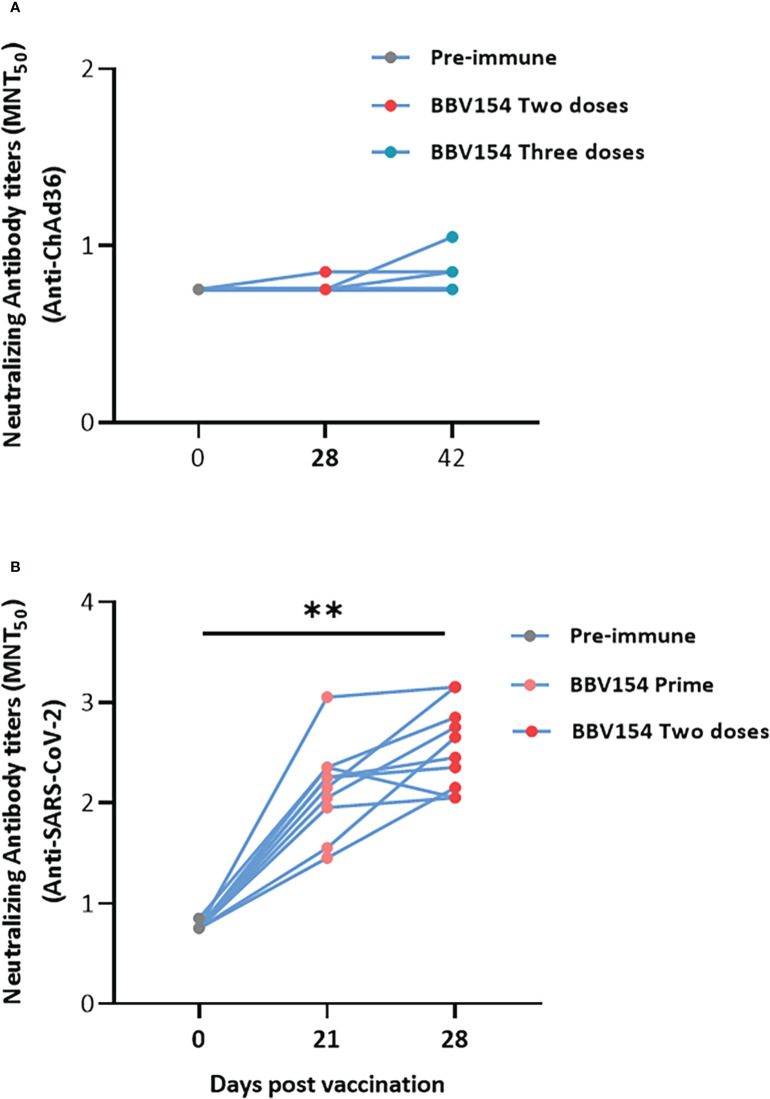
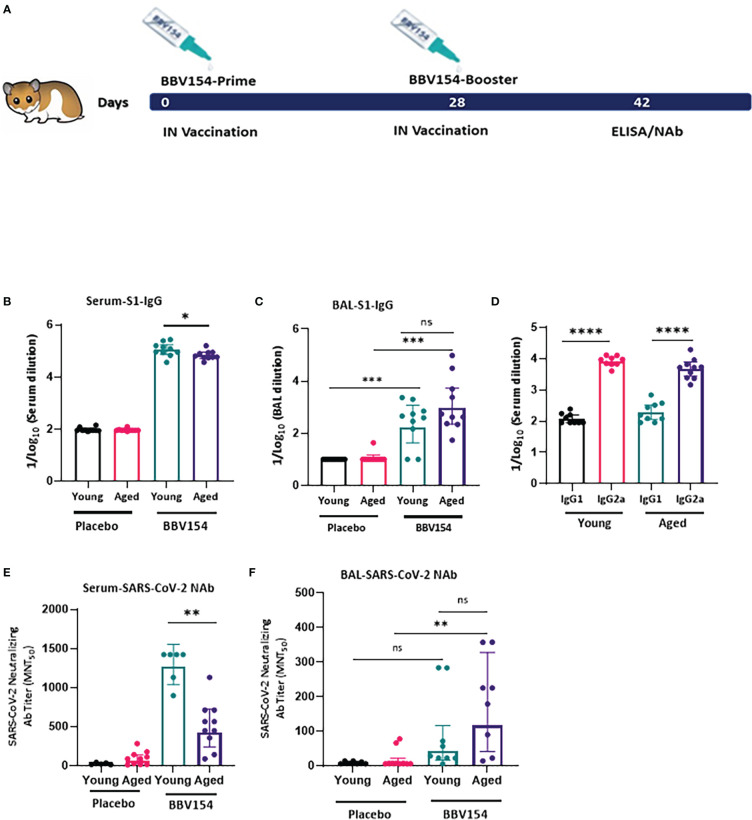
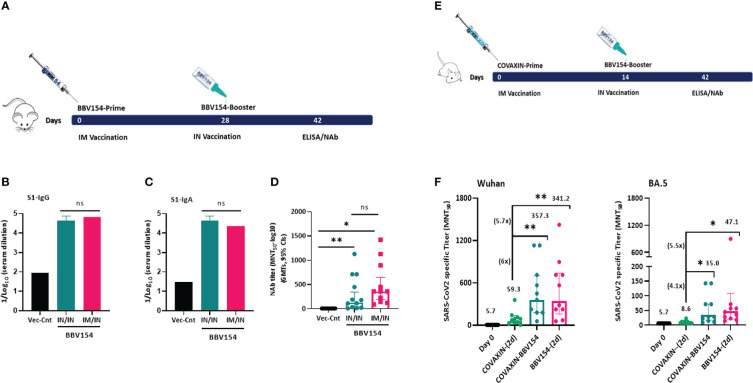
Most if not all vaccine candidates developed to combat COVID-19 due to SARS-CoV-2 infection are administered parenterally. As SARS-CoV-2 is transmitted through infectious respiratory fluids, vaccine-induced mucosal immunity could provide an important contribution to control this pandemic. ChAd-SARS-CoV-2-S (BBV154), a replication-defective chimpanzee adenovirus (ChAd)-vectored intranasal (IN) COVID-19 vaccine candidate, encodes a prefusion-stabilized version of the SARS-CoV-2 spike protein containing two proline substitutions in the S2 subunit. We performed preclinical evaluations of BBV154 in mice, rats, hamsters and rabbits. Repeated dose toxicity studies presented excellent safety profiles in terms of pathology and biochemical analysis. IN administration of BBV154 elicited robust mucosal and systemic humoral immune responses coupled with Th1 cell-mediated immune responses. BBV154 IN vaccination also elicited potent variant (omicron) cross neutralization antibodies. Assessment of anti-vector (ChAd36) neutralizing antibodies following repeated doses of BBV154 IN administration showed insignificant titers of ChAd36 neutralizing antibodies. However, the immune sera derived from the same animals displayed significantly higher levels of SARS-CoV-2 virus neutralization (p<0.003). We also evaluated the safety and immunogenicity of heterologous prime-boost vaccination with intramuscular (IM) COVAXIN-prime followed by BBV154 IN administration. COVAXIN priming followed by BBV154 IN-booster showed an acceptable reactogenicity profile comparable to the homologous COVAXIN/COVAXIN or BBV154/BBV154 vaccination model. Heterologous vaccination of COVAXIN-prime and BBV154 booster also elicited superior (p<0.005) and cross variant (omicron) protective immune responses (p<0.013) compared with the homologous COVAXIN/COVAXIN schedule. BBV154 has successfully completed both homologous and heterologous combination schedules of human phase 3 clinical trials and received the restricted emergency use approval (in those aged above 18 years) from the Drugs Controller General of India (DCGI).
大多数(如果不是全部的话)针对由 SARS-CoV-2 感染引起的 COVID-19 而开发的疫苗候选物都是通过注射给药的。由于 SARS-CoV-2 通过传染性呼吸道飞沫传播,疫苗诱导的黏膜免疫可能对控制这一大流行病做出重要贡献。ChAd-SARS-CoV-2-S(BBV154)是一种复制缺陷型 chimpanzee 腺病毒(ChAd)载体的鼻腔内(IN)COVID-19 疫苗候选物,编码一种含有 S2 亚基两个脯氨酸取代的 SARS-CoV-2 刺突蛋白的预融合稳定化版本。我们在小鼠、大鼠、仓鼠和兔子中进行了 BBV154 的临床前评估。重复剂量毒性研究在病理学和生化分析方面表现出极佳的安全性。IN 给予 BBV154 可引起强烈的黏膜和全身体液免疫应答,并伴有 Th1 细胞介导的免疫应答。BBV154 IN 疫苗接种还可引起针对变体(奥密克戎)的交叉中和抗体。在重复给予 BBV154 IN 后,评估针对载体(ChAd36)的中和抗体,结果显示针对 ChAd36 的中和抗体的滴度不高。然而,来自同一动物的免疫血清显示出更高水平的 SARS-CoV-2 病毒中和能力(p<0.003)。我们还评估了肌内(IM)COVAXIN 初免后再用 BBV154 IN 加强免疫的异源初免-加强免疫的安全性和免疫原性。COVAXIN 初免后再用 BBV154 IN 加强免疫的方案具有可接受的反应原性,与同源 COVAXIN/COVAXIN 或 BBV154/BBV154 疫苗接种方案相当。COVAXIN 初免和 BBV154 加强免疫的异源接种也可引起更优的(p<0.005)和交叉变体(奥密克戎)保护免疫应答(p<0.013),优于同源 COVAXIN/COVAXIN 方案。BBV154 已成功完成了人类 3 期临床试验的同源和异源组合方案,并获得了印度药品管制总局(DCGI)的限制紧急使用批准(适用于 18 岁以上人群)。