Zhang Ying, Huang Xiaocui, Li Weixin, Xie Qunfang, Zhang Jie, Luo Fang, Qiu Bin, Chen Zhonghui, Lin Zhenyu, Xu Guoyan
Central Laboratory, Fujian Key Laboratory of Precision Medicine for Cancer, The First Affiliated Hospital of Fujian Medical University, Fuzhou, Fujian 350005, China.
Ministry of Education Key Laboratory for Analytical Science of Food Safety and Biology, Fujian Provincial Key Laboratory of Analysis and Detection for Food Safety, College of Chemistry, Fuzhou University, Fuzhou, Fujian 350116, China.
Sens Actuators B Chem. 2023 Mar 15;379:133223. doi: 10.1016/j.snb.2022.133223. Epub 2022 Dec 22.
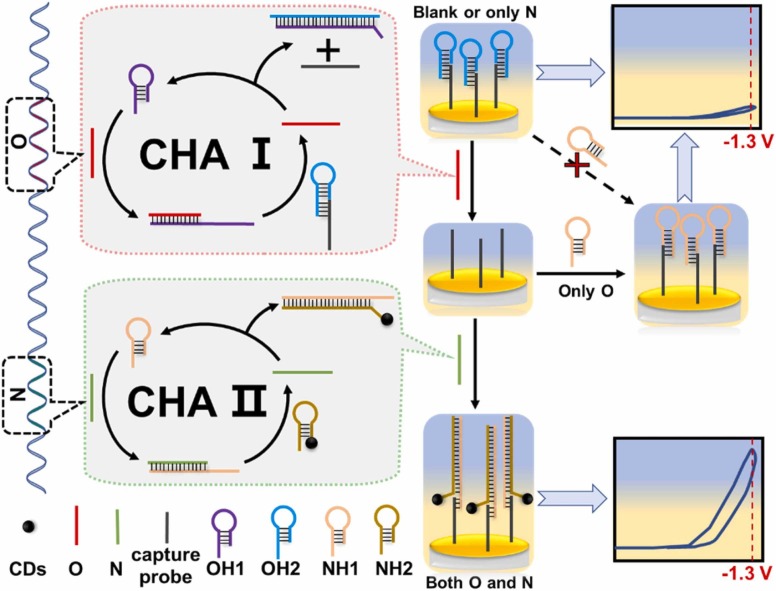
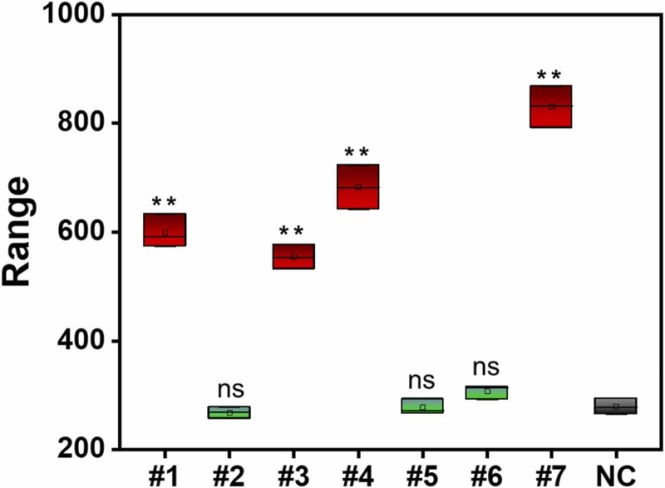
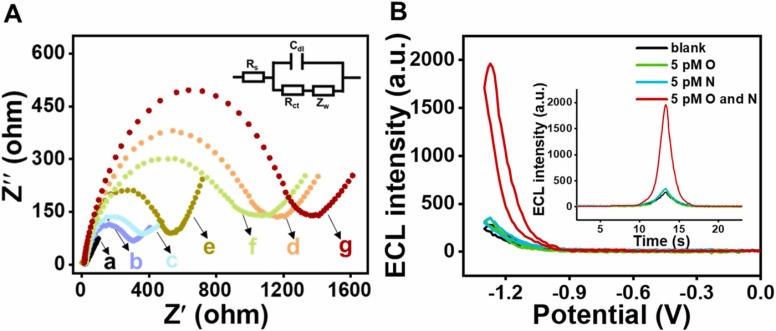
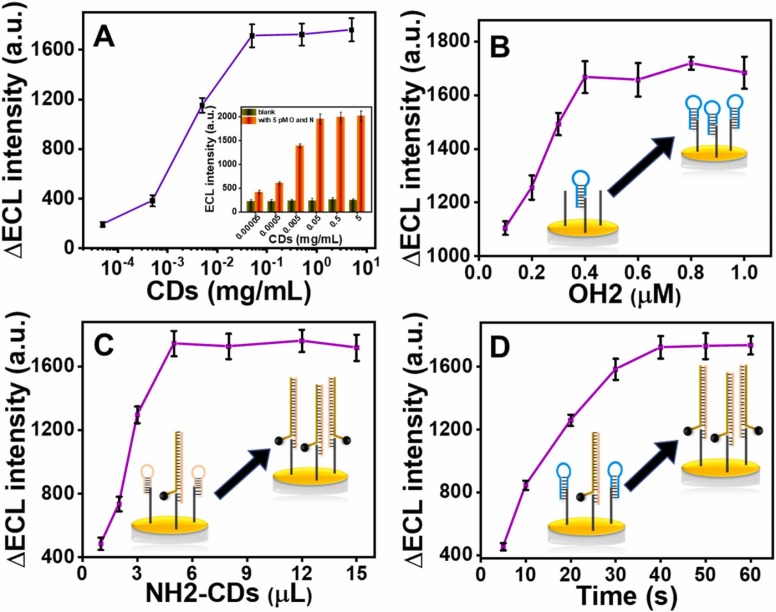
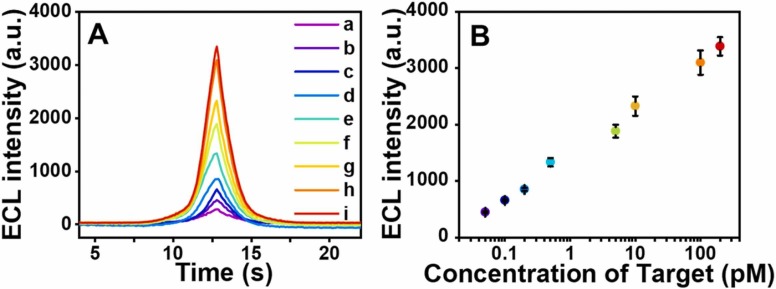
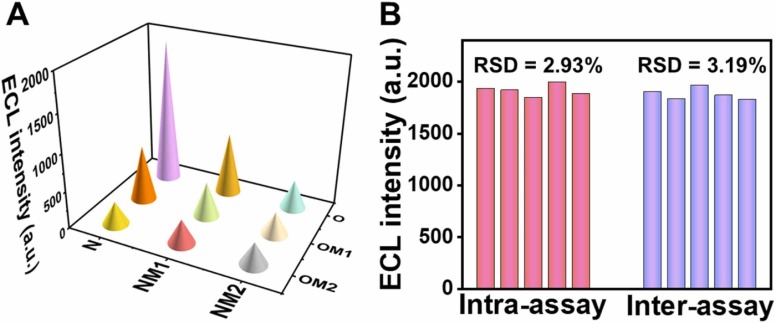
Severe acute respiratory syndrome coronavirus (SARS-CoV-2) is rampant all over the world, and rapid and effective virus detection is the best auxiliary to curb the spread of the epidemic. A diagnosis can only be made if two or more different nucleic acid sequences are confirmed at the same time, and in most of traditional detection technologies, these target sequences have been detected separately. In this work, an electrochemiluminescent (ECL) biosensor employing a single ECL probe as signal output and responding to dual-target simultaneously is proposed for the first time. Taking the two sequences located in ORF 1ab region and N region of SARS-CoV-2 gene sequence as the model target and nitrogen doped carbon quantum dots (CDs) as ECL beacon, supplemented with catalytic hairpin assembly (CHA) reaction for signal amplification, the presented strategy has been successfully applied to the rapid detection of SARS-CoV-2. The developed SARS-CoV-2 biosensor based on the series CHA systems can realize the quantitative determination of SARS-CoV-2 in the range of 50 fM to 200 pM within 40 min. Moreover, the clinical validity of this method has been verified by the high consistency between the detection results of using this method and those using RT-qPCR for seven clinical pharyngeal swab samples.
严重急性呼吸综合征冠状病毒(SARS-CoV-2)在全球肆虐,快速有效的病毒检测是遏制疫情传播的最佳辅助手段。只有同时确认两个或更多不同的核酸序列才能做出诊断,而在大多数传统检测技术中,这些靶序列是分别检测的。在这项工作中,首次提出了一种以单个电化学发光(ECL)探针作为信号输出并同时响应双靶点的ECL生物传感器。以严重急性呼吸综合征冠状病毒基因序列开放阅读框1ab区和N区的两个序列为模型靶点,以氮掺杂碳量子点(CDs)作为ECL信标,并辅以催化发夹组装(CHA)反应进行信号放大,所提出的策略已成功应用于严重急性呼吸综合征冠状病毒的快速检测。基于该系列CHA系统开发的严重急性呼吸综合征冠状病毒生物传感器能够在40分钟内实现50飞摩尔至200皮摩尔范围内严重急性呼吸综合征冠状病毒的定量测定。此外,通过该方法与实时荧光定量聚合酶链反应(RT-qPCR)对7份临床咽拭子样本的检测结果具有高度一致性,验证了该方法的临床有效性。