Beijing Institute of Basic Medical Sciences, Beijing, China.
Department of Anesthesiology, Seventh Medical Center of Chinese PLA General Hospital, Beijing, China.
Front Immunol. 2022 Dec 13;13:1046966. doi: 10.3389/fimmu.2022.1046966. eCollection 2022.
Ischemic cerebral infarction is the most common type of stroke with high rates of mortality, disability, and recurrence. However, the known diagnostic biomarkers and therapeutic targets for ischemic stroke (IS) are limited. In the current study, we aimed to identify novel inflammation-related biomarkers for IS using machine learning analysis and to explore their relationship with the levels of immune-related cells in whole blood samples.
Gene expression profiles of healthy controls and patients with IS were download from the Gene Expression Omnibus. Analysis of differentially expressed genes (DEGs) was performed in healthy controls and patients with IS. Single-sample gene set enrichment analysis was performed to calculate inflammation scores, and weighted gene co-expression network analysis was used to analyze genes in significant modules associated with inflammation scores. Key DEGs in significant modules were then analyzed using LASSO regression analysis for constructing a diagnostic model. The effectiveness and specificity of the diagnostic model was verified in healthy controls and patients with IS and with cerebral hemorrhage (CH) using qRT-PCR. The relationship between diagnostic score and the levels of immune-related cells in whole blood were analyzed using Pearson correlations.
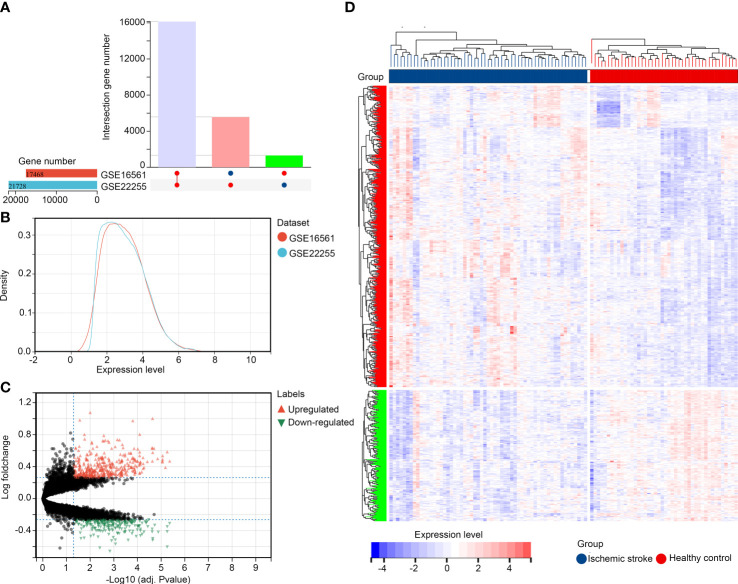
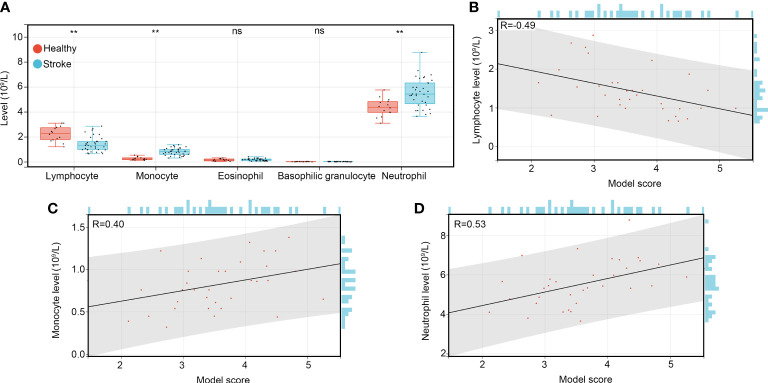
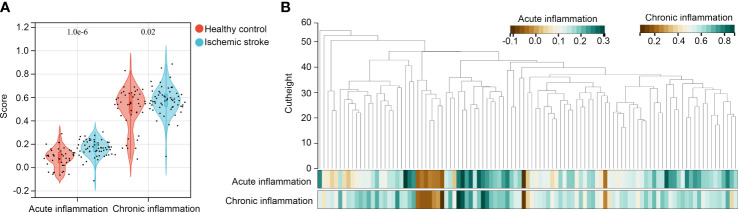
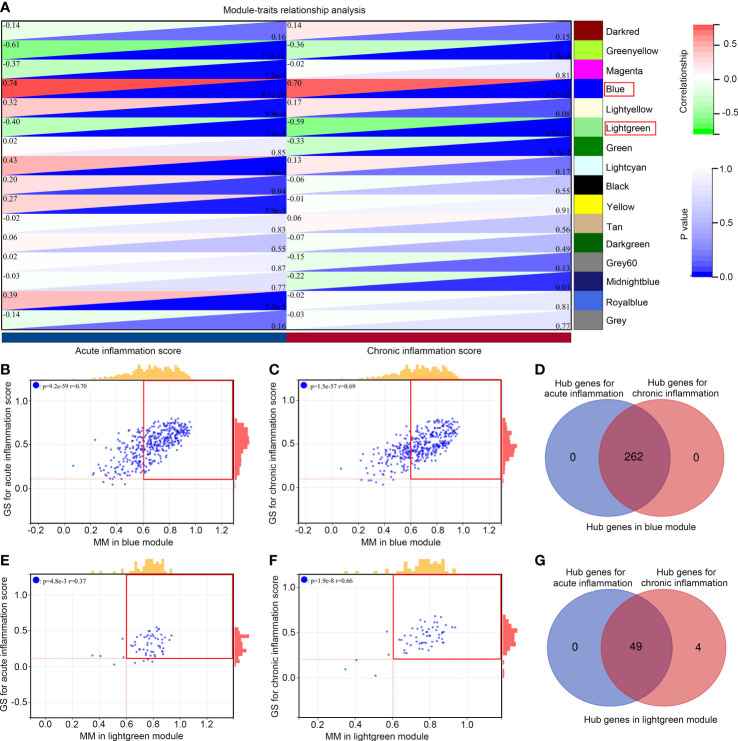
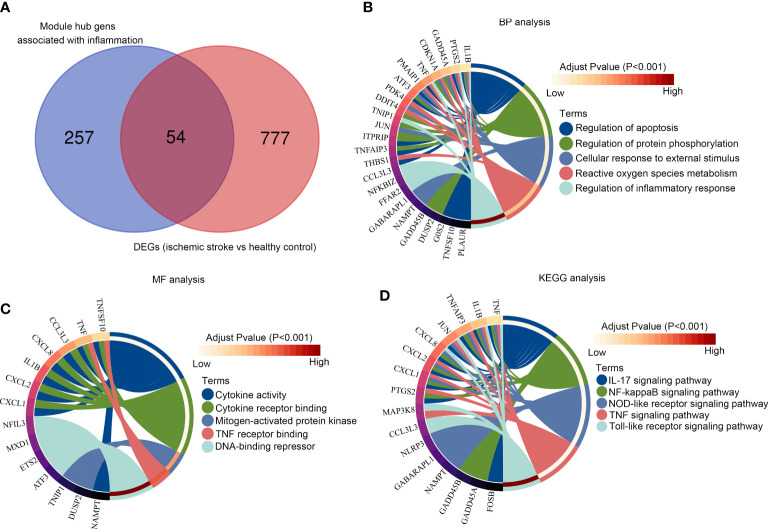
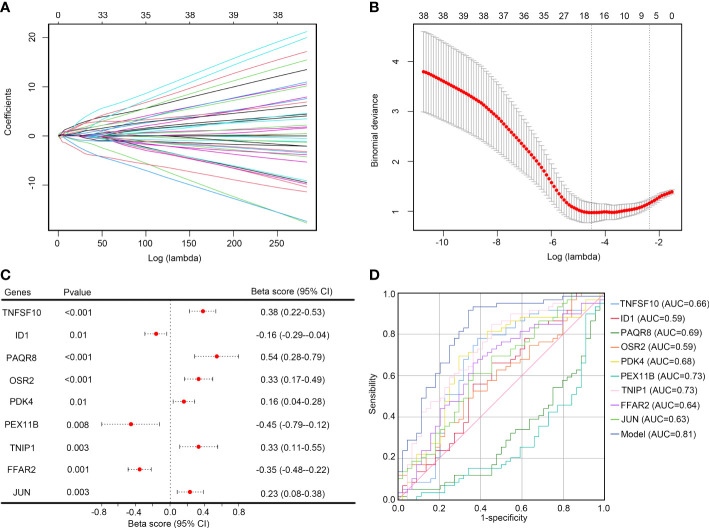
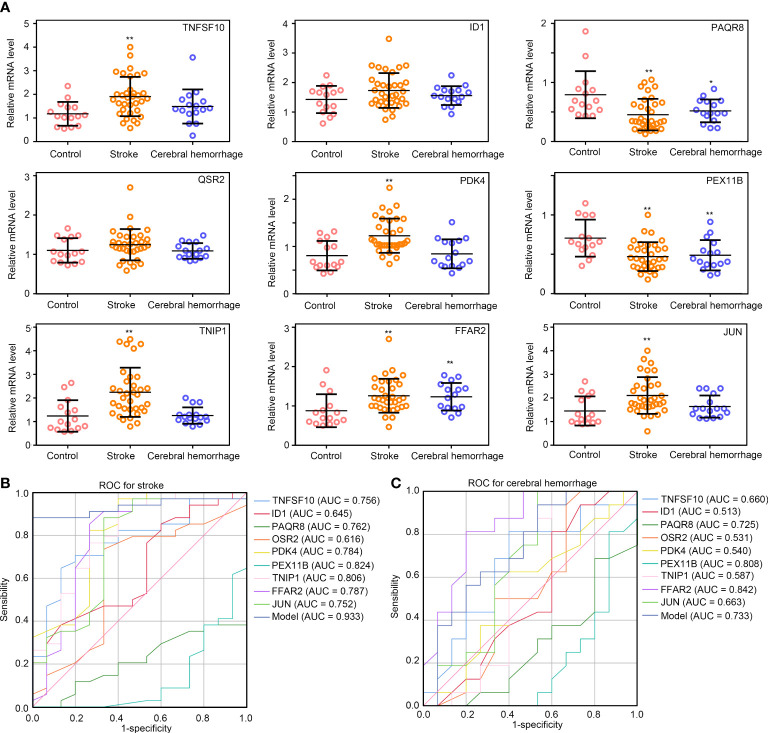
A total of 831 DEGs were identified. Both chronic and acute inflammation scores were higher in patients with IS, while 54 DEGs were also clustered in the gene modules associated with chronic and acute inflammation scores. Among them, a total of 9 genes were selected to construct a diagnostic model. Interestingly, RT-qPCR showed that the diagnostic model had better diagnostic value for IS but not for CH. The levels of lymphocytes were lower in blood of patients with IS, while the levels of monocytes and neutrophils were increased. The diagnostic score of the model was negatively associated with the levels of lymphocytes and positively associated with levels of monocytes and neutrophils.
Taken together, the diagnostic model constructed using the inflammation-related genes , , , , , , , , and exhibited high and specific diagnostic value for IS and reflected the condition of lymphocytes, monocytes, and neutrophils in the blood. The diagnostic model may contribute to the diagnosis of IS.
缺血性脑梗死是最常见的中风类型,其死亡率、残疾率和复发率都很高。然而,目前缺血性中风(IS)的已知诊断生物标志物和治疗靶点有限。在本研究中,我们旨在使用机器学习分析鉴定 IS 的新型炎症相关生物标志物,并探索它们与全血样本中免疫相关细胞水平的关系。
从基因表达综合数据库中下载健康对照者和 IS 患者的基因表达谱。在健康对照者和 IS 患者中进行差异表达基因(DEGs)分析。进行单样本基因集富集分析以计算炎症评分,并进行加权基因共表达网络分析以分析与炎症评分相关的显著模块中的基因。然后使用 LASSO 回归分析对显著模块中的关键 DEGs 进行分析,以构建诊断模型。使用 qRT-PCR 在健康对照者和 IS 患者以及脑出血(CH)患者中验证诊断模型的有效性和特异性。使用 Pearson 相关性分析诊断评分与全血免疫相关细胞水平的关系。
共鉴定出 831 个 DEGs。IS 患者的慢性和急性炎症评分均较高,而 54 个 DEGs 也聚类在与慢性和急性炎症评分相关的基因模块中。其中,共有 9 个基因被选择用于构建诊断模型。有趣的是,RT-qPCR 显示该诊断模型对 IS 具有更好的诊断价值,但对 CH 则不然。IS 患者血液中的淋巴细胞水平较低,而单核细胞和中性粒细胞水平升高。模型的诊断评分与淋巴细胞水平呈负相关,与单核细胞和中性粒细胞水平呈正相关。
总之,使用炎症相关基因 、 、 、 、 、 、 和 构建的诊断模型对 IS 具有高特异性的诊断价值,反映了血液中淋巴细胞、单核细胞和中性粒细胞的情况。该诊断模型可能有助于 IS 的诊断。