Göklü Mehmet Rıfat, Oğlak Süleyman Cemil, Gedik Özköse Zeynep, Tunç Şeyhmus, Bolluk Gökhan
Clinic of Obstetrics and Gynecology, University of Health Sciences Turkey, Gazi Yaşargil Training and Research Hospital, Diyarbakır, Turkey
Clinic of Perinatology, University of Health Sciences Turkey, Kanuni Sultan Süleyman Training and Research Hospital, İstanbul, Turkey
J Turk Ger Gynecol Assoc. 2023 Mar 15;24(1):33-41. doi: 10.4274/jtgga.galenos.2022.2022-6-8. Epub 2022 Dec 30.
This study aimed to examine the effects of infection with the Delta variant of coronavirus disease-2019 (COVID-19) on the clinical course, laboratory parameters, and neonatal outcome in pregnant women.
A total of 96 pregnant women who tested positive for the Delta variant of severe acute respiratory syndrome-coronavirus-2 (SARS-CoV-2) causing COVID-19 were retrospectively examined. The pregnant women were divided into three groups: Asymptomatic; non-severe; and severe. Age, obstetric history, symptoms and findings, blood tests, medication and vaccination history, clinical course, and perinatal outcome of pregnant women were analyzed.
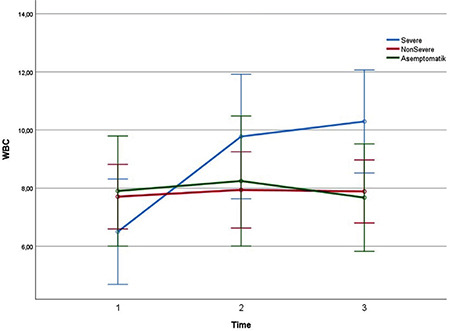
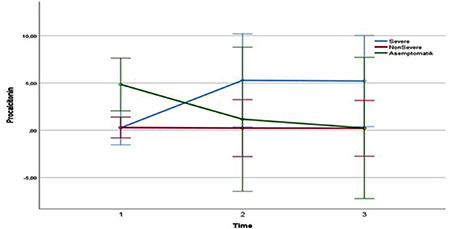
Pregnant women who tested positive for the Delta variant of SARS-CoV-2 had an intensive care unit (ICU) admission rate of 9.4% and a mortality rate of 5.2%. Pregnant women in the severe disease group had significantly higher rates of preterm birth and cesarean section compared with the non-severe and asymptomatic group. Pregnant women in the severe group had high C-reactive protein (CRP) levels at the time of admission. White blood cell count (WBC) and procalcitonin levels were increased in clinical follow-up in women in the severe group.
The Delta variant of SARS-CoV-2 was found to increase mortality rates in pregnant women compared to pre-Delta variants of COVID-19. In pregnant women infected with the Delta variant, advanced gestational age at diagnosis, high CRP, WBC, and procalcitonin levels were significantly correlated with poor prognosis. Pregnant women infected with the Delta variant and with severe COVID-19 had an increased risk for preterm delivery and cesarean section. Although newborns of women with severe disease were found to have significantly higher rates of ICU admission, there was no significant difference in neonatal mortality rates. We recommend close monitoring of CRP, WBC, and procalcitonin levels, in addition to symptoms, in pregnant women infected with the Delta variant of SARS-CoV-2 and diagnosed in the third trimester.
本研究旨在探讨感染新型冠状病毒肺炎(COVID-19)的德尔塔变异株对孕妇临床病程、实验室参数及新生儿结局的影响。
对96例新型严重急性呼吸综合征冠状病毒2(SARS-CoV-2)德尔塔变异株检测呈阳性且患有COVID-19的孕妇进行回顾性研究。将这些孕妇分为三组:无症状组;非重症组;重症组。分析孕妇的年龄、产科病史、症状和体征、血液检查、用药和疫苗接种史、临床病程及围产期结局。
SARS-CoV-2德尔塔变异株检测呈阳性的孕妇重症监护病房(ICU)收治率为9.4%,死亡率为5.2%。与非重症组和无症状组相比,重症疾病组孕妇的早产率和剖宫产率显著更高。重症组孕妇入院时C反应蛋白(CRP)水平较高。重症组女性临床随访期间白细胞计数(WBC)和降钙素原水平升高。
与COVID-19的德尔塔变异株之前的变异株相比,发现SARS-CoV-2德尔塔变异株会增加孕妇死亡率。在感染德尔塔变异株的孕妇中,诊断时孕周较大、CRP、WBC和降钙素原水平较高与预后不良显著相关。感染德尔塔变异株且患有重症COVID-19的孕妇早产和剖宫产风险增加。虽然发现重症疾病女性的新生儿ICU收治率显著更高,但新生儿死亡率无显著差异。我们建议,除了症状之外,对感染SARS-CoV-2德尔塔变异株且在孕晚期确诊的孕妇密切监测CRP、WBC和降钙素原水平。