Capurro Pietro, Ricciardiello Valentina, Lova Paola, Lambruschini Chiara, Protti Stefano, Basso Andrea
Dipartimento di Chimica e Chimica Industriale, Università degli Studi di Genova, Via Dodecaneso 31, 16146 Genova, Italy.
PhotoGreenLab, Dipartimento di Chimica, Università di Pavia, Viale Taramelli 12, 27100 Pavia, Italy.
ACS Omega. 2022 Dec 15;7(51):48564-48571. doi: 10.1021/acsomega.2c07172. eCollection 2022 Dec 27.
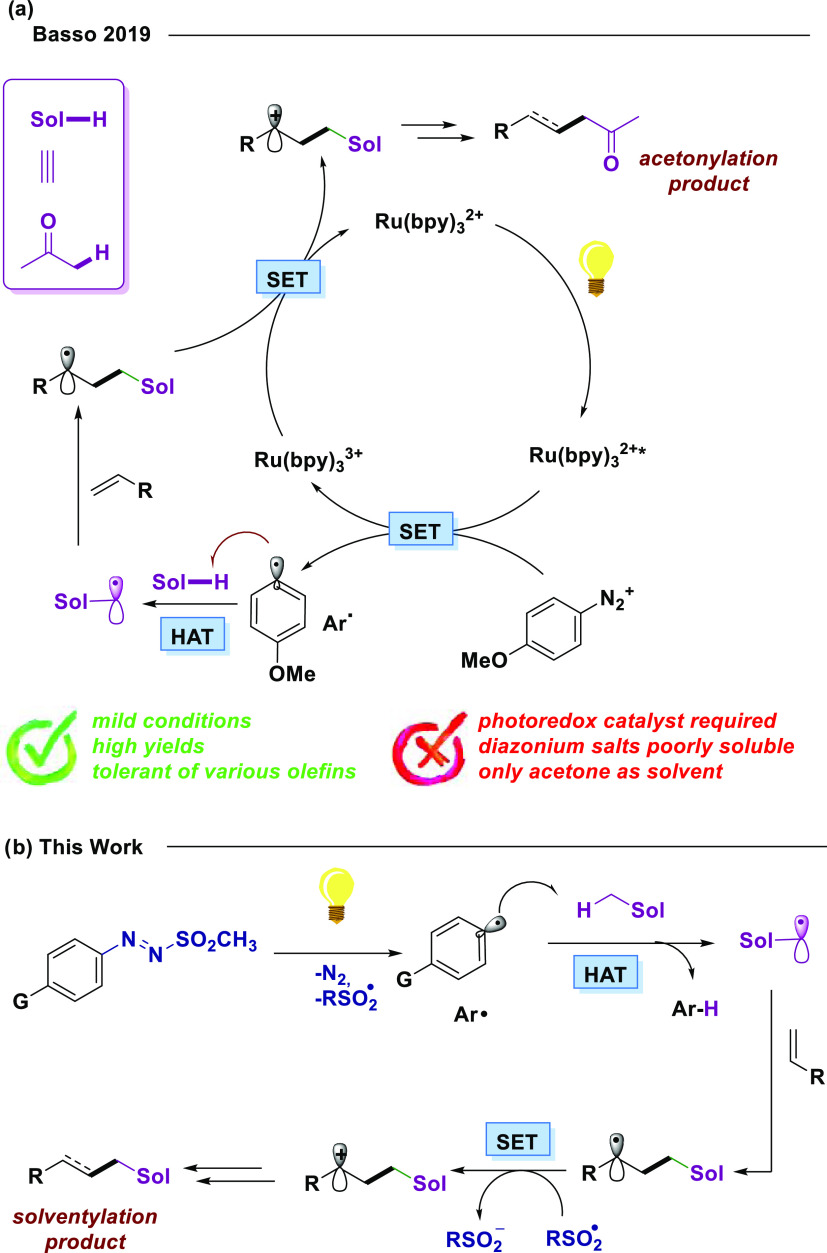
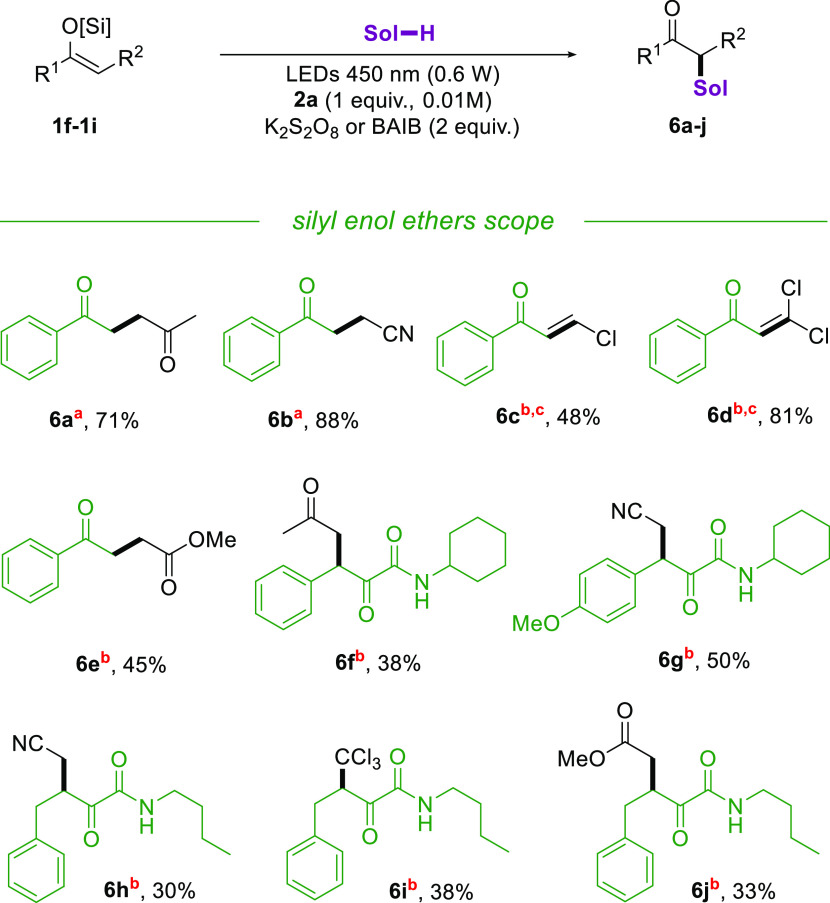
Amphiphilic aryl radicals generated upon visible light irradiation of arylazo sulfones have been exploited in the development of a solventylation strategy via hydrogen atom transfer (HAT). The present protocol succeeded in the versatile functionalization of various olefins with carbon-centered radicals deriving from acetone, acetonitrile, chloroform, methylene chloride, nitromethane, methyl acetate, and methyl formate under metal- and photocatalyst-free conditions. The direct addition of the aryl radicals onto the olefin substrates was suppressed under high dilution conditions.
在可见光照射芳基偶氮砜时产生的两亲性芳基自由基已被用于通过氢原子转移(HAT)开发一种溶剂化策略。本方法成功地在无金属和光催化剂的条件下,用源自丙酮、乙腈、氯仿、二氯甲烷、硝基甲烷、乙酸甲酯和甲酸甲酯的碳中心自由基对各种烯烃进行了多功能官能化。在高稀释条件下,芳基自由基直接加成到烯烃底物上的反应受到抑制。