Villegas Marta, Gonzalez-Agirre Aitor, Gutiérrez-Fandiño Asier, Armengol-Estapé Jordi, Carrino Casimiro Pio, Pérez-Fernández David, Soares Felipe, Serrano Pablo, Pedrera Miguel, García Noelia, Valencia Alfonso
Barcelona Supercomputing Center, Jordi Girona 1-3 08034, Barcelona, Spain.
Spanish Ministry of Inclusion, Social Security and Migration, Paseo de la Castellana 63 28071, Madrid, Spain.
Comput Methods Programs Biomed Update. 2023;3:100089. doi: 10.1016/j.cmpbup.2022.100089. Epub 2022 Dec 29.
In December 2020, the COVID-19 disease was confirmed in 1,665,775 patients and caused 45,784 deaths in Spain. At that time, health decision support systems were identified as crucial against the pandemic.
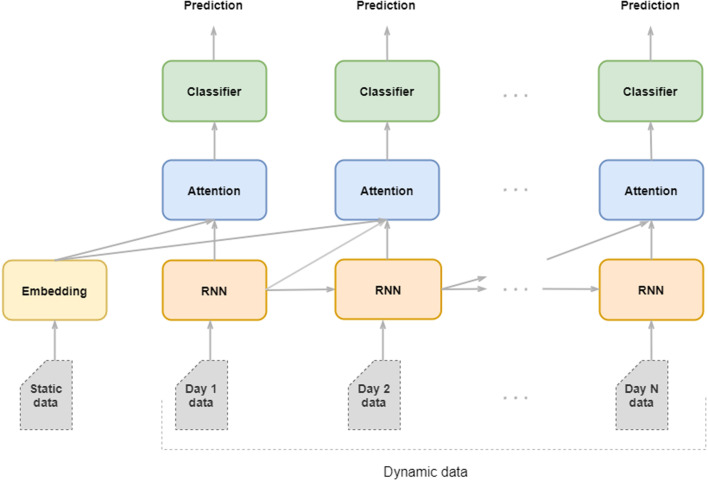
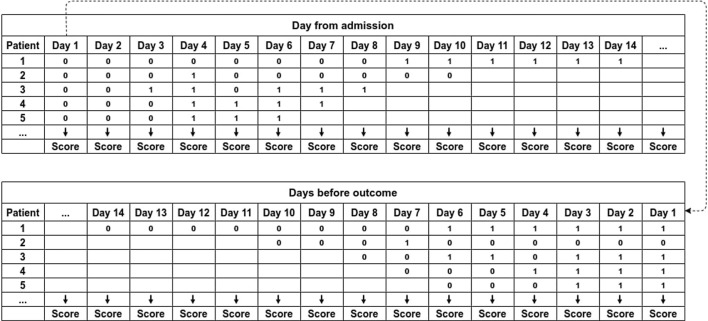
This study applies Deep Learning techniques for mortality prediction of COVID-19 patients. Two datasets with clinical information were used. They included 2,307 and 3,870 COVID-19 infected patients admitted to two Spanish hospitals. Firstly, we built a sequence of temporal events gathering all the clinical information for each patient, comparing different data representation methods. Next, we used the sequences to train a Recurrent Neural Network (RNN) model with an attention mechanism exploring interpretability. We conducted an extensive hyperparameter search and cross-validation. Finally, we ensembled the resulting RNNs to enhance sensitivity.
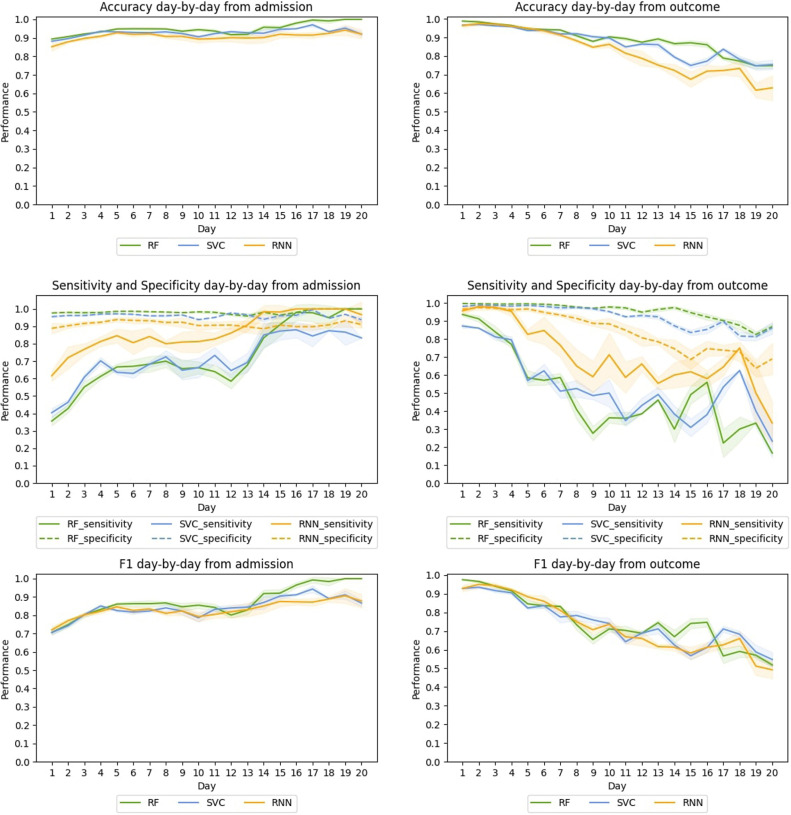
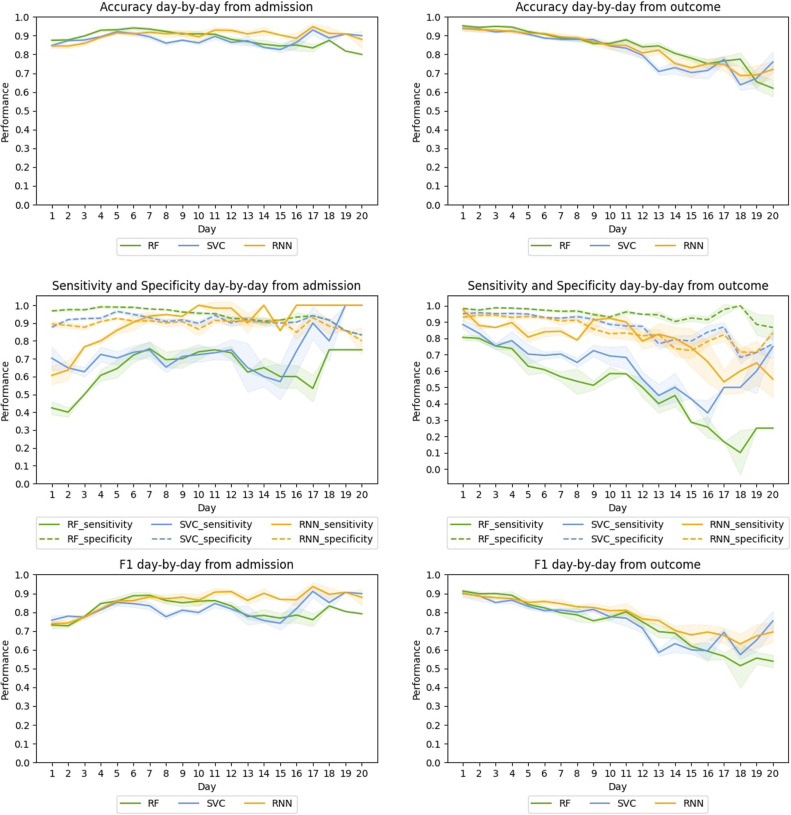
We assessed the performance of our models by averaging the performance across all the days in the sequences. Additionally, we evaluated day-by-day predictions starting from both the hospital admission day and the outcome day. We compared our models with two strong baselines, Support Vector Classifier and Random Forest, and in all cases our models were superior. Furthermore, we implemented an ensemble model that substantially increased the system's sensitivity while producing more stable predictions.
We have shown the feasibility of our approach to predicting the clinical outcome of patients. The result is an RNN-based model that can support decision-making in healthcare systems aiming at interpretability. The system is robust enough to deal with real-world data and can overcome the problems derived from the sparsity and heterogeneity of data.
2020年12月,西班牙确诊1,665,775例新冠肺炎患者,导致45,784人死亡。当时,卫生决策支持系统被认为是抗击疫情的关键。
本研究应用深度学习技术预测新冠肺炎患者的死亡率。使用了两个包含临床信息的数据集。它们包括两所西班牙医院收治的2307例和3870例新冠肺炎感染患者。首先,我们构建了一系列时间事件,收集每位患者的所有临床信息,比较不同的数据表示方法。接下来,我们使用这些序列训练一个带有注意力机制的递归神经网络(RNN)模型,以探索可解释性。我们进行了广泛的超参数搜索和交叉验证。最后,我们将得到的RNN模型集成起来以提高敏感性。
我们通过对序列中所有天数的性能进行平均来评估模型的性能。此外,我们从入院日和结果日开始评估每日预测。我们将我们的模型与两个强大的基线模型——支持向量分类器和随机森林进行比较,在所有情况下我们的模型都更优。此外,我们实施了一个集成模型,该模型在产生更稳定预测的同时大幅提高了系统的敏感性。
我们已经证明了我们预测患者临床结果方法的可行性。结果是一个基于RNN的模型,该模型可以支持旨在实现可解释性的医疗保健系统中的决策制定。该系统足够强大,能够处理现实世界的数据,并能克服数据稀疏性和异质性带来的问题。