Xiang Guo-Xing, Li Hao, Gan Xiong, Qin Ke-Nan, Jin Xin, Wang Pin-Yi
Department of Psychology, College of Education and Sports Sciences, Yangtze University, Jingzhou, China.
Yangtze University College of Technology and Engineering, Jingzhou, China.
Curr Psychol. 2022 Dec 29:1-13. doi: 10.1007/s12144-022-04178-5.
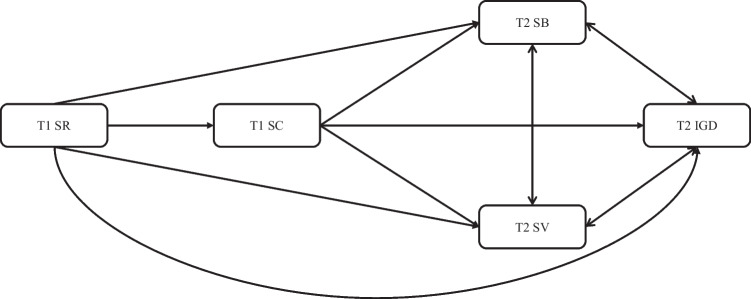
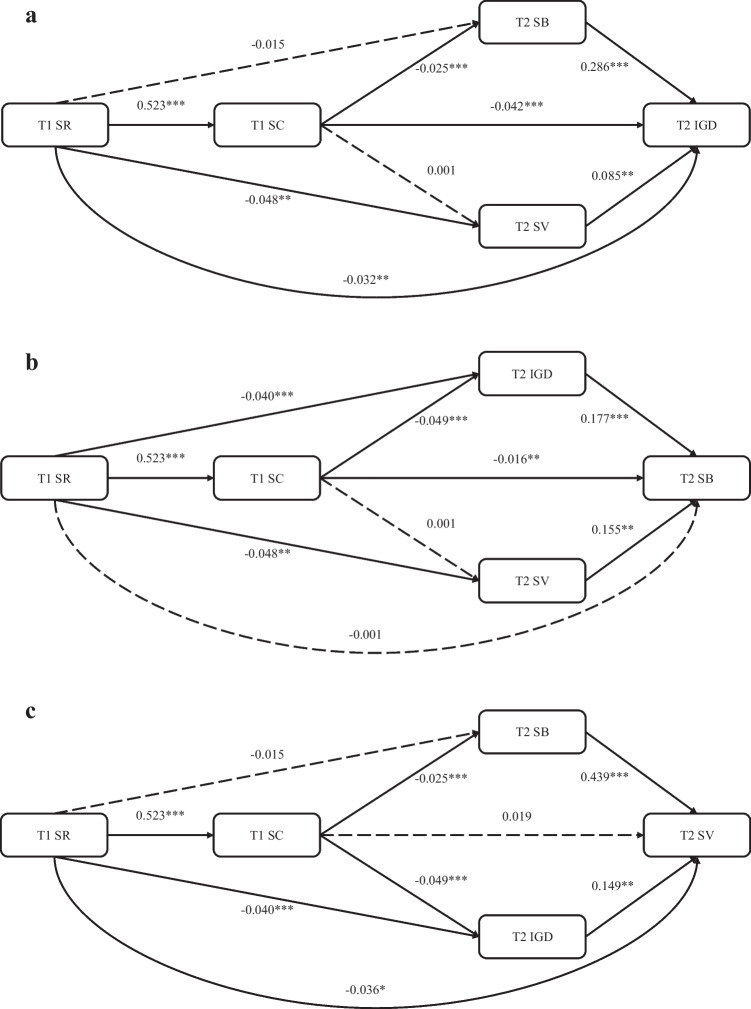
The outbreak of COVID-19 has brought many challenges to youth development. During this specific period, adolescents have suffered from numerous behavioral problems, which will lead to more maladaptive consequences. It is necessary to explore several protective factors to prevent or reduce the occurrence of problem behaviors in adolescence. The current study combined school resources and self-control to evaluate the multiple protective effects on adolescents' problematic behaviors in a two-wave longitudinal study. A sample of 789 Chinese adolescents (Mage = 14.00 years, SD = 2.05, 418 boys) were recruited via the random cluster sampling method to participate in the survey. The results confirmed the assumptions about the multiple protective effects of school resources and self-control on adolescents' problem behaviors. Specifically, school resources could negatively predict IGD and victimization, and self-control mediated these associations. Moreover, one problematic behavior could also mediate the associations between self-control and another problematic behavior. This is the first study to focus on the multiple protective effects of positive factors on adolescents' problem behaviors during the post-pandemic period, which has made several contributions to the literature and practice.
新冠疫情的爆发给青少年发展带来了诸多挑战。在这一特殊时期,青少年出现了诸多行为问题,这些问题将导致更多适应不良的后果。探索若干保护因素以预防或减少青少年问题行为的发生很有必要。本研究在一项两波次的纵向研究中,结合学校资源和自我控制来评估对青少年问题行为的多重保护作用。通过随机整群抽样法招募了789名中国青少年(平均年龄 = 14.00岁,标准差 = 2.05,418名男生)参与调查。结果证实了关于学校资源和自我控制对青少年问题行为多重保护作用的假设。具体而言,学校资源能够负向预测网络成瘾和受欺负情况,且自我控制在这些关联中起中介作用。此外,一种问题行为也能够在自我控制和另一种问题行为之间起中介作用。这是第一项聚焦于疫情后时期积极因素对青少年问题行为多重保护作用的研究,对相关文献和实践做出了若干贡献。