Acharjee Shiva Aley, Bharali Pranjal, Gogoi Bhagyudoy, Sorhie Viphrezolie, Walling Bendangtula
Applied Environmental Microbial Biotechnology Laboratory, Department of Environmental Science, Nagaland University, Hq- Lumami, Zunheboto-798627, Nagaland, India.
Water Air Soil Pollut. 2023;234(1):21. doi: 10.1007/s11270-022-06029-2. Epub 2022 Dec 29.
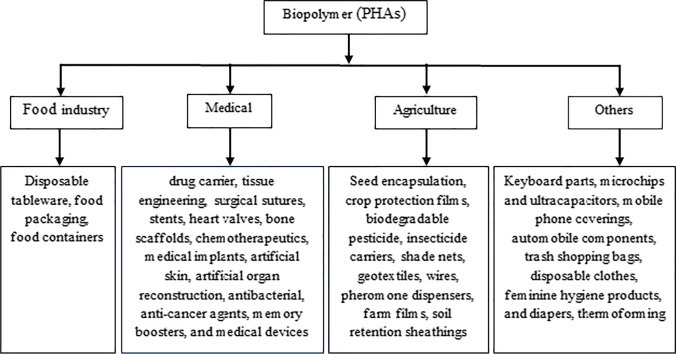
Petroleum-derived plastics are linked to a variety of growing environmental issues throughout their lifecycle, including emission of greenhouse gases, accumulation in terrestrial and marine habitats, pollution, among others. There has been a lot of attention over the last decade in industrial and research communities in developing and producing eco-friendly polymers to deal with the current environmental issues. Bioplastics preferably are a fast-developing family of polymeric substances that are frequently promoted as substitutes to petroleum-derived plastics Polyhydroxyalkanoates (PHAs) have a number of appealing properties that make PHAs a feasible source material for bioplastics, either as a direct replacement of petroleum-derived plastics or as a blend with elements derived from natural origin, fabricated biodegradable polymers, and/or non-biodegradable polymers. Among the most promising PHAs, polyhydroxybutyrates (PHBs) are the most well-known and have a significant potential to replace traditional plastics. These biodegradable plastics decompose faster after decomposing into carbon dioxide, water, and inorganic chemicals. Bioplastics have been extensively utilized in several sectors such as food-processing industry, medical, agriculture, automobile industry, etc. However, it is also associated with disadvantages like high cost, uneconomic feasibility, brittleness, and hydrophilic nature. A variety of tactics have been explored to improve the qualities of bioplastics, with the most prevalent being the development of gas and water barrier properties. The prime objective of this study is to review the current knowledge on PHAs and provide a brief introduction to PHAs, which have drawn attention as a possible potential alternative to conventional plastics due to their biological origin, biocompatibility, and biodegradability, thereby reducing the negative impact of microplastics in the environment. This review may help trigger further scientific interest to thoroughly research on PHAs as a sustainable option to greener bioplastics.
石油衍生塑料在其整个生命周期中与各种日益严重的环境问题相关联,包括温室气体排放、在陆地和海洋栖息地的积累、污染等。在过去十年中,工业界和研究界对开发和生产环保聚合物以应对当前环境问题给予了大量关注。生物塑料最好是一类快速发展的聚合物质,经常被宣传为石油衍生塑料的替代品。聚羟基脂肪酸酯(PHA)具有许多吸引人的特性,这使得PHA成为生物塑料的一种可行原料,既可以直接替代石油衍生塑料,也可以与天然来源的元素、人造可生物降解聚合物和/或不可生物降解聚合物混合使用。在最有前途的PHA中,聚羟基丁酸酯(PHB)最为人所知,并且有很大的潜力取代传统塑料。这些可生物降解塑料在分解成二氧化碳、水和无机化学物质后分解得更快。生物塑料已广泛应用于食品加工业、医疗、农业、汽车工业等多个领域。然而,它也存在成本高、经济可行性差、脆性大和亲水性等缺点。人们已经探索了各种策略来改善生物塑料的性能,其中最普遍的是开发气体和水阻隔性能。本研究的主要目的是回顾关于PHA的现有知识,并简要介绍PHA,由于其生物来源、生物相容性和生物可降解性,PHA作为传统塑料的一种可能的潜在替代品受到了关注,从而减少微塑料对环境的负面影响。这篇综述可能有助于激发进一步的科学兴趣,以深入研究PHA作为绿色生物塑料的可持续选择。