Wang Xiaohui, Su Lianlin, Tan Jinhua, Ding Tianwen, Yue Yinzi
Department of General Surgery, Bayinguoleng Mongolian Autonomous Prefecture People's Hospital, Korla, 841000, Xinjiang, China.
These authors contributed eqully to this work.
Iran J Basic Med Sci. 2023 Jan;26(1):48-56. doi: 10.22038/IJBMS.2022.66678.14624.
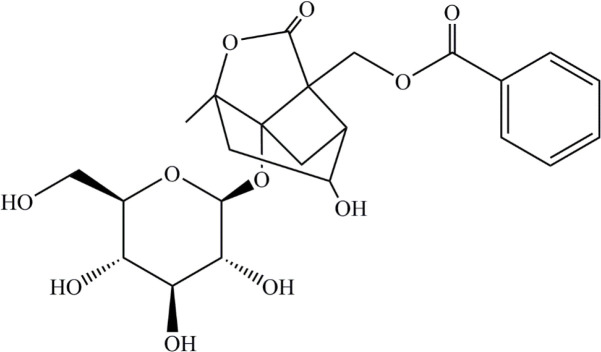
To clarify therapeutic potential of albiflorin and its intrinsic mechanisms against dextran sulfate sodium (DSS)-induced Ulcerative colitis (UC) mice.
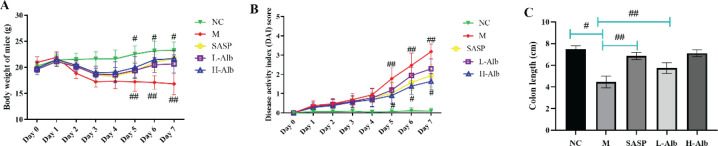
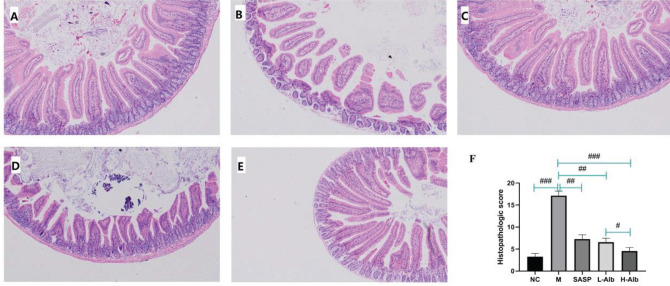
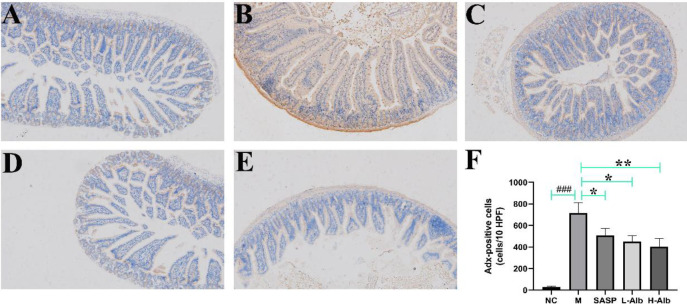
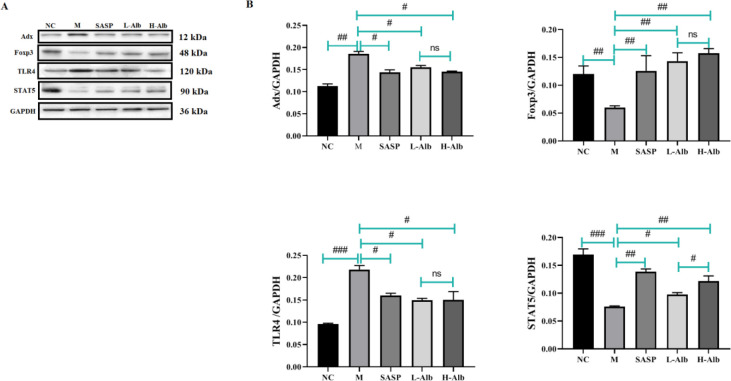
Sixty male C57BL/6 mice were randomly divided into five groups: negative control, positive, albiflorin low-dose group, albiflorin high-dose group and treatment control (Salicylazosulfapyridine "SASP", 100 mg/kg) group. Acute colitis was induced in all groups except NC by administration of 3% DSS for 7 days. Albiflorin and SASP were administered via the intragastric route twice a day for 7 days. The changes of colon tissue were assessed by disease activity index (DAI), HE staining, and ELISA. Adrenodoxin expressions of UC colon tissues were evaluated by immunohistochemistry. Western blotting was performed to investigate related protein of the NF-κB and mitogen-activated protein kinase (MAPK) signaling pathways.
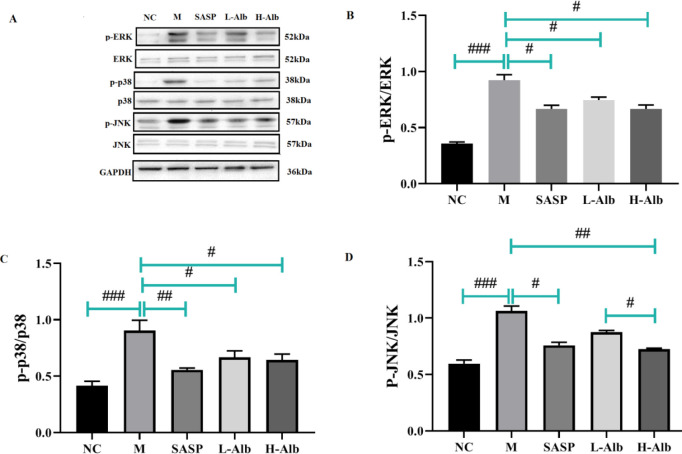
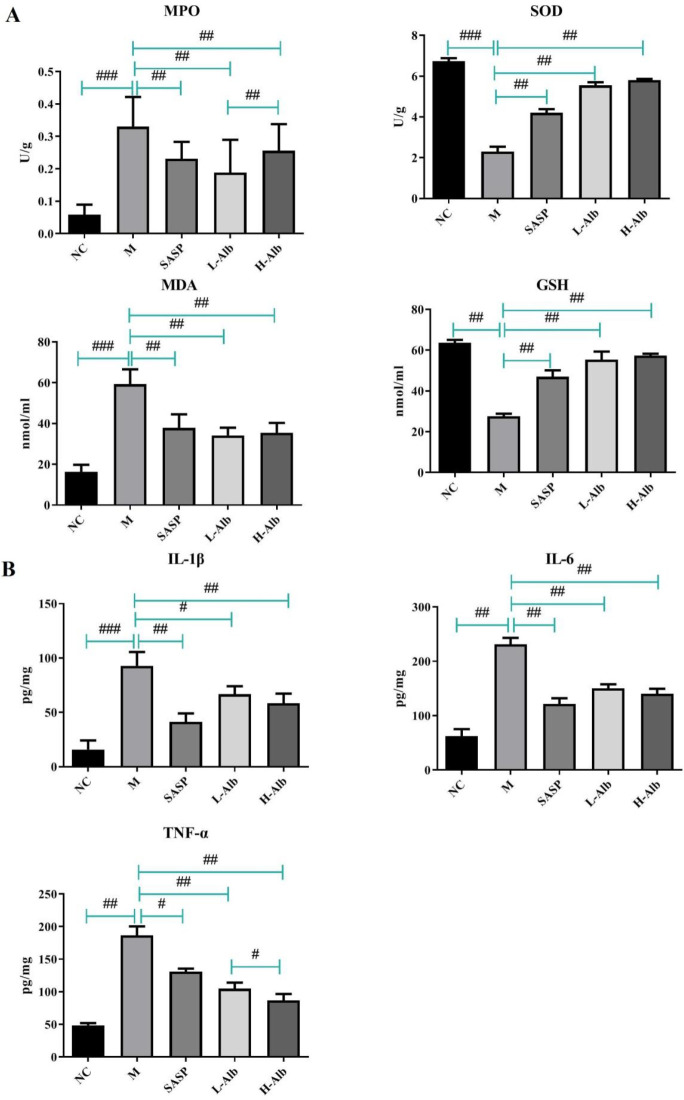
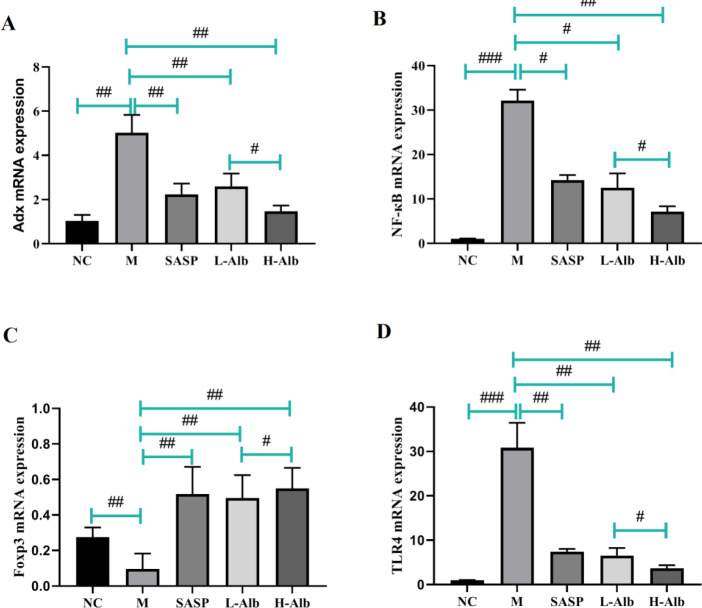
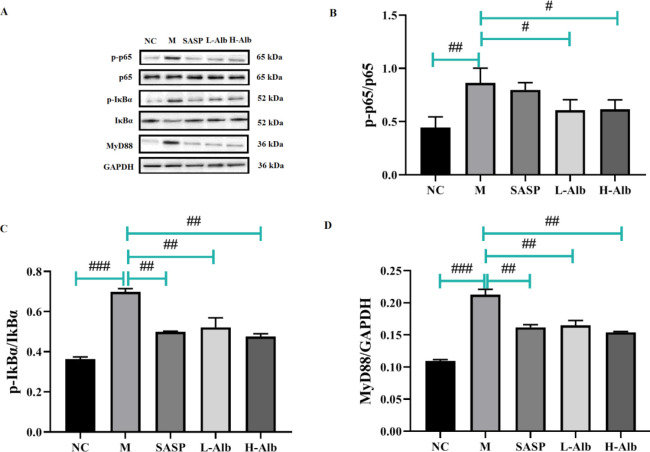
It has been found that the albiflorin shares similar influences as the SASP in ameliorating the DSS-induced UC. The reduced DAI and alleviated colon tissue damage were observed in albiflorin intervened groups. Moreover, albiflorin significantly inhibited myeloperoxidase activities and attenuated immuno-inflammatory response and elevated Foxp3 mRNA in colon tissue. Furthermore, investigations revealed that albiflorin could inhibit adrenodoxin isoform and activate activated phosphorylated NF-κB p65 and IκBα, which consequently suppressed phosphorylated p38 MAPK, extracellular regulated protein kinase (ERK), and c-Jun N-terminal kinase (JNK).
These findings showed that albiflorin could alleviate DSS-induced murine colitis by activating inhibiting NF-κB and MAPK signaling pathways. It might be a potential therapeutic reagent for UC treatment.
阐明白花芍药苷对葡聚糖硫酸钠(DSS)诱导的溃疡性结肠炎(UC)小鼠的治疗潜力及其内在机制。
将60只雄性C57BL/6小鼠随机分为五组:阴性对照组、阳性对照组、白花芍药苷低剂量组、白花芍药苷高剂量组和治疗对照组(柳氮磺胺吡啶“SASP”,100 mg/kg)组。除阴性对照组外,其余各组均给予3% DSS诱导急性结肠炎7天。白花芍药苷和SASP通过灌胃给药,每天两次,共7天。通过疾病活动指数(DAI)、苏木精-伊红(HE)染色和酶联免疫吸附测定(ELISA)评估结肠组织的变化。采用免疫组织化学法评估UC结肠组织中肾上腺皮质铁氧化还原蛋白的表达。进行蛋白质免疫印迹法以研究核因子-κB(NF-κB)和丝裂原活化蛋白激酶(MAPK)信号通路的相关蛋白。
发现白花芍药苷在改善DSS诱导的UC方面具有与SASP相似的作用。在白花芍药苷干预组中观察到DAI降低和结肠组织损伤减轻。此外,白花芍药苷显著抑制髓过氧化物酶活性,减轻免疫炎症反应,并提高结肠组织中叉头框蛋白3(Foxp3)mRNA水平。此外,研究表明白花芍药苷可抑制肾上腺皮质铁氧化还原蛋白异构体,激活磷酸化的NF-κB p65和IκBα,从而抑制磷酸化的p38 MAPK、细胞外调节蛋白激酶(ERK)和c-Jun氨基末端激酶(JNK)。
这些发现表明白花芍药苷可通过抑制NF-κB和MAPK信号通路的激活来减轻DSS诱导的小鼠结肠炎。它可能是一种治疗UC的潜在治疗药物。