Department of Pneumology and Intensive Care Medicine, University Hospital RWTH Aachen, Aachen, Germany.
Institute of Life Sciences, Sant'Anna School of Advanced Studies, Pisa, Italy.
Am J Respir Crit Care Med. 2023 Apr 15;207(8):1012-1021. doi: 10.1164/rccm.202206-1243OC.
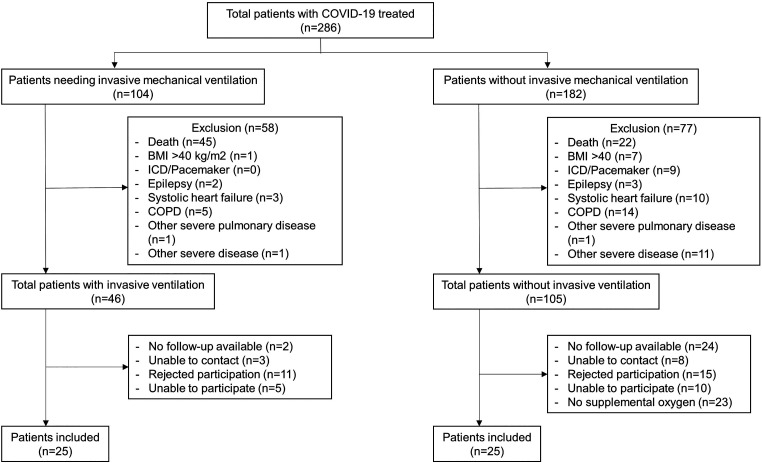
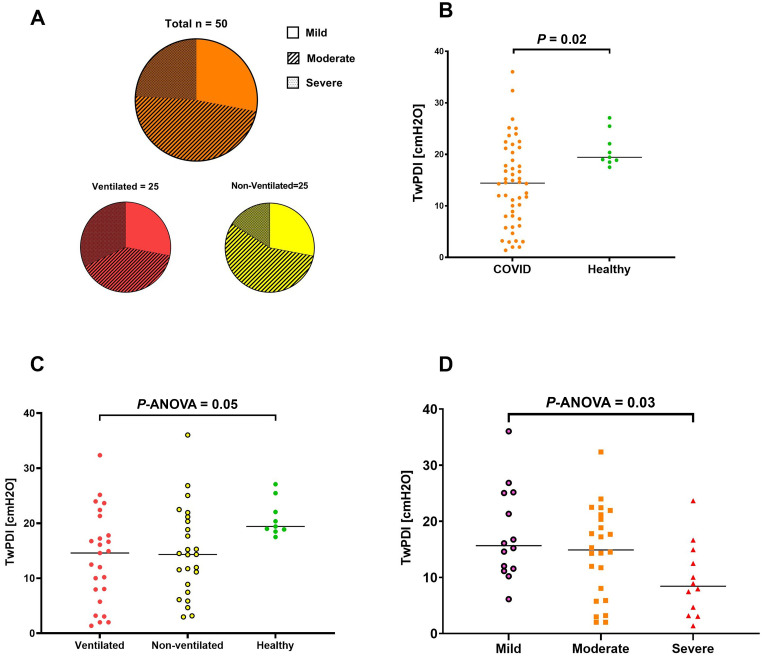
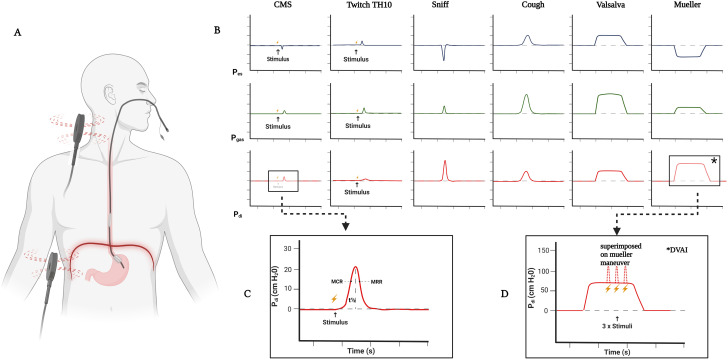
Dyspnea is often a persistent symptom after acute coronavirus disease (COVID-19), even if cardiac and pulmonary function are normal. This study investigated diaphragm muscle strength in patients after COVID-19 and its relationship to unexplained dyspnea on exertion. Fifty patients previously hospitalized with COVID-19 (14 female, age 58 ± 12 yr, half of whom were treated with mechanical ventilation, and half of whom were treated outside the ICU) were evaluated using pulmonary function testing, 6-minute-walk test, echocardiography, twitch transdiaphragmatic pressure after cervical magnetic stimulation of the phrenic nerve roots, and diaphragm ultrasound. Diaphragm function data were compared with values from a healthy control group. Moderate or severe dyspnea on exertion was present at 15 months after hospital discharge in approximately two-thirds of patients. No significant pulmonary function or echocardiography abnormalities were detected. Twitch transdiaphragmatic pressure was significantly impaired in patients previously hospitalized with COVID-19 compared with control subjects, independent of initial disease severity (14 ± 8 vs. 21 ± 3 cm HO in mechanically ventilated patients vs. control subjects [ = 0.02], and 15 ± 8 vs. 21 ± 3 cm HO in nonventilated patients vs. control subjects [ = 0.04]). There was a significant association between twitch transdiaphragmatic pressure and the severity of dyspnea on exertion ( = 0.03). Diaphragm muscle weakness was present 15 months after hospitalization for COVID-19 even in patients who did not require mechanical ventilation, and this weakness was associated with dyspnea on exertion. The current study, therefore, identifies diaphragm muscle weakness as a correlate for persistent dyspnea in patients after COVID-19 in whom lung and cardiac function are normal. Clinical trial registered with www.clinicaltrials.gov (NCT04854863).
呼吸困难是急性冠状病毒病 (COVID-19) 后的常见持续症状,即使心脏和肺功能正常也是如此。本研究调查了 COVID-19 后患者的膈肌肌肉力量及其与无法解释的运动性呼吸困难的关系。50 名曾因 COVID-19 住院的患者(14 名女性,年龄 58±12 岁,其中一半接受机械通气治疗,一半在 ICU 外治疗)接受了肺功能测试、6 分钟步行测试、超声心动图、颈部膈神经磁刺激后的膈神经 twitch 跨膈压和膈肌超声检查。将膈肌功能数据与健康对照组的值进行比较。约三分之二的患者在出院后 15 个月出现中度或重度运动性呼吸困难。未发现明显的肺功能或超声心动图异常。与对照组相比,曾因 COVID-19 住院的患者的 twitch 跨膈压明显受损,与初始疾病严重程度无关(机械通气患者为 14±8 与对照组相比 [=0.02],非通气患者为 15±8 与对照组相比 [=0.04])。twitch 跨膈压与运动性呼吸困难的严重程度呈显著相关性(=0.03)。即使在不需要机械通气的 COVID-19 住院患者中,在 COVID-19 住院 15 个月后也存在膈肌肌肉无力,并且这种无力与运动性呼吸困难相关。因此,本研究确定膈肌肌肉无力是 COVID-19 后肺和心脏功能正常的患者持续呼吸困难的相关因素。本研究已在 www.clinicaltrials.gov 上注册(NCT04854863)。