Primary Care Centre Versus Arthritis, School of Medicine, Keele University, Newcastle-under-Lyme, UK
Primary Care Centre Versus Arthritis, School of Medicine, Keele University, Newcastle-under-Lyme, UK.
BMJ Open. 2023 Jan 4;13(1):e062377. doi: 10.1136/bmjopen-2022-062377.
Summarise longitudinal observational studies to determine whether diabetes (types 1 and 2) is a risk factor for frozen shoulder.
Systematic review and meta-analysis.
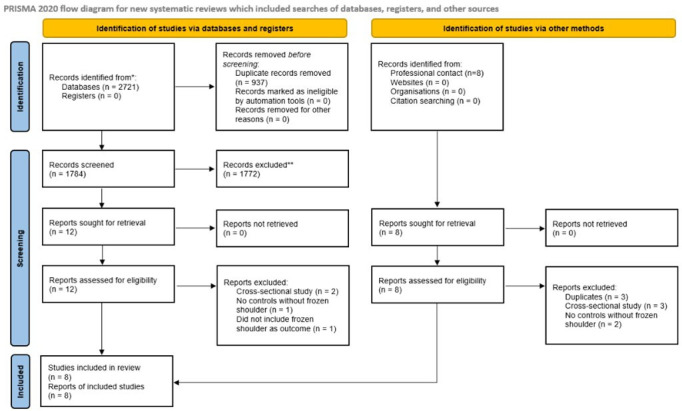
MEDLINE, Embase, AMED, PsycINFO, Web of Science Core Collection, CINAHL, Epistemonikos, Trip, PEDro, OpenGrey and The Grey Literature Report were searched on January 2019 and updated in June 2021. Reference screening and emailing professional contacts were also used.
Longitudinal observational studies that estimated the association between diabetes and developing frozen shoulder.
Data extraction was completed by one reviewer and independently checked by another using a predefined extraction sheet. Risk of bias was judged using the Quality In Prognosis Studies tool. For studies providing sufficient data, random-effects meta-analysis was used to derive summary estimates of the association between diabetes and the onset of frozen shoulder.
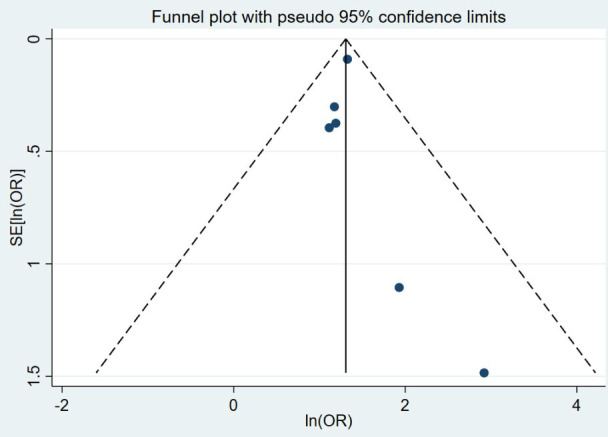
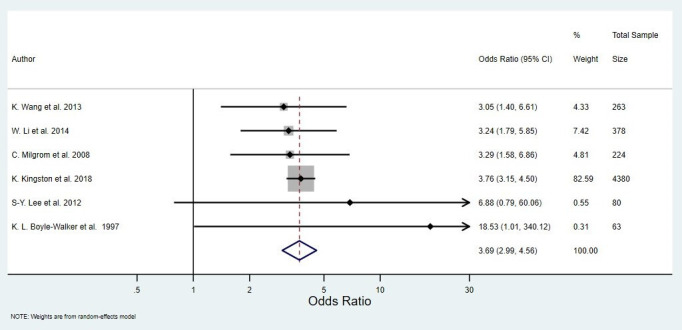
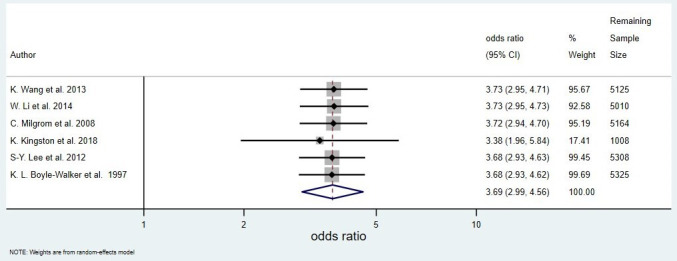
A meta-analysis of six case-control studies including 5388 people estimated the odds of developing frozen shoulder for people with diabetes to be 3.69 (95% CI 2.99 to 4.56) times the odds for people without diabetes. Two cohort studies were identified, both suggesting diabetes was associated with frozen shoulder, with HRs of 1.32 (95% CI 1.22 to 1.42) and 1.67 (95% CI 1.46 to 1.91). Risk of bias was judged as high in seven studies and moderate in one study.
People with diabetes are more likely to develop frozen shoulder. Risk of unmeasured confounding was the main limitation of this systematic review. High-quality studies are needed to confirm the strength of, and understand reasons for, the association.
CRD42019122963.
总结纵向观察性研究,以确定糖尿病(1 型和 2 型)是否是肩周炎的危险因素。
系统评价和荟萃分析。
2019 年 1 月在 MEDLINE、Embase、AMED、PsycINFO、Web of Science 核心合集、CINAHL、Epistemonikos、Trip、PEDro、OpenGrey 和灰色文献报告中进行了检索,并于 2021 年 6 月进行了更新。还进行了参考文献筛选和给专业联系人发电子邮件。
估计糖尿病与肩周炎发展之间关联的纵向观察性研究。
由一名评审员完成数据提取,并由另一名评审员使用预定义的提取表进行独立检查。使用预后研究质量工具(Quality In Prognosis Studies tool)判断偏倚风险。对于提供足够数据的研究,使用随机效应荟萃分析得出糖尿病与肩周炎发病之间关联的综合估计值。
对 6 项包括 5388 人的病例对照研究的荟萃分析估计,糖尿病患者患肩周炎的几率是无糖尿病患者的 3.69 倍(95% CI 2.99 至 4.56)。确定了两项队列研究,均表明糖尿病与肩周炎有关,HR 分别为 1.32(95% CI 1.22 至 1.42)和 1.67(95% CI 1.46 至 1.91)。7 项研究的偏倚风险被判断为高,1 项研究为中。
糖尿病患者更有可能患上肩周炎。本系统评价的主要局限性是存在无法测量的混杂因素。需要高质量的研究来证实这种关联的强度并了解其原因。
PROSPERO 注册号:CRD42019122963。