Instituto Nacional de Infectologia Evandro Chagas, Fundacao Oswaldo Cruz, Rio de Janeiro, Brazil
Instituto Nacional de Infectologia Evandro Chagas, Fundacao Oswaldo Cruz, Rio de Janeiro, Brazil.
BMJ Open. 2022 Dec 7;12(12):e067212. doi: 10.1136/bmjopen-2022-067212.
To better understand the household transmission of SARS-COV-2 in a low-resource community in Rio de Janeiro during the COVID-19 pandemic (2020-2022).
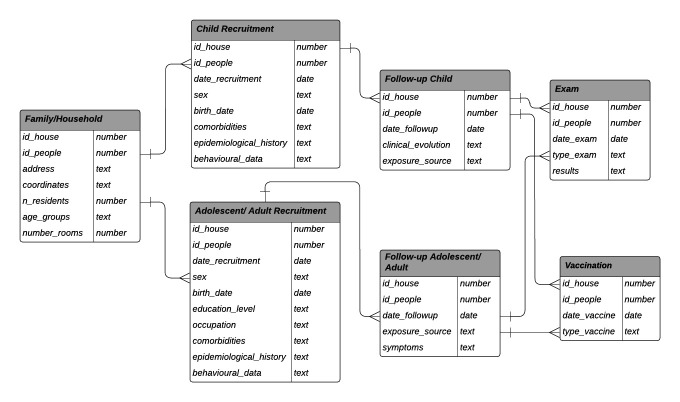
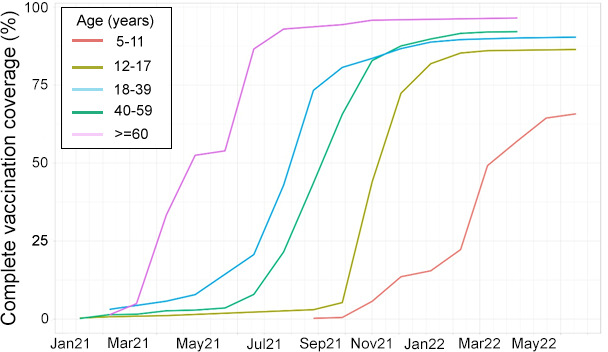
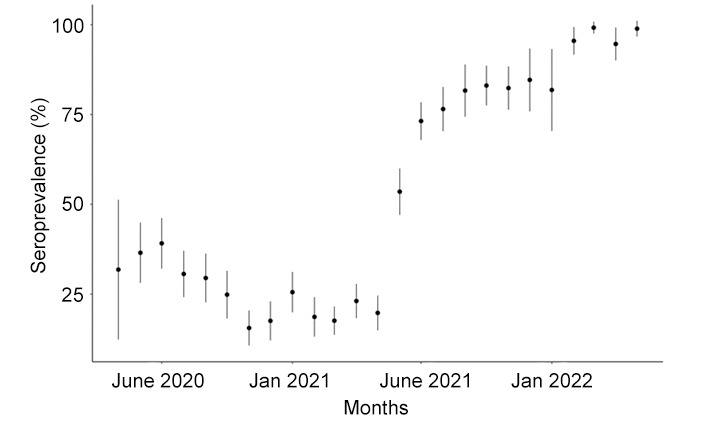
This is an open prospective cohort study of children ≤12 years old and their household contacts. During home visits over 24 months, we collected data on sociodemographic characteristics, behavioural data, clinical manifestations of SARS-CoV-2, vaccination status, SARS-CoV-2 (reverse transcription-polymerase chain reaction) RT-PCR and anti-S antibody tests. Among adults, the majority of participants were women (62%).
We enrolled 845 families from May 2020 to May 2022. The median number of residents per household was four. The median household density, defined as the number of persons per room, was 0.95. The risk of SARS-CoV-2 occurrence was higher in households with a high number of persons per room. Children were not the principal source of SARS-CoV-2 infections in their households during the first wave of the pandemic.
Future studies will investigate cellular and humoral immune responses to locally circulating SARS-CoV-2 variants, which is relevant for the design of vaccines, antivirals and monoclonal antibodies. We will also engage in outreach to encourage vaccination as a means of limiting the transmission of novel SARS-CoV-2 variants and other emerging pathogens.
更好地了解 2020-2022 年 COVID-19 大流行期间里约热内卢资源匮乏社区中 SARS-CoV-2 的家庭传播情况。
这是一项针对≤12 岁儿童及其家庭接触者的开放性前瞻性队列研究。在 24 个月的家访期间,我们收集了社会人口统计学特征、行为数据、SARS-CoV-2 的临床表现、疫苗接种状况、SARS-CoV-2(逆转录-聚合酶链反应)RT-PCR 和抗-S 抗体检测的数据。在成年人中,大多数参与者为女性(62%)。
我们于 2020 年 5 月至 2022 年 5 月期间招募了 845 个家庭。每户居民的中位数为 4 人。家庭密度的中位数,定义为每人房间数,为 0.95。每个房间人数较多的家庭发生 SARS-CoV-2 感染的风险较高。在大流行的第一波期间,儿童并不是家庭中 SARS-CoV-2 感染的主要来源。
未来的研究将调查针对本地流行的 SARS-CoV-2 变体的细胞和体液免疫反应,这对于疫苗、抗病毒药物和单克隆抗体的设计很重要。我们还将开展外联活动,鼓励接种疫苗,以限制新型 SARS-CoV-2 变体和其他新出现的病原体的传播。