Texas State University, San Marcos, TX, United States.
J Med Internet Res. 2023 Jan 5;25:e43601. doi: 10.2196/43601.
Telemedicine has a long history; however, its efficacy has been reported with mixed reviews. Studies have reported a wide range of quality implications when using the telemedicine modality of care.
This study aimed to analyze the effectiveness of telemedicine through 6 domains of quality through an analysis of randomized controlled trials (RCTs) published in the literature published, to date, in 2022.
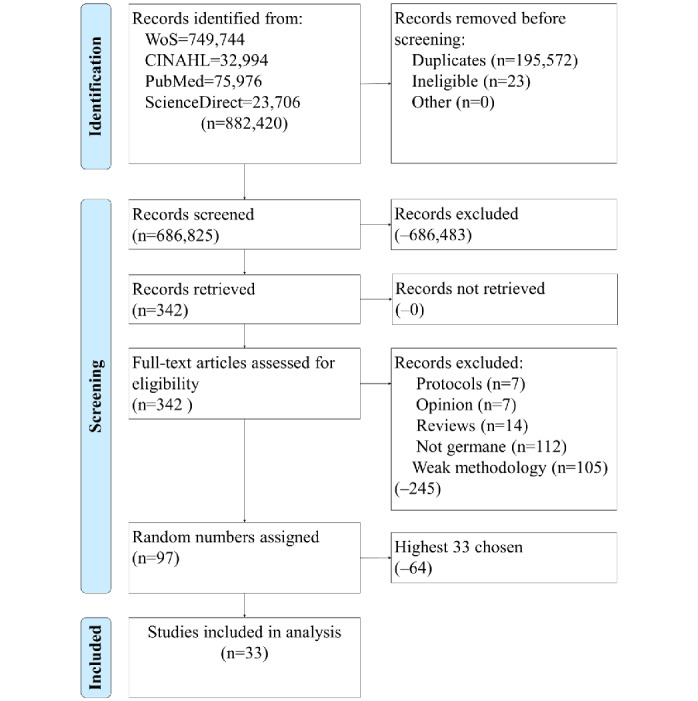
A total of 4 databases were searched using a standard Boolean string. The 882,420 results were reduced to 33 for analysis through filtering and randomization. The systematic literature review was conducted in accordance with the Kruse Protocol and reported in accordance with PRISMA (Preferred Reporting Items for Systematic Reviews and Meta-Analyses; 2020).
The Cohen κ statistic was calculated to show agreement between the reviewers (Cohen κ=0.90, strong). Medical outcomes associated with the telemedicine modality were 100% effective with a weighted average effect size of 0.21 (small effect). Many medical outcomes were positive but not statistically better than treatment as usual. RCTs have reported positive outcomes for physical and mental health, medical engagement, behavior change, increased quality of life, increased self-efficacy, increased social support, and reduced costs. All 6 domains of quality were identified in the RCTs and 4 were identified in 100% of the studies. Telemedicine is highly patient-centered because it meets digital preferences, is convenient, avoids stigma, and enables education at one's own pace. A few barriers exist to its wide adoption, such as staff training and cost, and it may not be the preferred modality for all.
The effectiveness of telemedicine is equal to or greater than that of traditional care across a wide spectrum of services studied in this systematic literature review. Providers should feel comfortable offering this modality of care as a standard option to patients where it makes sense to do so. Although barriers exist for wide adoption, the facilitators are all patient facing.
PROSPERO CRD42022343478; https://www.crd.york.ac.uk/prospero/display_record.php?RecordID=343478.
远程医疗历史悠久,但它的疗效评价褒贬不一。研究报告指出,在使用远程医疗模式时,存在广泛的质量影响。
本研究旨在通过分析截至 2022 年发表的文献中已发表的随机对照试验(RCT),从 6 个质量领域分析远程医疗的效果。
使用标准布尔字符串搜索 4 个数据库。通过过滤和随机化,将 882420 个结果减少到 33 个进行分析。系统文献综述按照 Kruse 方案进行,并按照 PRISMA(系统评价和荟萃分析的首选报告项目;2020 年)进行报告。
计算 Cohen κ 统计量以显示审稿人之间的一致性(Cohen κ=0.90,强)。与远程医疗模式相关的医疗结果 100%有效,加权平均效应大小为 0.21(小效应)。许多医疗结果是积极的,但与常规治疗相比并不具有统计学优势。RCT 报告了身体和心理健康、医疗参与、行为改变、生活质量提高、自我效能提高、社会支持增加和成本降低的积极结果。所有 6 个质量领域都在 RCT 中得到了识别,其中 4 个在 100%的研究中得到了识别。远程医疗高度以患者为中心,因为它满足数字偏好,方便,避免污名化,并能够按照自己的节奏进行教育。它的广泛采用存在一些障碍,例如员工培训和成本,并且它可能不是所有患者的首选模式。
在本系统文献综述研究的广泛服务中,远程医疗的有效性与传统护理相等或更高。在有意义的情况下,提供者应该放心为患者提供这种护理模式作为标准选择。尽管广泛采用存在障碍,但促进因素都是面向患者的。
PROSPERO CRD42022343478;https://www.crd.york.ac.uk/prospero/display_record.php?RecordID=343478。