Verster Joris C, Kraneveld Aletta D, Garssen Johan
Division of Pharmacology, Utrecht Institute for Pharmaceutical Sciences, Utrecht University, 3584CG Utrecht, The Netherlands.
Centre for Human Psychopharmacology, Swinburne University, Melbourne, VIC 3122, Australia.
J Clin Med. 2022 Dec 20;12(1):22. doi: 10.3390/jcm12010022.
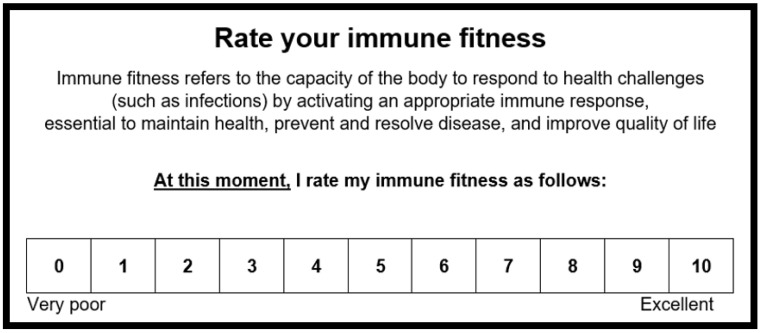
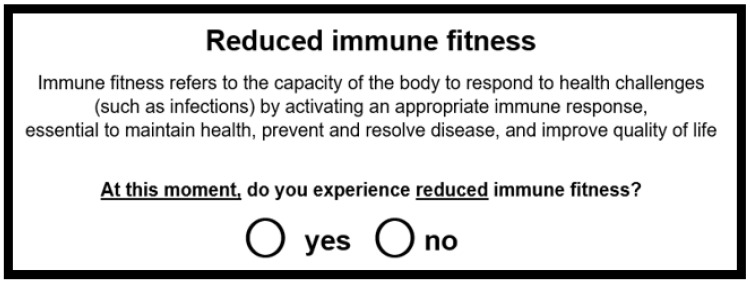
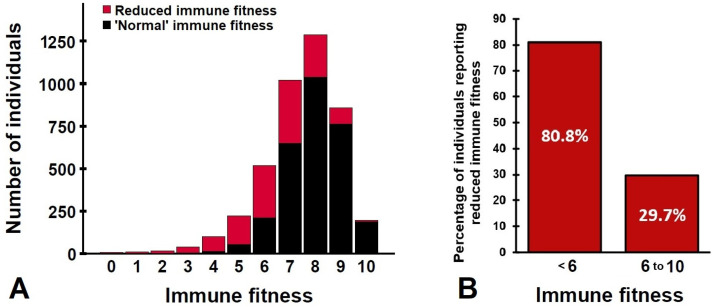
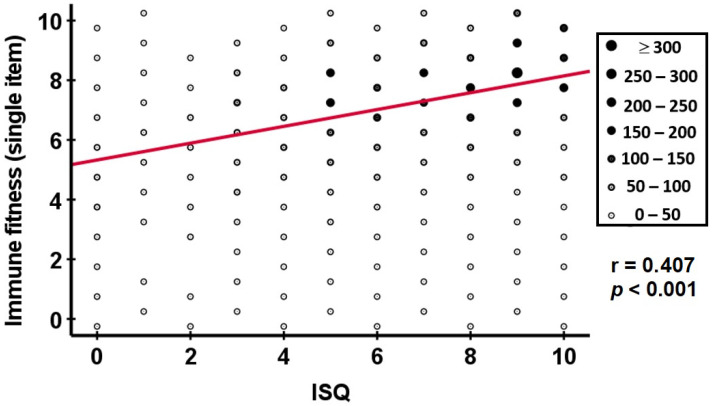
Immune fitness (i.e., adequate functioning of the immune system) is essential to maintain health, prevent and resolve disease, and improve quality of life. This article provides an overview of how to assess immune fitness. It discusses how a single-item rating scale can be used to assess immune fitness. The scale can be used in conjunction with a single "yes" or "no" question asking whether the individual is experiencing reduced immune fitness. Retrospective assessments can be complemented with the Immune Status Questionnaire (ISQ) to provide more insight into the type and frequency of experiencing specific immune-related complaints. Momentary assessments of immune fitness can be complemented with biomarker measurements in body fluids. As individuals may be unaware of systemic inflammation (e.g., biomarker concentrations outside the normal range), it remains critical to combine immune fitness assessments with biomarker measurements of immune functioning.
免疫健康(即免疫系统的充分功能)对于维持健康、预防和解决疾病以及提高生活质量至关重要。本文概述了如何评估免疫健康。它讨论了如何使用单项评分量表来评估免疫健康。该量表可与一个简单的“是”或“否”问题结合使用,询问个体是否正在经历免疫健康下降。回顾性评估可以通过免疫状态问卷(ISQ)进行补充,以更深入地了解经历特定免疫相关不适的类型和频率。免疫健康的即时评估可以通过体液中的生物标志物测量进行补充。由于个体可能未意识到全身性炎症(例如,生物标志物浓度超出正常范围),因此将免疫健康评估与免疫功能的生物标志物测量相结合仍然至关重要。