Division of Applied Life Science (BK21 Four Program), Plant Molecular Biology and Biotechnology Research Center, Gyeongsang National University, Jinju, South Korea.
Division of Life Science, Gyeongsang National University, Jinju, South Korea.
mBio. 2023 Feb 28;14(1):e0229622. doi: 10.1128/mbio.02296-22. Epub 2023 Jan 10.
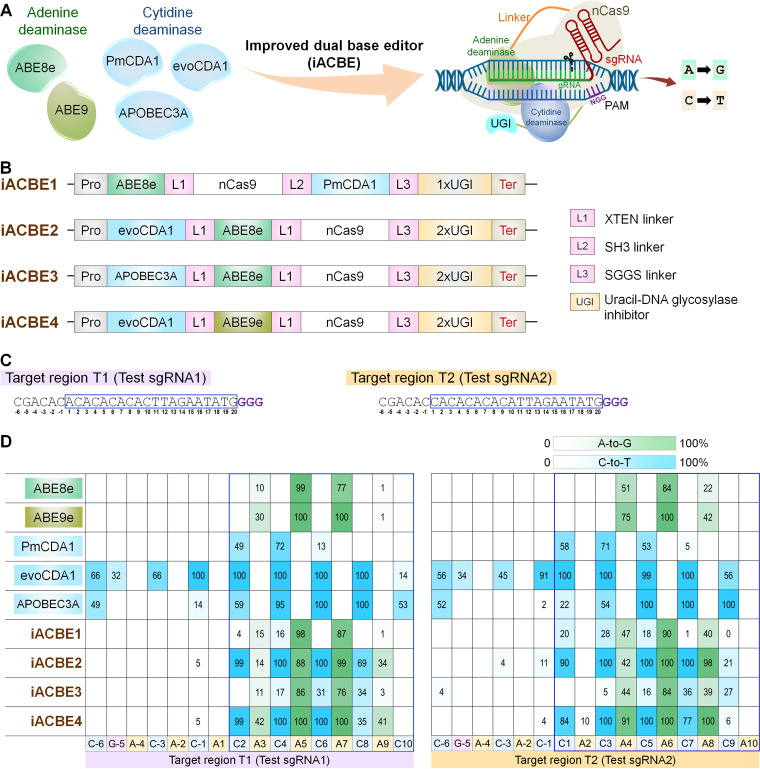
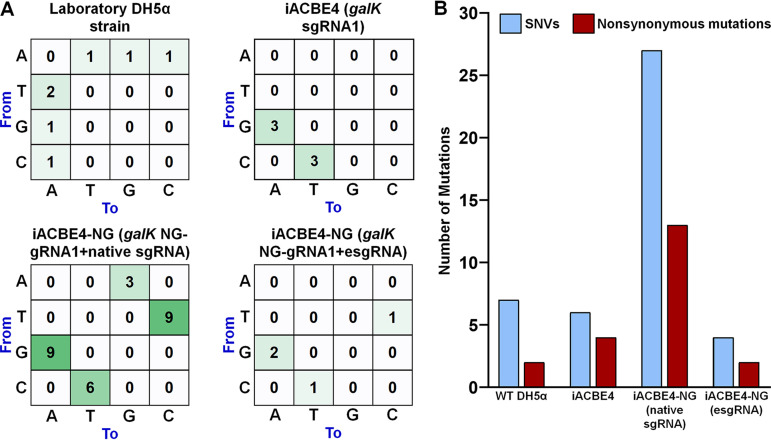
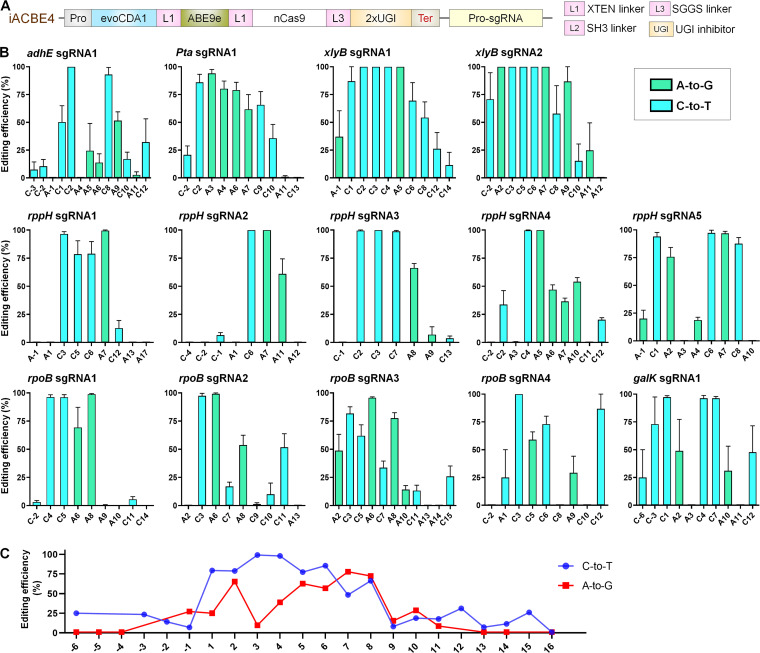
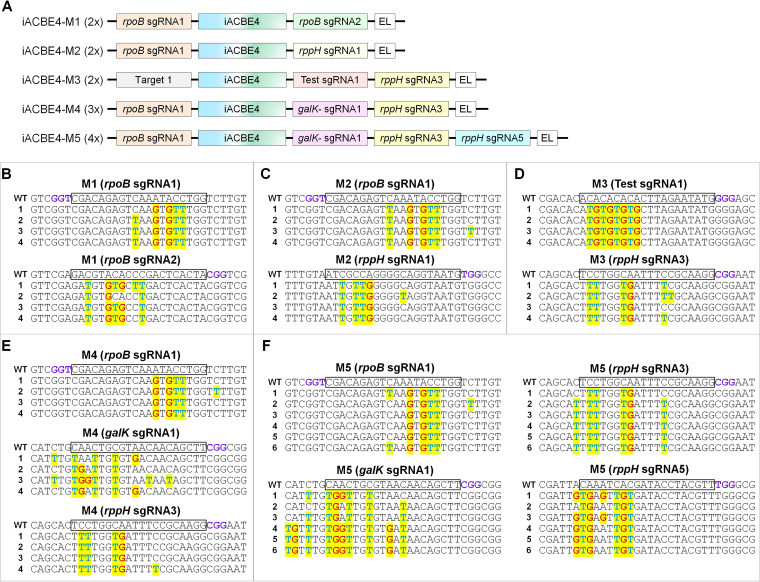
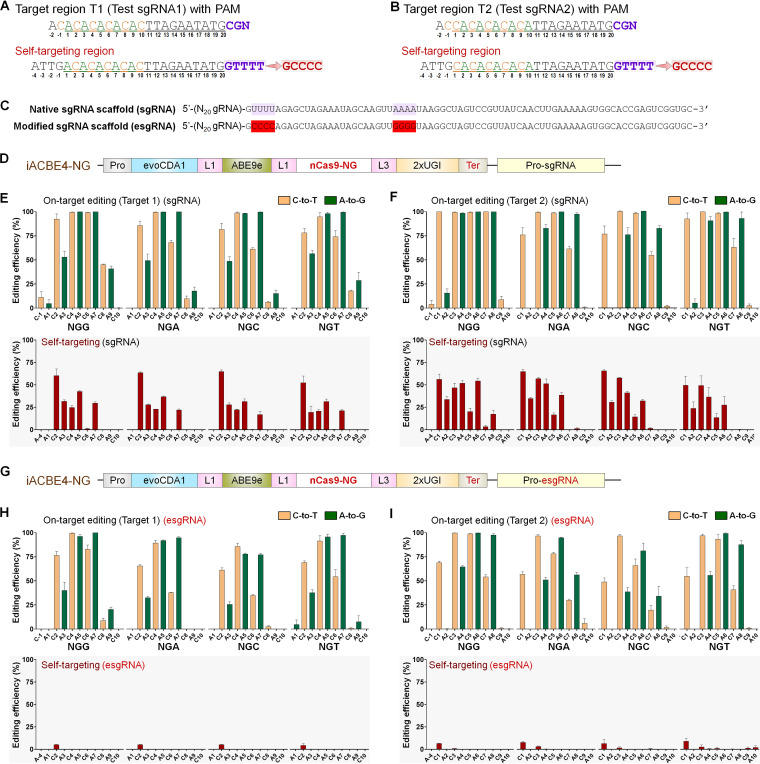
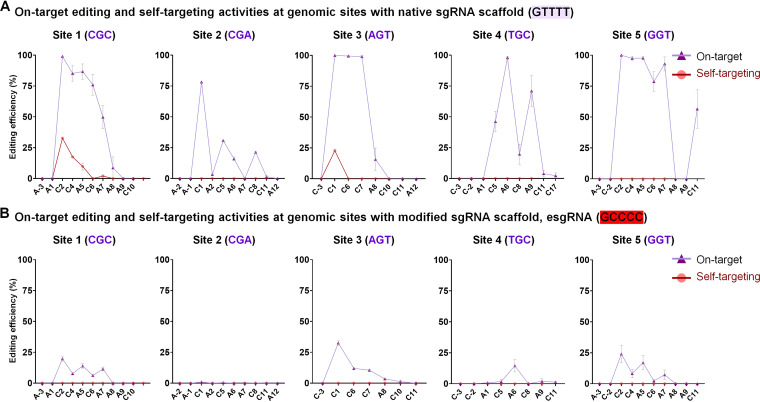
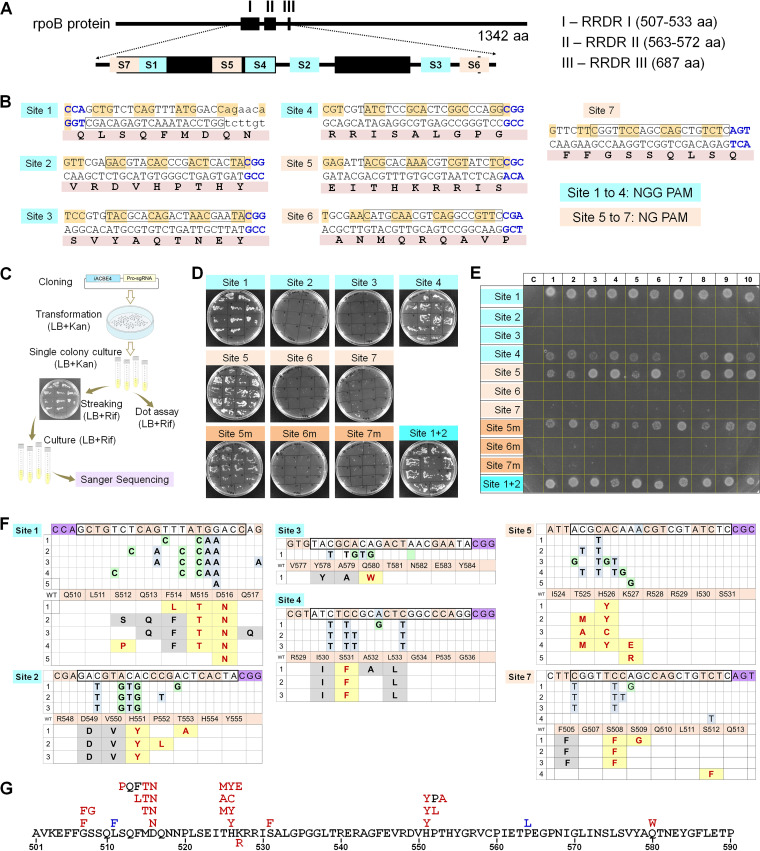
Genome-editing (GE) techniques like base editing are ideal for introducing novel gain-of-function mutations and protein evolution. Features of base editors (BEs) such as higher efficacy, relaxed protospacer adjacent motif (PAM), and a broader editing window enables diversification of user-defined targeted locus. Cytosine (CBE) or adenine (ABE) BEs alone can only alter C-to-T or A-to-G in target sites. In contrast, dual BEs (ACBEs) can concurrently generate C-to-T and A-to-G modifications. Although BE tools have recently been applied in microbes, there is no report of ACBE for microbial GE. In this study, we engineered four improved ACBEs (iACBEs) tethering highly active CBE and ABE variants that can introduce synchronized C-to-T and A-to-G mutations in targeted loci. iACBE4 generated by evoCDA1-ABE9e fusion demonstrated a broader editing window (positions -6 to 15) and is also compatible with the multiplex editing approach in Escherichia coli. We further show that the iACBE4-NG containing PAM-relaxed nCas9-NG expands the targeting scope beyond NGG (N-A/G/C/T) PAM. As a proof-of-concept, iACBE was effectively utilized to identify previously unknown mutations in the gene, conferring gain-of-function, i.e., rifampicin resistance. The iACBE tool would expand the CRISPR-GE toolkit for microbial genome engineering and synthetic biology. Dual base editors are DSB-free CRISPR tools applied in eukaryotes but not yet in bacteria. We developed an improved ACBE toolset for bacteria, combining highly processive deaminases. We believe that the bacterial optimized iACBE toolset is a significant advancement in CRISPR-based E. coli genome editing and adaptable to other microbes.
基因编辑(GE)技术,如碱基编辑,非常适合引入新的功能获得性突变和蛋白质进化。碱基编辑器(BE)的特点,如更高的效率、宽松的原间隔序列邻近基序(PAM)和更广泛的编辑窗口,使目标基因座的多样化成为可能。单独的胞嘧啶(CBE)或腺嘌呤(ABE)BE 只能在靶位点改变 C 到 T 或 A 到 G。相比之下,双碱基 BE(ACBE)可以同时产生 C 到 T 和 A 到 G 的修饰。尽管 BE 工具最近已应用于微生物,但没有关于微生物 GE 的 ACBE 的报道。在这项研究中,我们设计了四个改良的 ACBE(iACBE),它们连接了高效的 CBE 和 ABE 变体,可以在靶向基因座中同时引入 C 到 T 和 A 到 G 的突变。由 evoCDA1-ABE9e 融合产生的 iACBE4 显示出更广泛的编辑窗口(位置-6 到 15),并且也与大肠杆菌中的多路编辑方法兼容。我们进一步表明,包含 PAM 松弛的 nCas9-NG 的 iACBE4-NG 将靶向范围扩展到 NGG(N-A/G/C/T)PAM 之外。作为概念验证,iACBE 有效地用于鉴定 基因中以前未知的突变,赋予功能获得性,即利福平抗性。iACBE 工具将扩展微生物基因组工程和合成生物学的 CRISPR-GE 工具包。双碱基编辑器是无双链断裂的 CRISPR 工具,应用于真核生物,但尚未应用于细菌。我们开发了一种用于细菌的改良 ACBE 工具集,结合了高度连续的脱氨酶。我们相信,细菌优化的 iACBE 工具集是基于 CRISPR 的大肠杆菌基因组编辑的重大进展,并且可以适应其他微生物。