Fertilis Pty Ltd, The University of Adelaide, Frome Road, Helen Mayo South, Adelaide, SA, 5005, Australia.
Virtual Ark Pty Ltd, 73 Woolnough Road, Semaphore, SA, 5019, Australia.
Sci Rep. 2023 Jan 11;13(1):562. doi: 10.1038/s41598-023-27660-x.
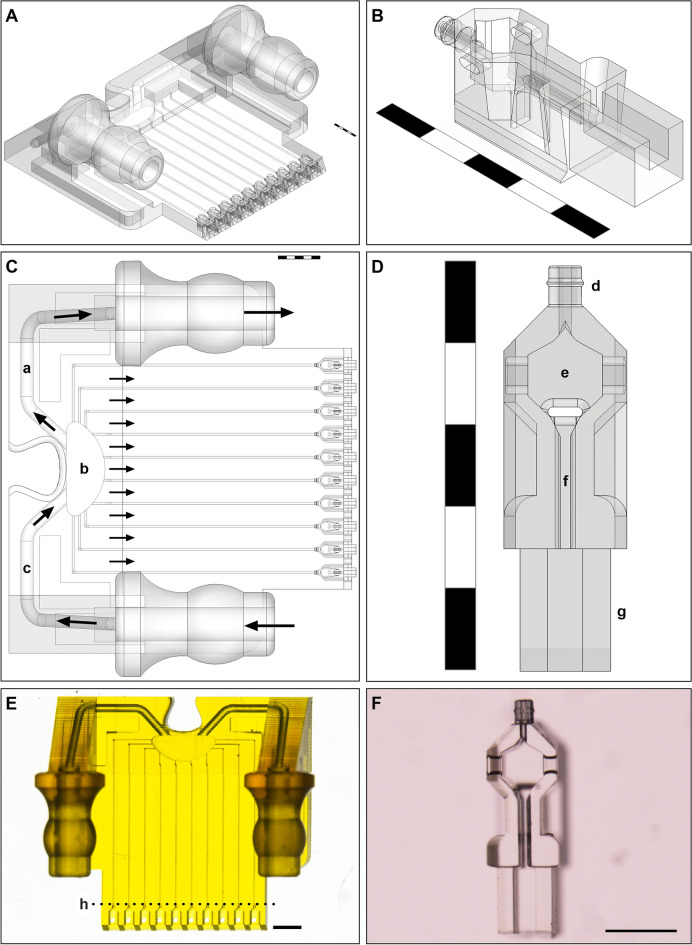
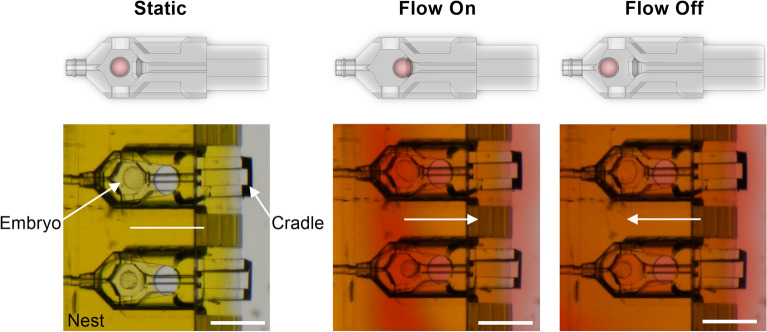
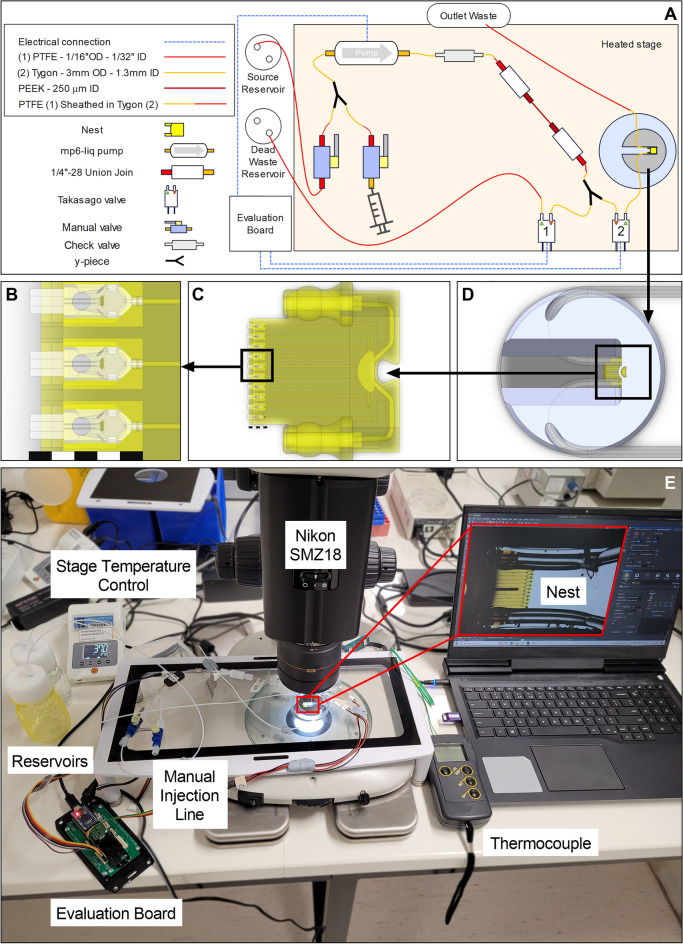
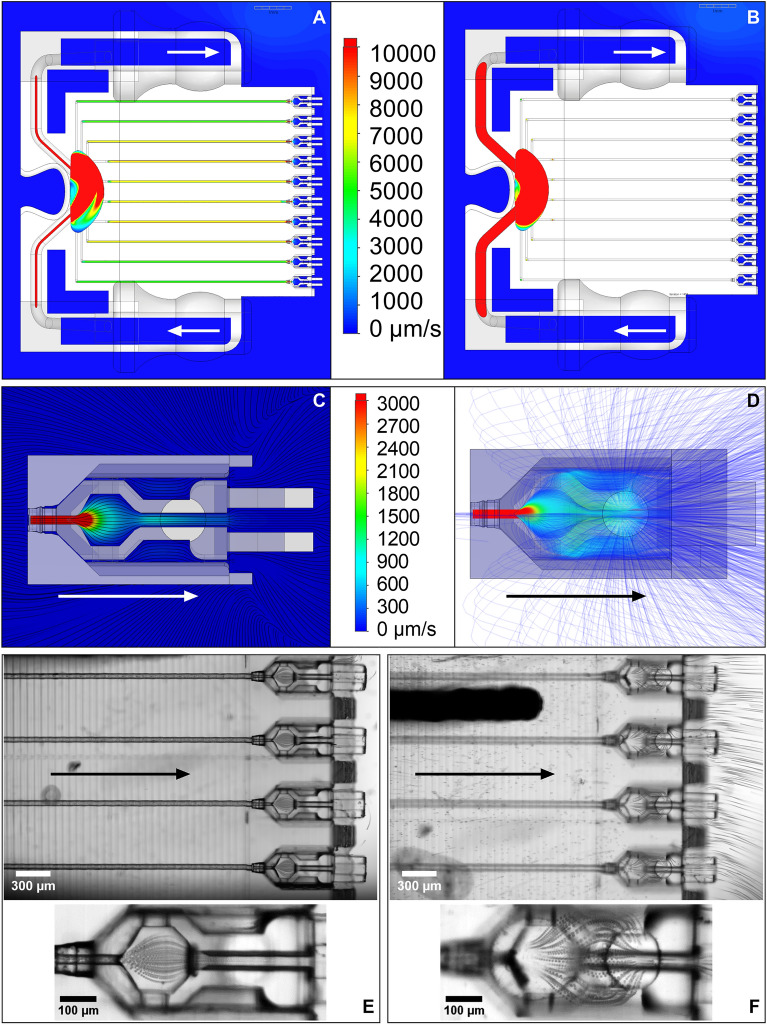
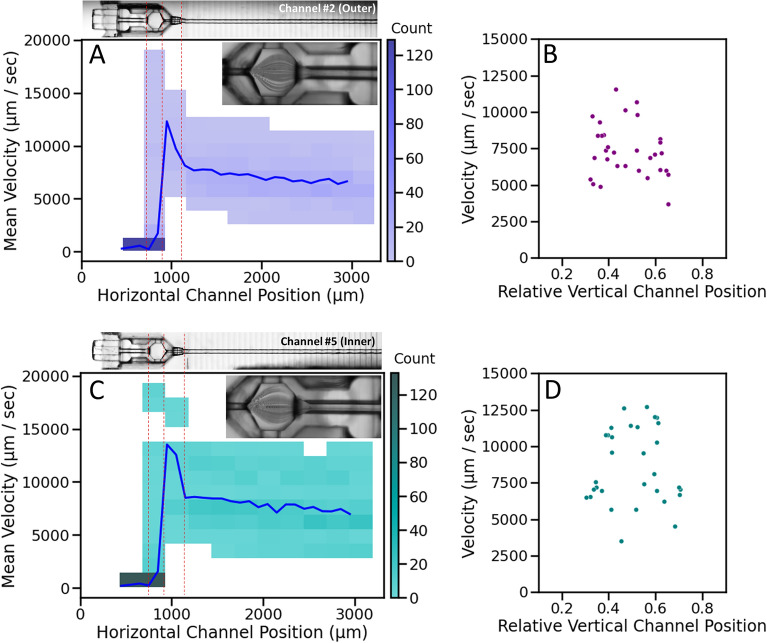
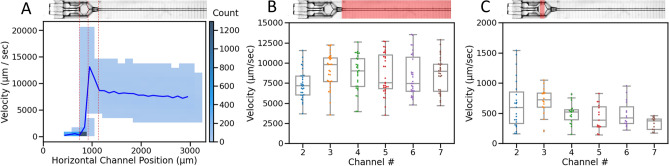
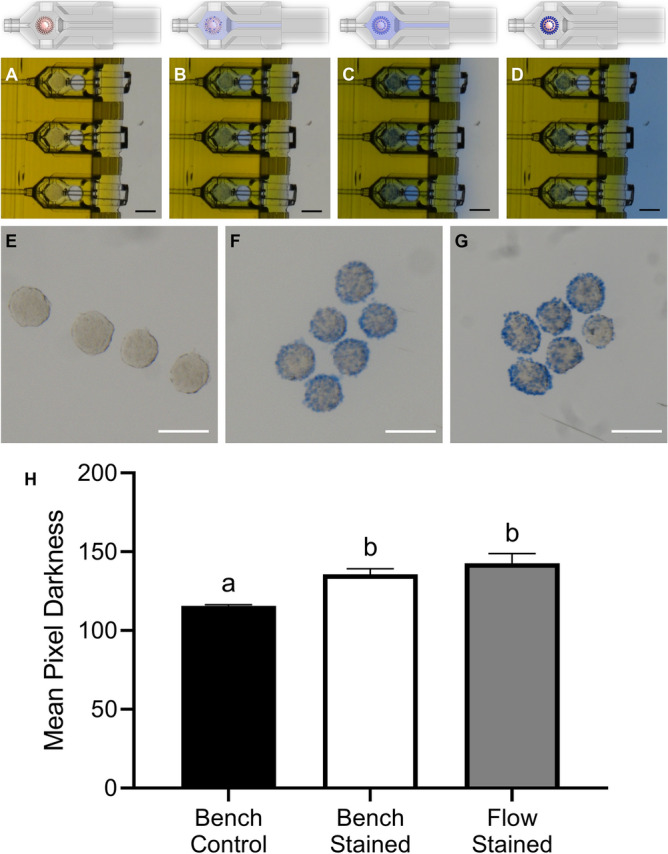
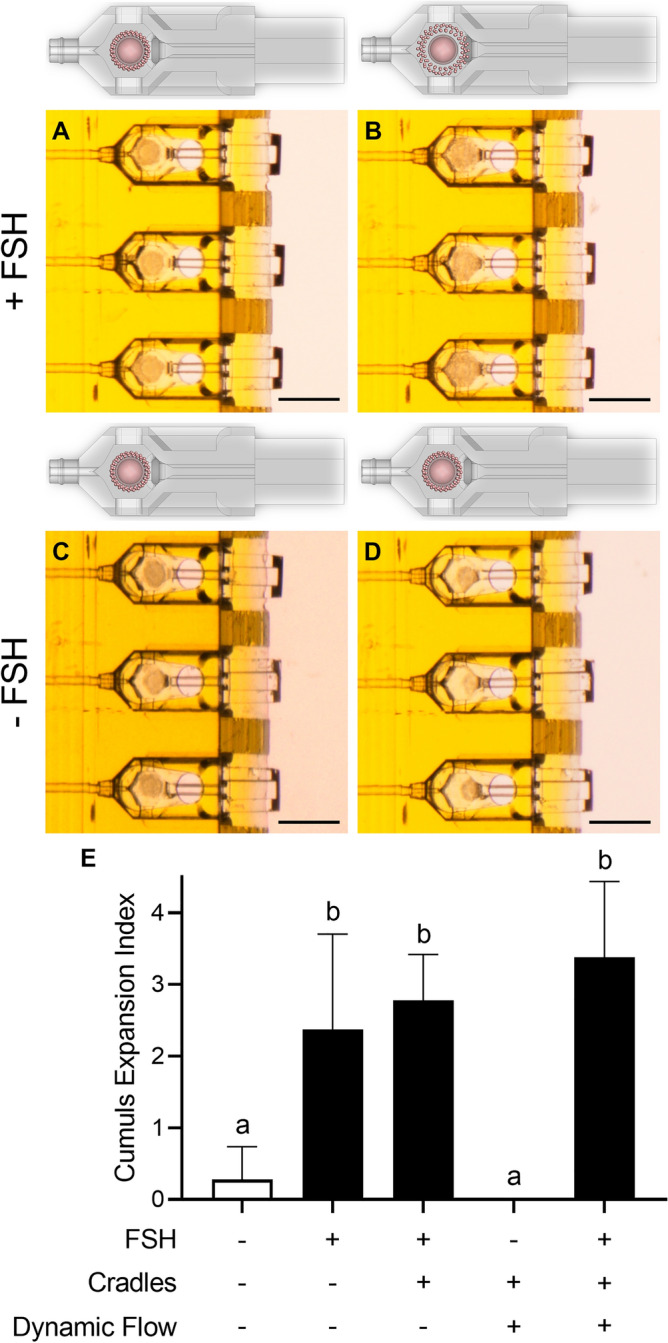
Polydimethylsiloxane (PDMS) has been the material of choice for microfluidic applications in cell biology for many years, with recent advances encompassing nano-scaffolds and surface modifications to enhance cell-surface interactions at nano-scale. However, PDMS has not previously been amenable to applications which require complex geometries in three dimensions for cell culture device fabrication in the absence of additional components. Further, PDMS microfluidic devices have limited capacity for cell retrieval following culture without severely compromising cell health. This study presents a designed and entirely 3D-printed microfluidic chip (8.8 mm × 8.2 mm × 3.6 mm) using two-photon polymerization (2PP). The 'nest' chip is composed of ten channels that deliver sub-microliter volume flowrates (to ~ 600 nL/min per channel) to 10 individual retrievable cell sample 'cradles' that interlock with the nest to create the microfluidic device. Computational fluid dynamics modelling predicted medium flow in the device, which was accurately validated by real-time microbead tracking. Functional capability of the device was assessed, and demonstrated the capability to deliver culture medium, dyes, and biological molecules to support cell growth, staining and cell phenotype changes, respectively. Therefore, 2PP 3D-printing provides the precision needed for nanoliter fluidic devices constructed from multiple interlocking parts for cell culture application.
聚二甲基硅氧烷(PDMS)多年来一直是细胞生物学微流控应用的首选材料,最近的进展包括纳米支架和表面修饰,以增强纳米尺度的细胞表面相互作用。然而,PDMS 以前不适用于需要在没有其他组件的情况下制造细胞培养设备的复杂三维几何形状的应用。此外,PDMS 微流控设备在培养后没有严重损害细胞健康的情况下,其细胞回收能力有限。本研究提出了一种使用双光子聚合(2PP)设计和完全 3D 打印的微流控芯片(8.8mm×8.2mm×3.6mm)。“巢”芯片由十个通道组成,可将亚微升体积的流速(每个通道约 600 nL/min)输送到 10 个可单独回收的细胞样本“摇篮”中,这些“摇篮”与巢互锁以形成微流控装置。计算流体动力学模型预测了装置中的介质流动,实时微珠跟踪准确地验证了该模型。评估了该装置的功能能力,并证明了其向细胞生长、染色和细胞表型变化分别输送培养基、染料和生物分子的能力。因此,2PP 3D 打印为需要多个互锁部件构建的纳升流体设备提供了用于细胞培养应用的所需精度。