Wang Lihong, Yan Danfang, Shen Liang, Xie Yalin, Yan Senxiang
Department of Radiation Oncology, The First Affiliated Hospital, Zhejiang University School of Medicine, Hangzhou, China.
Hepatopancreatobiliary Surgery Department, The First Affiliated Hospital, Zhejiang University School of Medicine, Hangzhou, China.
J Oncol. 2023 Jan 3;2023:1554599. doi: 10.1155/2023/1554599. eCollection 2023.
This study aimed to investigatie the feasibility of pretherapeutic CT radiomics-based nomograms to predict the overall survival (OS) of patients with nondistant metastatic Barcelona Clinic Liver Cancer stage C (BCLC-C) hepatocellular carcinoma (HCC) undergoing stereotactic body radiotherapy (SBRT).
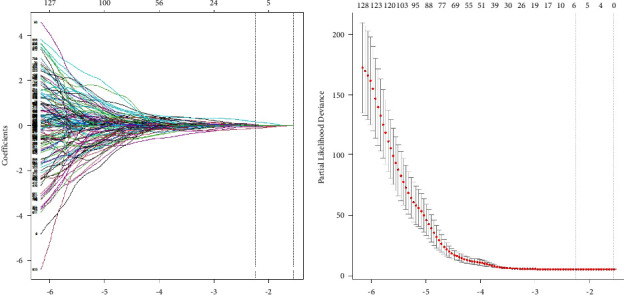
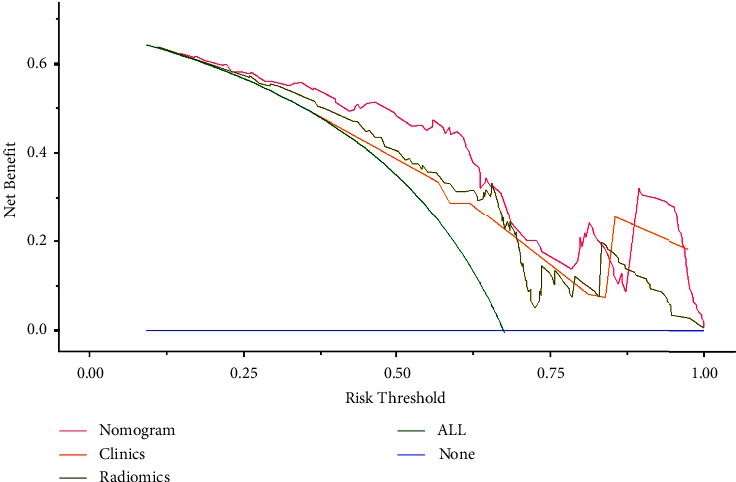
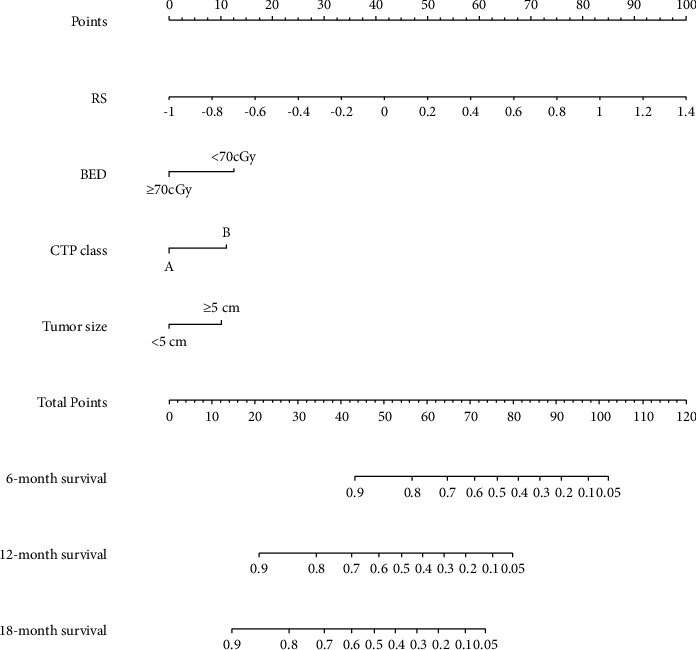
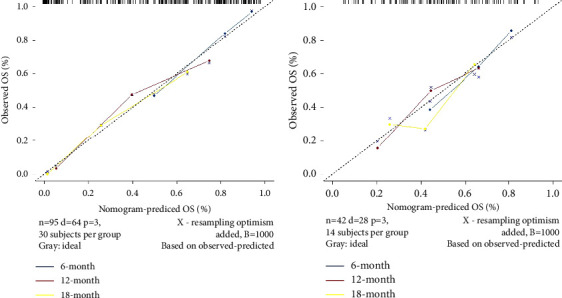
A retrospective review of 137 patients with nondistant metastatic BCLC-C HCC who underwent SBRT was made. Radiomics features distilled from pretherapeutic CT images were selected by the method of LASSO regression for radiomics signature construction. Then, the clinical model was constructed based on clinical characteristics. A radiomics nomogram was constructed using the radiomics score (Rad-score) and clinical characteristics to predict post-SBRT OS in BCLC-C HCC patients. An analysis of discriminatory ability and calibration was performed to confirm the efficacy of the radiomics nomogram.
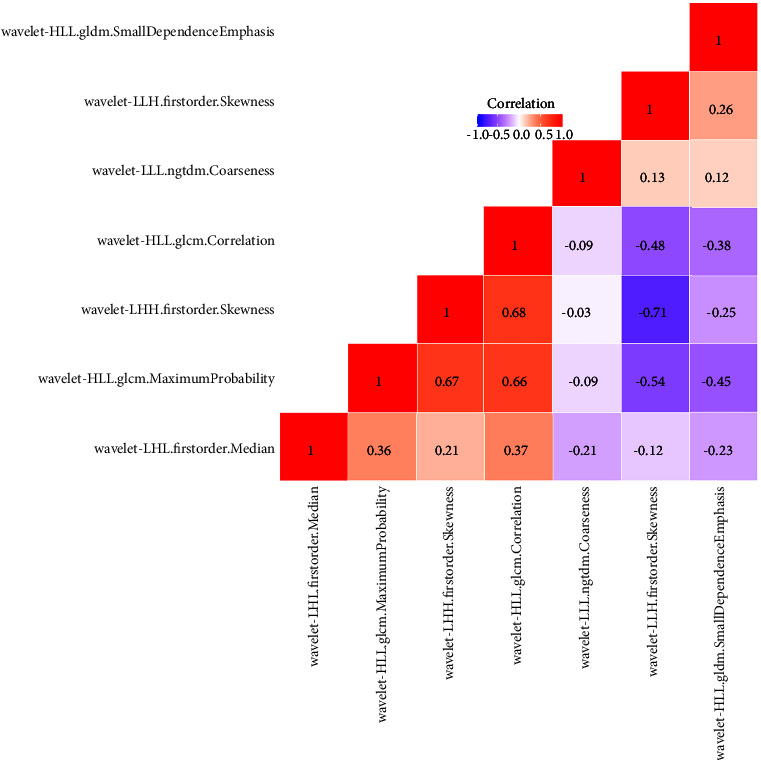
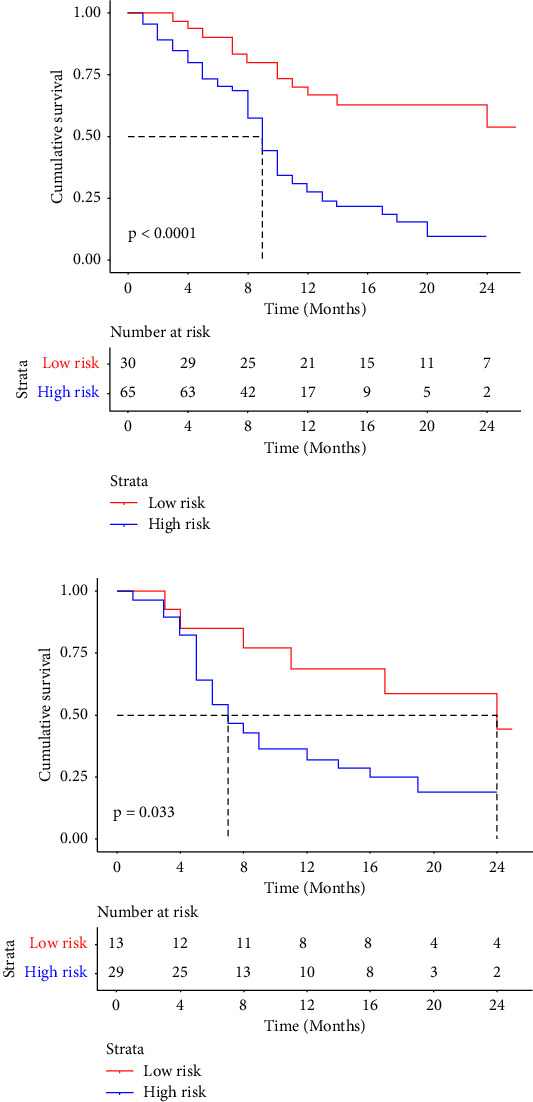
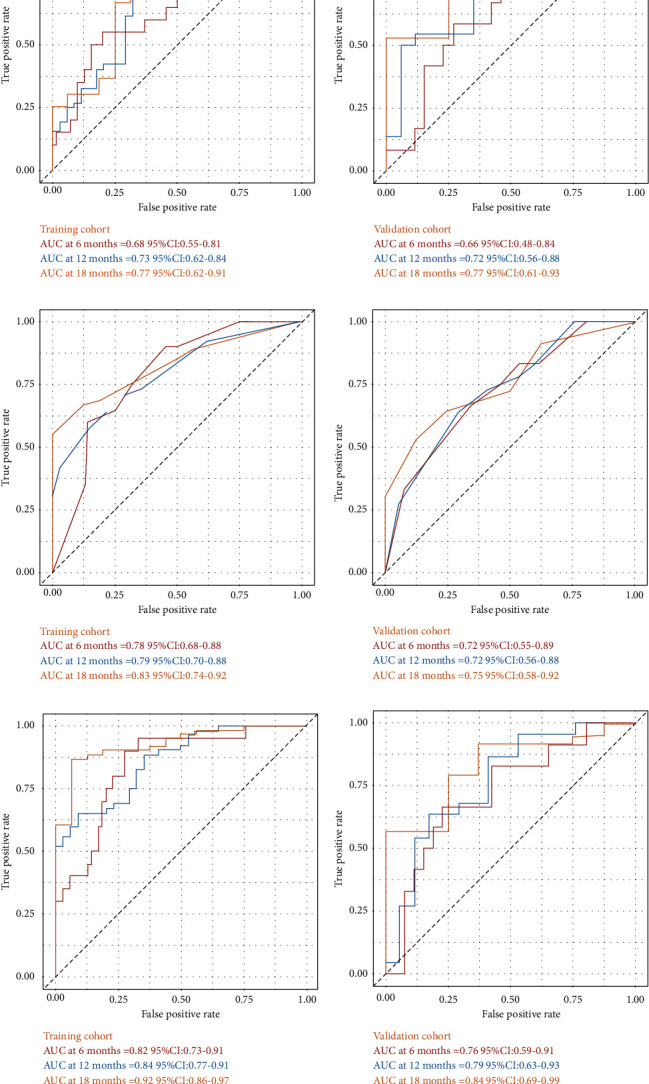
In order to construct the radiomic signature, seven significant features were selected. Patients were divided into low-risk (Rad-score < -0.03) and high-risk (Rad-score ≥ -0.03) groups based on the best Rad-score cutoff value. There were statistically significant differences in OS both in the training set ( < 0.0001) and the validation set (=0.03) after stratification. The -indexes of the radiomics nomogram were 0.77 (95% CI: 0.72-0.82) in the training set and 0.71 (95% CI: 0.61-0.81) in the validation set, which outperformed the clinical model and radiomics signature. An AUC of 0.76, 0.79, and 0.84 was reached for 6-, 12-, and 18-month survival predictions, respectively.
The predictive nomogram that combines radiomic features with clinical characteristics has great prospects for application in the prediction of post-SBRT OS in nondistant metastatic BCLC-C HCC patients.
本研究旨在探讨基于治疗前CT影像组学的列线图预测接受立体定向体部放疗(SBRT)的非远处转移性巴塞罗那临床肝癌C期(BCLC-C)肝细胞癌(HCC)患者总生存期(OS)的可行性。
回顾性分析137例接受SBRT的非远处转移性BCLC-C HCC患者。采用LASSO回归方法从治疗前CT图像中提取影像组学特征以构建影像组学特征标签。然后,基于临床特征构建临床模型。使用影像组学评分(Rad-score)和临床特征构建影像组学列线图,以预测BCLC-C HCC患者SBRT后的OS。进行鉴别能力和校准分析以确认影像组学列线图的有效性。
为构建影像组学特征标签,选择了7个显著特征。根据最佳Rad-score临界值,将患者分为低风险(Rad-score<-0.03)和高风险(Rad-score≥-0.03)组。分层后,训练集(<0.0001)和验证集(=0.03)的OS均有统计学显著差异。影像组学列线图在训练集和验证集的C指数分别为0.77(95%CI:0.72-0.82)和0.71(95%CI:0.61-0.81),优于临床模型和影像组学特征标签。6个月、12个月和18个月生存预测的AUC分别达到0.76、0.79和0.84。
结合影像组学特征与临床特征的预测列线图在预测非远处转移性BCLC-C HCC患者SBRT后OS方面具有广阔的应用前景。